
Former Minister Uche Nnaji’s Pending Court of Appeal Case After Arrest
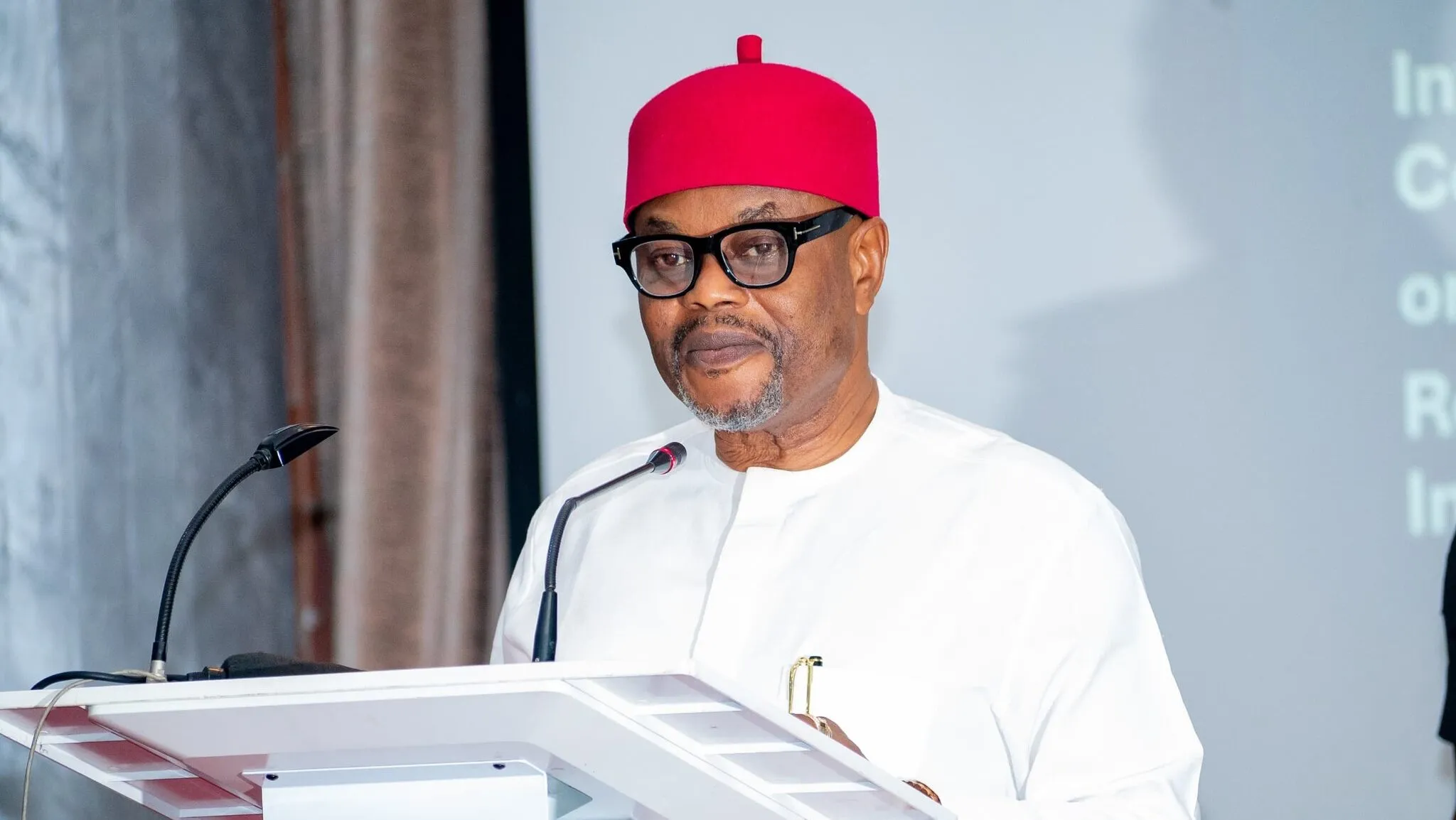
Former Minister of Science and Technology, Uche Nnaji, was arrested on Wednesday at the Nnamdi Azikiwe International Airport in Abuja, bringing months of legal pressure over a certificate forgery scandal to a dramatic head at the arrivals terminal.
Nnaji was picked up upon landing from Enugu via a chartered flight, with authoritative airport sources confirming that he would be handed over to the Independent Corrupt Practices and Other Related Offences Commission for interrogation. The arrest marks the culmination of a pursuit the anti-graft agency had maintained since Nnaji resigned from office last year, after investigations surfaced revealing that he had forged his academic certificates.
The legal groundwork for Wednesday’s arrest had been laid weeks earlier. In mid-June, a Federal High Court in Abuja ordered the ICPC to arrest Nnaji so it could investigate the certificate forgery allegations against him. The court went further than simply authorising an arrest — it also granted the commission leave to formally declare Nnaji wanted, through publication in national newspapers, on social media platforms, and across other media channels. According to the ICPC’s submissions to the court, its ex parte application had become necessary only after Nnaji repeatedly failed to honour invitations extended to him for what the commission described as “investigative activities” tied to the forgery allegations.
The trail leading to that court order stretches back further still. The ICPC’s invitation to Nnaji followed a two-year investigation, published in October of last year, which uncovered that the then-minister had forged both his University of Nigeria, Nsukka degree certificate and his National Youth Service Corps certificate. Those findings did not merely raise questions about Nnaji’s academic record in the abstract — they exposed how deeply the forged documents had been woven into his rise to ministerial office.
According to the investigation’s findings, Nnaji had submitted the forged academic and NYSC documents to President Bola Tinubu and to the Nigerian Senate during his ministerial confirmation process in 2023, meaning the falsified credentials had effectively underpinned his appointment to one of the country’s most consequential technology and innovation portfolios. The same forged bachelor’s degree and NYSC certificate, the findings showed, were also presented to the Office of the Secretary to the Government of the Federation, to the State Security Service, and to the Senate itself — institutions whose vetting processes were meant to catch precisely this kind of discrepancy.
The scandal took a decisive turn when Nnaji himself later admitted that the University of Nigeria, Nsukka had never actually issued him a degree certificate — an admission that effectively validated the findings of the original investigation and left little room for further denial about the authenticity of the documents he had relied upon.
That admission stood in sharp contrast to Nnaji’s earlier posture on the matter. When the allegations first surfaced, he had firmly denied their substance, going so far as to describe the reporting that exposed the forgery as a “media trial” rather than a legitimate account of his conduct. That denial, however, did not hold up once the subsequent revelation about the missing UNN degree came to light.
Even as the legal net tightened around him, Nnaji continued to resist the process through the courts rather than submit quietly to the ICPC’s demands. He had initially disputed the existence of the court order authorising his arrest, before eventually moving to challenge it through formal legal channels. On 18 June, he filed an appeal against the arrest order at the Court of Appeal in Abuja, a notice of appeal that was independently obtained and confirmed at the time.
Wednesday’s arrest at the airport now brings that months-long standoff into a new phase, with Nnaji set to face direct interrogation by the ICPC over allegations that have already cost him his ministerial position and that now carry the weight of a criminal investigation into how forged academic credentials made their way through some of the highest vetting processes in Nigeria’s federal government. Whether his pending appeal at the Court of Appeal will affect the trajectory of the ICPC’s interrogation remains to be seen, but for now, the former minister finds himself in the custody of the very commission he had spent weeks attempting to evade.
Author