
8 Charges, 34 Accounts, One Presidency Under Fire
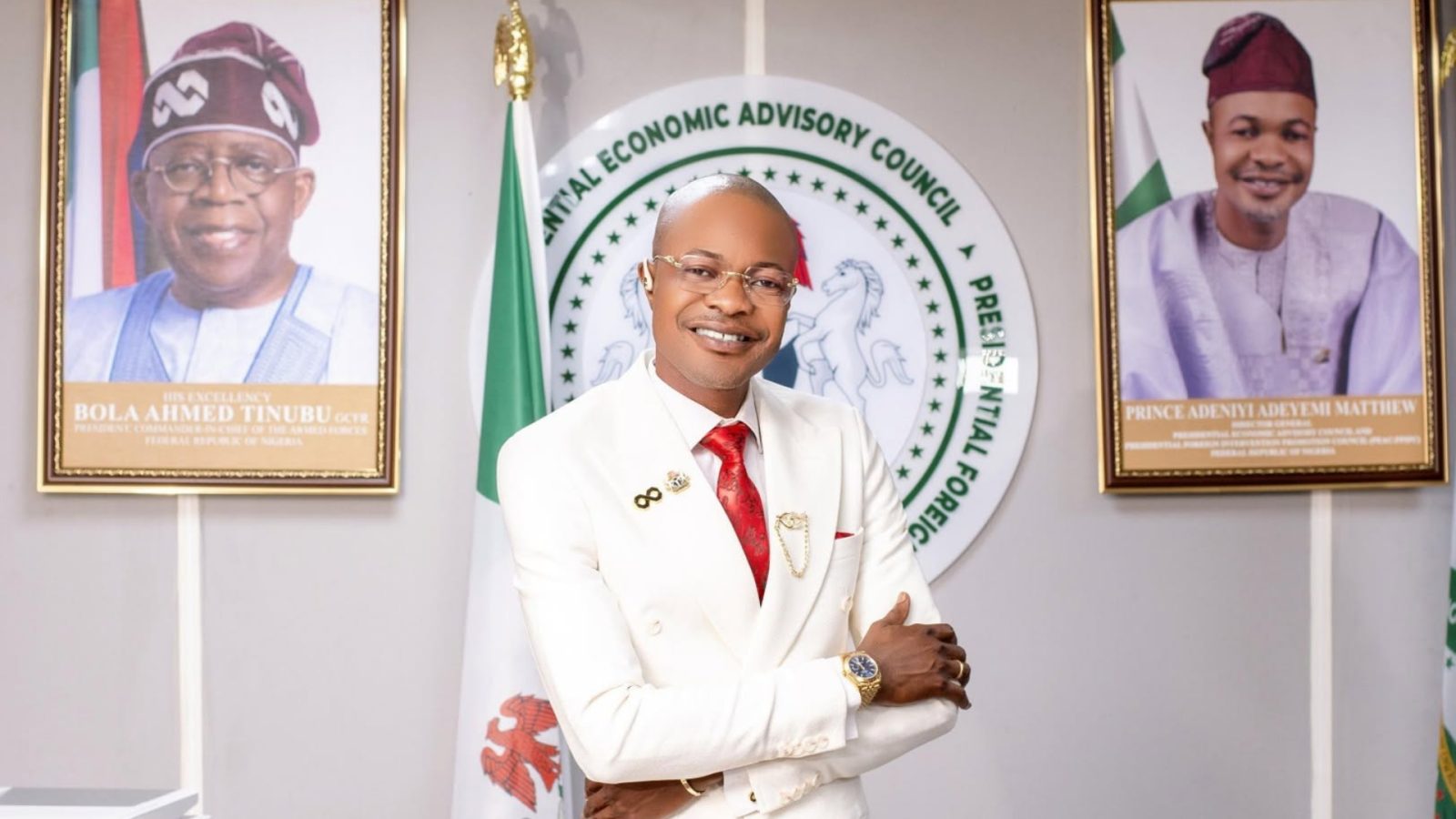
A sprawling forgery and impersonation scandal centred on a supposed presidential agency has thrust the Presidency into fresh legal and public scrutiny, after Prince Adeniyi Adeyemi was charged with eight counts of conspiracy, forgery and impersonation before the Federal High Court in Abuja.
Adeyemi had, for months, paraded himself as Director-General of a body called the Presidential Foreign Intervention Promotion Council, presenting himself to government institutions, foreign missions and the public as the head of a legitimate federal agency. The Presidency now says the council never existed in any official capacity, and that Adeyemi’s activities amounted to an elaborate scheme to fabricate the appearance of state authority for personal gain.
The police allege that Adeyemi forged a presidential appointment letter bearing the purported signature of the Chief of Staff to the Presidency, Femi Gbajabiamila, and that he maintained 34 bank accounts registered in the names of non-existent government bodies. In a statement issued Wednesday by the Special Adviser to the President on Information and Strategy, Bayo Onanuga, the Presidency laid out its account of the case in detail — covering the police investigation report, the charges filed against Adeyemi, and what it described as his long history of fraudulent conduct — while also cautioning politicians against using the episode to attack the Chief of Staff.
According to the Presidency’s account, Adeyemi was arrested by police on October 27, 2025, at his office in the Federal Secretariat Complex in Abuja. The arrest followed a formal petition Gbajabiamila filed with the Department of State Services and the Police on October 17, 2025, requesting an investigation into what he described as an elaborate forgery and impersonation scheme.
The Nigeria Police Force subsequently filed an eight-count charge against Adeyemi and two accomplices, identified only as Femi and Anu and currently still at large, before the Federal High Court on November 27, 2025, under a charge marked FHC/ABJ/CR/2025. The charges span conspiracy to commit forgery, forgery of presidential appointment documents, forgery of official State House letterheads, forgery of requests for office accommodation and inter-ministerial collaboration, impersonation as Director-General of the purported council, and forgery of further correspondence intended to lend the fictitious organisation an air of legitimacy.
Two of the counts illustrate the core of the case against him. Count Two states: “That you, Prince Adeniyi Adeyemi Mathew, forged an appointment letter purported to have been issued by His Excellency, President Bola Ahmed Tinubu, GCFR, and signed by the Chief of Staff to the President, Femi Gbajabiamila.” Count Five alleges: “That you falsely personate as the Director-General of the Presidential Foreign Investment Promotion Council.”
The Presidency’s statement noted that Adeyemi had been out on police bail when he recently resurfaced with a fresh claim that Gbajabiamila had personally appointed him Director-General of the same fictitious agency — a claim that directly contradicted his own statement to police made in November 2024, and one that prompted the Chief of Staff to issue a public disclaimer on June 8, 2026. Adeyemi is due back in court on July 27, 2026.
The origins of the case trace back to complaints from officials at the Nigerian Investment Promotion Commission, who noticed another body appeared to be operating at cross-purposes with their own agency. Around the same period, the Ministry of Foreign Affairs independently raised its own concerns after Adeyemi hosted ambassadors at the Wells Carlton Hotel and Apartments in Asokoro on October 10, 2025, without any engagement with or notification to the ministry.
In a letter dated October 15, 2025, and signed by Anderson Madubuike, the ministry wrote to the Office of the National Security Adviser and the Office of the Chief of Staff seeking clarification, stating that the conduct “contravenes extant rules and regulations guiding diplomatic practices globally.” The National Security Adviser subsequently wrote to the Secretary to the Government of the Federation’s office on October 20, which in turn wrote to the Chief of Staff on October 29 requesting further clarification. Two days before that final letter, however, Gbajabiamila had already sent a rebuttal to the Foreign Affairs Ministry, stating unequivocally that he had never issued any such appointment.
In his petition to security agencies, Gbajabiamila described the scale of the deception in stark terms. “The attention of this office has been drawn to the activities of certain individuals and groups engaged in the forgery of official appointment letters purportedly issued from my office. The fake documents, bearing falsified signatures, reference and folio numbers, and seals, have been used to claim leadership appointments to non-existent entities, with particular reference to the Presidential Foreign Intervention Promotion Council,” he wrote.
He added that the individuals involved had gone as far as “hosting meetings with both foreigners and Nigerian citizens, and even going so far as to request a Note Verbale from the Ministry of Foreign Affairs of the United States of America to facilitate visas for some of their staff,” warning that the conduct “not only constitutes a serious criminal act but also undermines the integrity of the Presidency and the credibility of official government communication.”
The police investigation, led by Assistant Commissioner Kabir Mogaji, uncovered that Adeyemi operated 34 bank accounts in total, nine of them opened in the names of fictitious agencies including the FCT Investment Promotion Agency, Public Private Partnership and the FCT Investment Promotion Act.
Investigators also found that he had fraudulently opened a Central Bank of Nigeria account by deceiving the Office of the Accountant-General of the Federation using forged government documents, although the Presidency maintained that no government funds were ever transferred into the account. Police nonetheless described the scheme as “a deliberate attempt to infiltrate official financial systems for potential diversion of government funds, money laundering and other financial crimes,” and recommended that all 34 identified accounts be frozen pending prosecution.
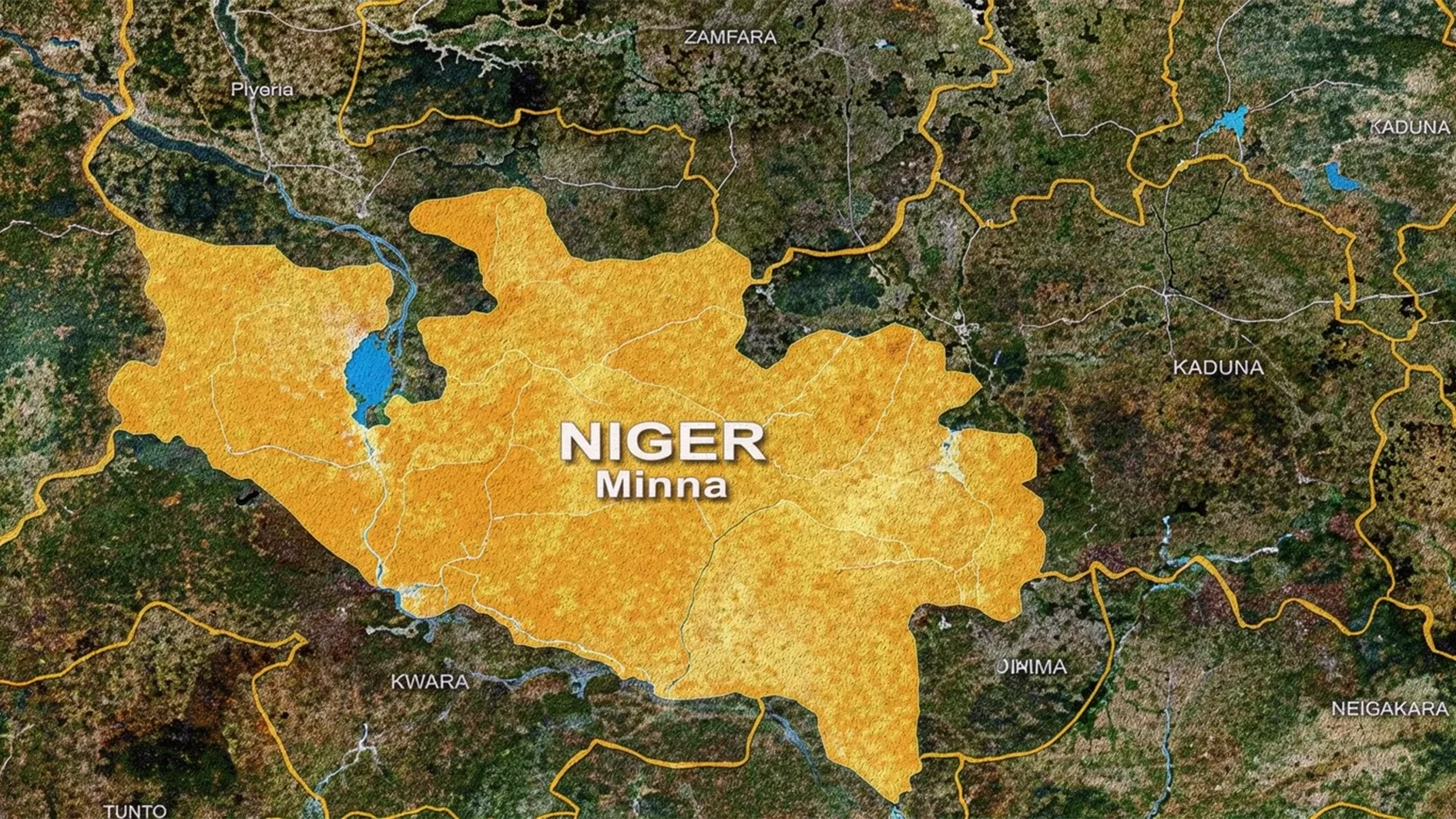
Search warrants executed at Adeyemi’s office in the Federal Secretariat Complex, Phase III, and at his residence in APC Quarters, Suleja, Niger State, turned up forged appointment letters, official letterhead, correspondence addressed to government institutions, and photographs and other materials, according to police. Investigators also allege that Adeyemi wrote to the Ministry of Foreign Affairs seeking a Note Verbale to the US Embassy to facilitate entry visas for purported staff members, and that three officials from the Office of the Accountant-General confirmed they had been posted to his office in August 2025 but carried out no official duties throughout their time there.
A darker thread runs through the investigation as well. In his statement to police, Adeyemi claimed that one Dolapo Babatunde Tanimola had assisted him in procuring the forged appointment letter. When officers went looking for Tanimola, they discovered he had died in a fire incident at Kachi Hotel in Utako, Abuja, on October 22, 2025 — five days before Adeyemi’s own arrest. The Presidency said police confirmed Tanimola’s death through morgue records, interviews with his relatives and the hotel proprietor, and confirmation from the National Hospital and St Matthew’s Anglican Church, Maitama, regarding his burial.
The Presidency further disclosed that this was not Adeyemi’s first brush with impersonation. It said that in November 2016, he had paraded himself as Ambassador and President-General of the World Youth Organisation, claiming affiliation with the United Nations and asserting he had been elected to the position in New Delhi, India — a claim local media initially celebrated before the United Nations publicly denied that any such body existed. The police investigation report, as quoted by the Presidency, concluded that “the act of the suspect constitutes criminal forgery, impersonation and obtaining by false pretence, thereby bringing the office of the Chief of Staff to the President and the Presidency to disrepute before the public and international community.”
Onanuga used the statement to caution against turning the case into a political weapon. “Politicians and members of the public who are weaponising Adeyemi’s claim against the Chief of Staff should refrain from swallowing his narrative hook, line and sinker. They are advised to await the trial of Adeyemi and his accomplices, as well as the court’s judgement,” he said.
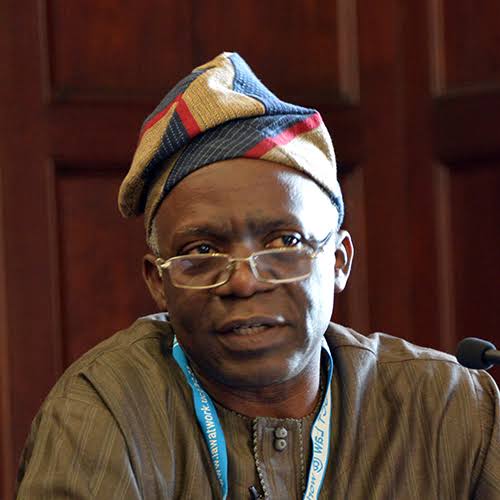
Not everyone is content to wait quietly for the trial to run its course, however. Human rights lawyer Femi Falana argued that the executive branch simply lacks the constitutional authority to clear anyone implicated in the matter, insisting that Nigeria’s anti-corruption institutions must be allowed to operate independently of Presidency statements. “The Presidency is not in a position to clear anybody. It is the duty of the police and anti-graft agencies to investigate cases of official corruption,” he said, adding, “The Presidency can only refer Femi Gbajabiamila, as well as the other individual, to the ICPC because allegations of fraud and corruption have been raised.”
Falana also pressed for answers on the financial dimension of the case, questioning how public budgeting processes could have accommodated an agency the government now says never existed. “The government will have to explain to Nigerians how a whopping sum of N24bn was budgeted for an unknown agency, as well as how that agency had accounts with the Central Bank of Nigeria,” he said, calling for clarity on how a fictitious body could have secured a CBN account and attracted its own budget line in the first place.
For his part, Adeyemi has not stayed silent either. At a press conference, he accused Gbajabiamila of making contradictory statements about the existence of both the Presidential Foreign Intervention Promotion Council and the Presidential Economic Advisory Council, and called for an independent investigation into both bodies. He went further, alleging that Gbajabiamila received N400m through a proxy and demanded an additional N200m to secure his appointment, and claimed the dispute between the two men originated from the Chief of Staff’s alleged demand for 48 per cent of the council’s N27.4bn take-off grant — a demand Adeyemi said he rejected.
“The major rationale behind the disagreement between myself and the chief of staff is that he allegedly requested 48 per cent of the take-off grant (N27,395,510,136) from the same agency, which he denies, which I rejected after he collected a total sum of 400m by proxy, with a remaining balance of N200m to secure the said appointment,” Adeyemi said, explaining that he felt compelled to speak out after what he described as attempts to misrepresent him and suppress questions surrounding the agency.
Adeyemi also pointed to the 2026 Appropriation Act, arguing that if the council did not exist, as Gbajabiamila’s disclaimer of June 11 stated, the government should explain why references to the agencies allegedly appeared on pages 50 and 51 of the document. He appealed directly to President Bola Tinubu to set up an independent investigative panel to examine the full range of issues raised — including the circumstances surrounding Tanimola’s death, alleged assassination attempts against himself, the official documents connected to the disputed agencies, budgetary references and institutional records, and testimony from relevant public officials, with findings to be published transparently. He also insisted that Gbajabiamila should step aside during any such investigation.
Wednesday’s statement marked the second time since June 11 that the Presidency has moved to publicly distance itself from Adeyemi. The first disclaimer, signed by Gbajabiamila on that date, warned the public, foreign missions, financial institutions and multilateral organisations that neither the council nor any appointment made under its name carried any official standing under the Tinubu administration. With Adeyemi due back in court on July 27, 2026, and calls for an independent probe growing louder, the case looks set to remain a significant point of scrutiny for the Presidency in the weeks ahead.
Author