
Intelligence Sharing to Continue Despite US Troop Withdrawal Nigeria
The United States has withdrawn most it’s troops deployed for a joint counterterrorism operation in Nigeria’s Lake Chad Basin, even as Washington signals it will continue intelligence sharing and other forms of security cooperation with Abuja going forward.
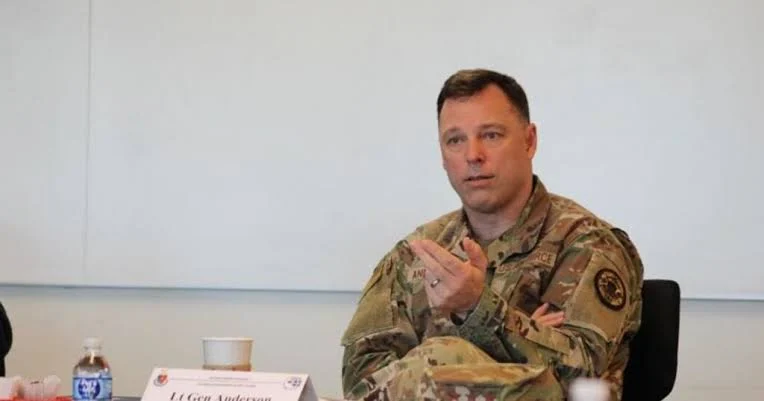
The disclosure came from the Commander of U.S. Air Forces in Europe-Air Forces Africa, Gen Dagvin R.M. Anderson, during a digital press briefing on the outcomes of the African Chiefs of Defence Conference 2026. Anderson used the briefing to highlight the role U.S.-Nigeria intelligence cooperation had played in counterterrorism operations against the Islamic State, also known as ISIS or Daesh.
He explained that while the specific military operation in the Lake Chad Basin has concluded, and most of the U.S. troops involved have since left Nigeria, Washington remains committed to supporting the country through intelligence collaboration at the explicit request of the Nigerian government. “And so that operation in the Lake Chad Basin of Nigeria not only helped the countries in that immediate region; it also helps countries globally as that disrupts the ISIS network,” Anderson said.
He was direct about the shift in posture. “Then, we have withdrawn much of our troops that were just there for that operation, but we are continuing the partnership that Nigeria has asked for to help continue with the intelligence sharing and the understanding that’s necessary to be able to prosecute these difficult tasks,” he added, framing the drawdown not as a retreat from the partnership but as a transition to a different form of cooperation.
Anderson was notably complimentary of Nigeria’s own capabilities, describing the country as a capable partner with a strong military and pointing to the tangible results the joint effort had produced against ISIS. He credited the combination of U.S. intelligence support and Nigerian military action with enabling a successful operation against the second-in-command of the ISIS global network.
“I think the partnership that we’ve shown recently with Nigeria, where Nigeria’s a very capable and large country — it’s got a strong economy; it’s got a large, educated population; it’s got a very capable military,” Anderson said.
He went on to explain the specific value the U.S. brought to the collaboration: “But there are things that we have learned in the counterterrorist fight over several years that we were able to assist and integrate with them to help them with their intelligence and help with the intelligence sharing that eventually led to a cooperative effort to where we were able to bring some unique capabilities that the U.S. brings and be able to prosecute together the number two leader within the ISIS or Daesh organisation who is responsible for much of their global operations, their global media, and their recruiting.”
For Anderson, the episode illustrated a broader lesson about how the U.S. should approach security partnerships going forward — favouring targeted intelligence cooperation over sustained, large-scale foreign troop deployments. “So I think as we go forward, that is an example of how we’re looking at engaging with partners to help them be more effective by only bringing unique U.S. capabilities that allow the partner to be effective in these fights,” he said.
Beyond counterterrorism, Anderson also called for stronger intelligence sharing among African countries more broadly, arguing that closer cooperation was essential to combating terrorism, illicit trafficking and other transnational crimes across the continent. He pointed to a recent example of what that kind of coordination can achieve, describing how effective communication among partners had contributed directly to the interception of a record 31-tonne cocaine shipment that had originated in South America and was transiting along the West African coast.
“I was able to coordinate through our interagency in the United States, through AFRICOM, and then notify some of the partners. And eventually it was a Spanish ship that interdicted the ship that had 31 tonnes of cocaine on it, and it turns out to be the largest interdiction of drugs on the sea that we’ve ever seen,” Anderson said, citing the seizure as one of the clearest recent examples of what coordinated, intelligence-driven cooperation can accomplish beyond the counterterrorism space specifically.
He argued that sustained cooperation among African nations, international partners and the private sector would remain essential going forward, both for addressing ongoing security threats and for supporting the kind of economic stability that attracts investment across the continent.
The now-concluded operation had its origins in February 2026, when the United States deployed approximately 200 military personnel to Nigeria to support intelligence, surveillance and counterterrorism operations specifically in the Lake Chad Basin. That deployment came amid a period of growing security cooperation between Washington and Abuja, as both governments intensified efforts against ISIS and other terrorist groups active in the region.
The troop deployment itself followed the redesignation of Nigeria as a Country of Particular Concern by U.S. President Donald Trump, who had at the time vowed to intensify American support for the fight against terrorist groups operating within the country. That commitment translated into direct military action on more than one occasion: on 25 December 2025, the U.S. carried out air strikes on two terrorist enclaves in the Bauni Forest in Tangaza Local Government Area of Sokoto State.
The broader partnership reached its most significant milestone in May 2026, when a joint U.S.-Nigerian operation killed Abu-Bilal Al-Minuki, the second-in-command of ISIS, at his hideout in Borno State — the same operation Anderson referenced as the clearest evidence of what the collaboration had achieved before the bulk of U.S. forces were withdrawn.
Author