
State Police Nigeria Reform a “Child of Necessity
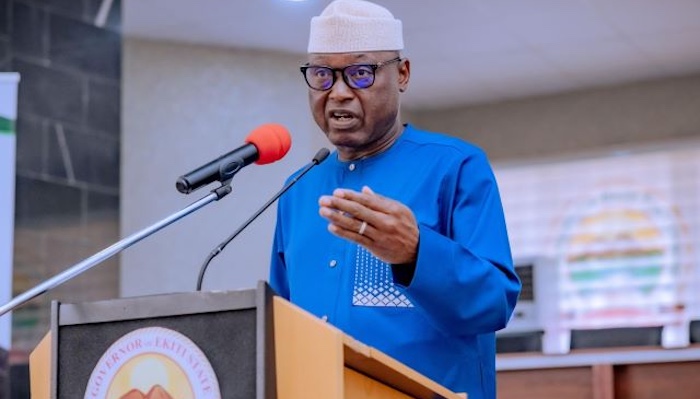
Governor Biodun Oyebanji of Ekiti State has given a firm assurance that all 36 state governors are fully united behind the creation of state police and are committed to doing everything necessary to bring the initiative to fruition.
Oyebanji made the declaration while speaking with newsmen after presenting his Certificate of Return for a second term to President Bola Tinubu at the State House in Abuja on Wednesday. “We are ready for state police. We are thankful to the National Assembly for the constitutional amendments, and we are waiting for them to be transmitted to the state Houses of Assembly,” he said, adding, “the governors have made up their minds that they are going to give it speedy approval so that we can start implementation.”
The governor revealed that the National Economic Council had already deliberated extensively on the issue, with most states having formally submitted their positions in support of the initiative — a signal that the consensus behind state policing extends well beyond informal political agreement into documented institutional backing.
Senate Leader Opeyemi Bamidele, who also spoke at the occasion, went further in characterising the reform, describing the establishment of state police as inevitable rather than merely likely. He argued that the initiative had moved beyond narrow political calculation to become a practical response to Nigeria’s evolving security realities. “It is important that we all know that state police is a child of necessity. It is no longer about political interests or politics. All of us are on the same page that there is a need for this,” he said.
Bamidele, who accompanied Oyebanji on the visit to the President, used the occasion to address one of the most persistent concerns surrounding the proposed reform: the risk that state governors could exploit a state police outfit for political ends. He acknowledged that such fears were not unreasonable. “There will always be fears and concerns. Whether those concerns are well-founded is another issue altogether, but we are not unmindful of them. In most cases, they are legitimate concerns,” he said.
He drew a comparison to the current policing arrangement, noting that even under the existing federal police structure, governors — in their capacity as chief security officers of their states — already retain some influence over how federal police are deployed within their jurisdictions, to the extent that the current system allows.
Bamidele argued that the proposed legal framework for state police would go further, building in mechanisms specifically designed to prevent or significantly reduce opportunities for abuse. “We are putting mechanisms in the law, as we are amending the constitution, that will prevent or minimise instances of abuse by state governors. It is not everything that can go into the constitution, but what is important is that we are taking these concerns into consideration,” he explained.
He disclosed that the safeguards would not stop at the constitutional amendment stage. According to Bamidele, more granular operational protections would follow in subsequent amendments to the Police Act, once the constitutional groundwork establishing state police has been concluded.
“In the amendment to the Police Act that will follow, we will spell out more details — details that cannot possibly go into the Constitution of the Federal Republic of Nigeria,” he said, framing the two-stage legislative approach as a deliberate strategy to balance constitutional principle with the kind of operational detail that requires a different legal instrument altogether.
Bamidele further described the widespread support for state policing among the governors as evidence of a growing national consensus on the need to decentralise policing in response to Nigeria’s ongoing security challenges. He expressed confidence that once the National Assembly transmits the constitutional amendment, state Houses of Assembly across the country would move quickly to endorse it.
“All the governors, or most of the governors, are on the same page with us, and that will be demonstrated by the speed with which the bill will receive concurrence in their state Houses of Assembly by the time we eventually transmit it,” he said, signalling that the coming weeks and months could bring rapid legislative movement on one of Nigeria’s most closely watched proposed security reforms.
Author