
Omoyele Sowore Seeks Bail Restoration as Court Weighs Arguments Over Cybercrime Trial and Detention
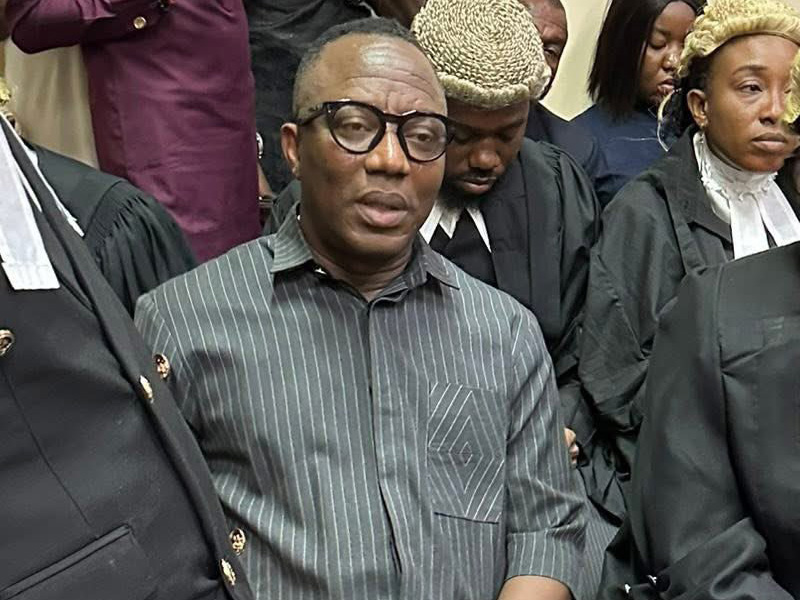
The Federal High Court in Abuja has fixed June 30 to rule on an application filed by activist, publisher and former presidential candidate Omoyele Sowore seeking the restoration of his bail after it was revoked last week, leading to his detention at the Kuje Correctional Centre.
The ruling date was announced on Wednesday after Justice Mohammed Umar heard arguments from both the defence team and lawyers representing the State Security Service (SSS), which is prosecuting Sowore over alleged cybercrime offences linked to social media posts made last year.
The case, which has attracted significant public attention and criticism from civil society organisations, has become another major legal battle involving one of Nigeria’s most outspoken government critics.
At the centre of the dispute is the court’s June 16 decision to revoke Sowore’s bail and issue a bench warrant for his arrest after he failed to appear for a scheduled hearing.
Sowore, who was arrested shortly after Monday’s proceedings and immediately remanded in prison, is now asking the court to reverse that decision and restore the bail conditions previously granted to him.
Defence Seeks Return to Previous Bail Arrangement
During Wednesday’s proceedings, Sowore’s lawyer, R.O. Adakole, who represented Senior Advocate of Nigeria Adeyinka Oloyede-Fusika, urged the court to restore the position that existed before June 16.
The defence relied on multiple legal documents filed before the court, including a motion on notice dated June 17 and officially filed on June 19.
The application was supported by a 25-paragraph affidavit deposed to by Emmanuel Larry.
The defence also referenced a further affidavit filed on Wednesday and a reply on points of law dated June 23.
Adakole urged the court to exercise its discretion in favour of the defendant.
He asked Justice Umar to grant the application “in the interest of justice” and disregard the arguments presented by the prosecution.
The defence maintained that Sowore had complied with previous court processes and that restoring his bail would be consistent with principles of fairness and due process.
SSS Opposes Application
The State Security Service opposed the application.
Lead prosecution counsel, Akinlolu Kehinde, a Senior Advocate of Nigeria, informed the court that the prosecution had submitted a 25-paragraph counter-affidavit alongside a written address urging the court to reject Sowore’s request.
According to him, the activist had not provided sufficient and truthful information to justify the court exercising its discretion in his favour.
The prosecution insisted that the application lacked merit and should be dismissed.
The government further argued that the circumstances surrounding Sowore’s absence from court justified the earlier revocation of his bail.
After hearing arguments from both parties, Justice Umar adjourned the matter until June 30 for ruling.
Request for Temporary Release Rejected
Shortly after the adjournment, Sowore’s legal team made another application.
The defence requested that Sowore be released to his lawyers pending the court’s ruling on the substantive application.
Adakole argued that the activist was represented by a senior advocate of impeccable character whose undertaking to produce him in court should be sufficient assurance.
However, the prosecution objected.
Government lawyers argued that such a request could not be made orally and should instead be formally filed before the court.
Justice Umar also expressed reservations about the request.
“If I release him, won’t that mean I have ruled on the application?” the judge asked.
The court subsequently declined the request and ordered that the existing arrangement remain in place until the June 30 ruling.
This means Sowore will remain at the Kuje Correctional Centre pending the court’s decision.
Origin of the Cybercrime Charges
The legal battle stems from social media posts Sowore made last year on X and Facebook in which he referred to President Bola Tinubu as a criminal.
The State Security Service subsequently filed cybercrime charges against him.
The agency formally arraigned him before the Federal High Court in Abuja in December 2025.
At the time, Sowore pleaded not guilty to the charges.
The court granted him bail on self-recognition.
The matter later progressed to the defence stage after the court dismissed his no-case submission on May 13 and ordered him to open his defence.
However, fresh controversy emerged after Sowore filed an application asking Justice Umar to withdraw from the case.
Allegations of Judicial Bias
Sowore had requested that the judge recuse himself from further handling the matter, alleging bias.
The court fixed June 15 for ruling on the recusal application.
According to the defence, Sowore appeared in court on that date.
However, proceedings did not hold.
The defence said that after discovering the court would not sit, Sowore informed court officials that he intended to travel to Lagos and requested that any new hearing date be fixed in July.
The matter was subsequently rescheduled for June 16.
When Sowore failed to appear on that date, the court revoked his bail and issued a bench warrant for his arrest.
On Monday, Justice Umar dismissed Sowore’s application seeking his withdrawal from the case.
The judge then ordered his remand at the Kuje Correctional Centre pending the hearing of his application challenging both the bail revocation and arrest warrant.
Civil Society Groups Condemn Decision
The court’s decision to revoke Sowore’s bail has generated widespread criticism from several political and civil society organisations.
Groups including Amnesty International Nigeria, the Socio-Economic Rights and Accountability Project (SERAP), the #EndBadGovernance movement and the African Action Congress (AAC) have all expressed concern.
The organisations argue that the decision raises serious questions about due process, freedom of expression and the treatment of critics of government policies.
Many have called for a fair and transparent judicial process.
The African Action Congress, Sowore’s political party, described the development as unfair and politically motivated.
The party argued that Sowore had honoured the earlier court date and that circumstances surrounding the rescheduling should have been taken into consideration.
The controversy has further intensified public debate about the balance between national security laws and constitutional rights.
A Significant Test for Freedom of Expression
Legal analysts say the case could have wider implications beyond Sowore himself.
The proceedings have become a focal point in discussions surrounding freedom of expression, digital rights and the application of Nigeria’s cybercrime laws.
Critics have repeatedly warned against broad interpretations of cybercrime legislation that could potentially restrict political speech.
Government authorities, however, maintain that the laws are necessary to protect national security and prevent abuse of digital platforms.
The June 30 ruling could therefore become a significant moment in the case.
If the court restores Sowore’s bail, it may ease tensions surrounding the proceedings.
If the application is rejected, legal battles over his detention and trial are likely to intensify.
For now, all eyes remain on the Federal High Court in Abuja as one of Nigeria’s most closely watched political and legal cases enters another critical phase.
Author