
Senior Lawyers Condemn ‘Unlawful’ Substitutional Arrest Under ACJA Section 7
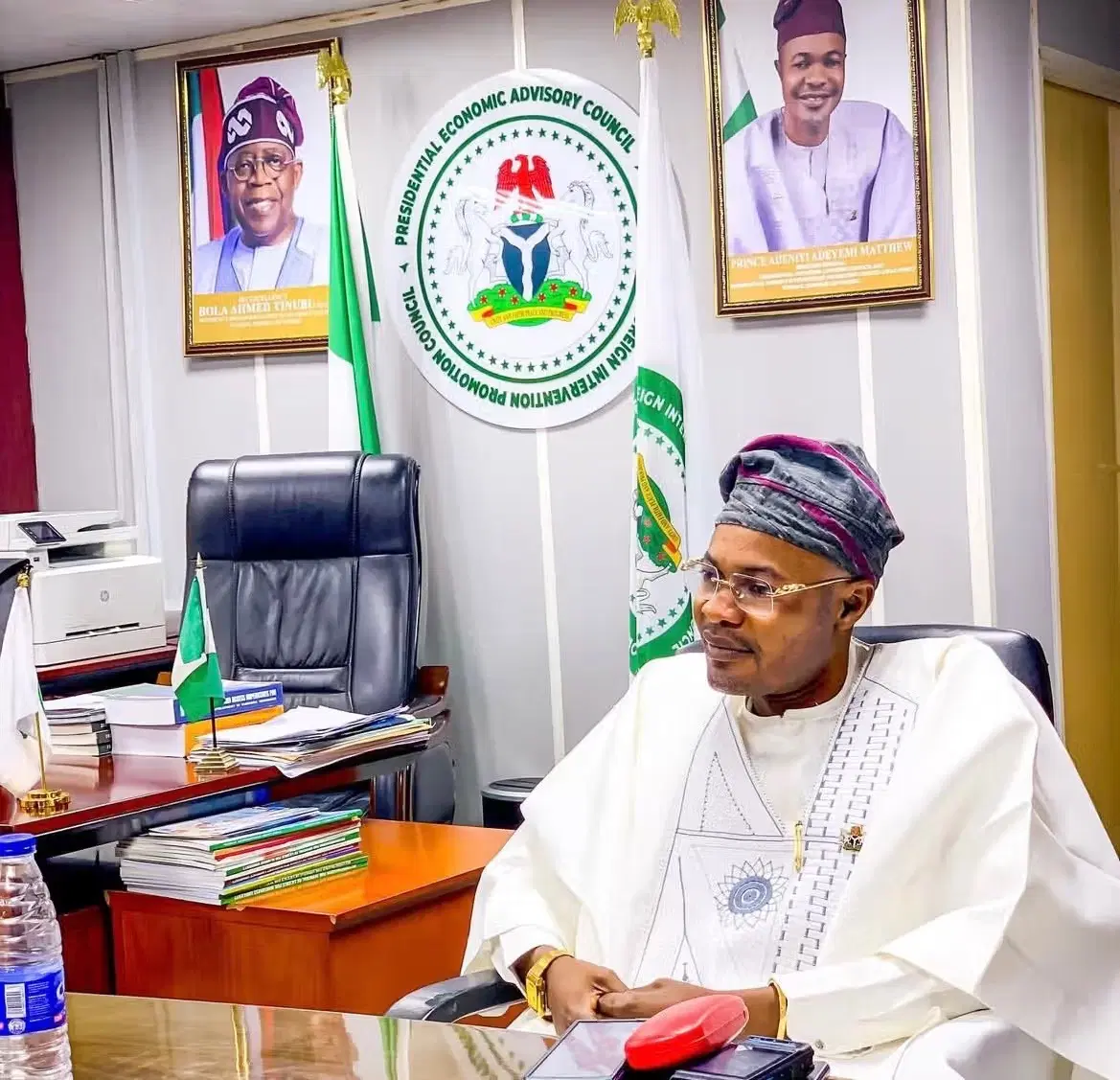
The controversy surrounding the alleged N1.3bn Presidential Foreign Intervention Promotion Council scandal deepened dramatically on Monday after the Nigeria Police Force reportedly arrested the father of the council’s embattled promoter, Prince Adeniyi Adeyemi, intensifying scrutiny of an affair already linked directly to the Presidency.
Adeyemi, who claims to be the council’s Director-General, is currently standing trial before the Federal High Court in Abuja on charges of conspiracy, forgery and impersonation. The Federal Government has listed Chief of Staff to the President, Femi Gbajabiamila, and 10 others as prosecution witnesses in the case, a detail that has kept the scandal firmly tethered to the corridors of power.
According to sources familiar with the matter, Adeyemi’s father, along with a family friend who had visited him on Monday morning, was arrested by police officers, leaving Adeniyi’s aged mother in shock. Senior lawyer Femi Falana (SAN) and eyewitnesses in the area confirmed the arrest in separate telephone interviews on Monday.
“Police stormed the house of the parents of Prince Adeyemi Adeniyi on Plot 3, Adeniyi Dynasty, behind Technical College, Road Safety Area, Ogbomoso,” Falana said. “The father has been arrested. There is no legal basis for substituted arrests. The young man has promised to show up in court, so why arrest his father?”
A neighbour of the Adeyemis described the scene at the residence, saying police officers arrived at the premises in four vehicles before allegedly taking the father away. “They came with four vehicles, and they started harassing them and eventually took the father away. They didn’t allow the neighbours to intervene before they took him away. At the moment, there is a man in blue clothes patrolling the area,” the neighbour said.
Another neighbour, speaking on condition of anonymity, confirmed the account. “Baba was taken away to Agbomire police station with someone who came to visit them this morning. They left the mother, who is currently in shock, but we have moved her away,” the eyewitness said in Yoruba.
The arrest, at Adeyemi’s parents’ residence in Ogbomoso, Oyo State, triggered fresh legal and human rights concerns nationwide, with the President of the Nigerian Bar Association, Mazi Afam Osigwe (SAN), and several other Senior Advocates of Nigeria warning that Nigerian law does not permit the arrest of relatives merely to compel a suspect to surrender or assist investigators. The lawyers were, however, careful to note that such an arrest would be lawful if Adeyemi’s father was himself a suspect or a person of interest in the investigation.
In a telephone interview, Osigwe urged caution against rushing to conclusions, noting that the circumstances surrounding the arrest remained unclear. “I’m careful about saying such things because I don’t know why his father was arrested,” he said, adding that the law does not permit the arrest of one person in place of another. “If a person is arrested for the purpose of putting pressure on a suspect who cannot be found, or to compel a person who is being investigated to surrender, then it is unlawful,” he said.
He clarified that the position would differ if the father was arrested in his own right. “But if the person is being arrested in the person’s own right as a suspect or a person of interest in any investigation, then the law would permit that,” Osigwe said, adding that the public should seek clarification from the police rather than speculate. “We don’t know the reason for the arrest. People may simply assume that because the son is involved in a criminal case, the father was arrested for that reason. We need to enquire from the police. It’s not too difficult.”
Another Senior Advocate of Nigeria, Prof. Sam Erugo, was more direct in his assessment, describing the arrest as unlawful under Nigerian law. “It is unlawful to arrest a father for an offence allegedly committed by the son,” Erugo said, citing Section 7 of the Administration of Criminal Justice Act, 2015, which he said expressly prohibits arrest by proxy or in lieu. He also called on the police to clarify the circumstances surrounding the arrest, saying, “The Nigerian public deserves more information from the arresting authority.”
Senior Advocate of Nigeria Isiaka Olagunju maintained that criminal responsibility is personal and cannot be transferred to relatives. “It is unlawful to arrest a suspect’s father or relatives in a criminal case,” he said, though he noted that law enforcement authorities may lawfully arrest a relative if there is evidence directly linking that person to the alleged offence. “Except if the father is also involved in the case, then the police can arrest,” he added.
Senior Advocate of Nigeria Wolemi Esan described the practice of “arrest in lieu” as having no place in Nigeria’s legal system, citing Section 7 of the ACJA, 2015, and Section 20 of the Nigeria Police Act, 2020, both of which forbid the arrest or detention of any person as a substitute for a suspect. “Arrest in lieu has no place in Nigeria’s legal system,” Esan said.
“The Supreme Court has consistently denounced the practice as unconstitutional and a clear violation of the fundamental rights of those unlawfully arrested.” He further cited Section 35(6) of the 1999 Constitution (as amended), which guarantees redress for victims of unlawful arrest or detention, adding, “Any law enforcement agency that engages in arrest in lieu acts in defiance of both statutory and constitutional safeguards.”
The most detailed legal opinion came from Senior Advocate of Nigeria Dr. Wahab Shittu, who said the police cannot lawfully arrest the father or any other relative of a criminal suspect merely to compel the suspect to surrender or cooperate with investigators, describing the practice as “substitutional arrest” expressly prohibited under Nigerian law. Shittu explained that the police power of arrest is not absolute but is regulated by the Constitution and the Administration of Criminal Justice Act, 2015. “The power of the Nigerian Police Force to arrest is neither unlimited nor unconditional,” he said.
He noted that Section 35(1) of the Constitution guarantees the right to personal liberty, while Section 36(8) provides that criminal liability is personal and cannot be transferred to another person. He also cited Section 7 of the ACJA, 2015, which expressly provides that “a person shall not be arrested in place of a suspect,” explaining that the provision was introduced to end the long-standing practice of arresting relatives to compel suspects to surrender. He further referenced Sections 6 and 8 of the ACJA, which require police officers to inform suspects of the reasons for arrest, ensure humane treatment, and limit arrest powers to persons reasonably suspected of committing an offence.
Citing judicial precedents including ACB Ltd v. Okonkwo, Akpan v. State, and Ahamba v. State, Shittu said Nigerian courts had consistently condemned substitutional arrests even before the enactment of the ACJA. “The gravity of an allegation, whether ordinary theft or alleged multi-billion-naira public fraud, does not alter the personal nature of criminal responsibility or expand the statutory and constitutional limits on the power of arrest,” he said.
Applying these principles to the reported arrest, Shittu noted that Adeyemi is already standing trial before the Federal High Court and is reportedly on bail, indicating he is not a fugitive from justice. He observed that there was no public indication that Adeyemi’s father was independently suspected of forgery, impersonation or any related offence, and said that in such circumstances there would be no legal basis for arresting a relative to compel the suspect’s appearance.
“If the true purpose of the operation was to pressure Adeyemi in connection with his pending prosecution or public allegations, that would amount to the very substitutional arrest prohibited by Section 7 of the ACJA and condemned by the courts,” he said, while cautioning that his opinion was based on publicly available information and that the position would differ if police could establish independent evidence linking the father to the alleged offences.
“Should the police demonstrate that the father was arrested on the basis of an independent, particularised reasonable suspicion of his own complicity, the arrest would be assessed as an ordinary arrest of a suspect and not as a substitutional arrest,” he added, noting that the burden of proof rests on the police.
Shittu also outlined remedies available to victims of unlawful arrest, noting they may approach the court under the Fundamental Rights (Enforcement Procedure) Rules, 2009, seeking declarations, release where applicable, and damages, citing Section 35(6) of the Constitution, which entitles anyone unlawfully arrested or detained to compensation and a public apology from the appropriate authority. He urged the police to publicly disclose the legal basis for any arrest of a suspect’s relative, stressing that “a bare family relationship is not a legal basis for arrest.”
Amid the mounting criticism, the police remained largely tight-lipped. Force Headquarters spokesman, Anietie Iniedu, despite being told that operatives from the FCID carried out the arrest, asked for the exact unit involved. “I have not been briefed on the arrest. Who picked him up? Which section? Which section in FCID? The police force is large. Tell me the section, so, I can find out from them,” he said. Subsequent efforts to reach him proved unsuccessful, and messages sent to him seeking comment on the matter, including on whether forensic examination had been conducted on Gbajabiamila’s signature, went unanswered.
The Oyo State Police Public Relations Officer, Olayinka Ayanlade, in Ibadan, said the case fell outside her jurisdiction. “The case involving Prince Adeniyi Adeyemi Matthew is a matter of national interest and is currently under investigation by the Force Criminal Investigation Department, Force Headquarters, Abuja. As such, it falls outside my jurisdiction. Consequently, anyone seeking updates regarding the alleged arrest of his parents in Ogbomoso or any other developments in the case is kindly advised to contact the Force Public Relations Officer, Force Headquarters, Abuja, or the FCID Liaison Public Relations Officer for accurate and official information,” she said.
Separately, the Office of the Accountant-General of the Federation moved to distance itself from allegations that public funds had been released to the council, insisting the body never operated a functional government account despite applying to open one. The Director of Press and Public Relations in the office, Bawa Mokwa, said in a telephone interview that an application had been initiated to open an account for the council, but the process was never completed because the applicant failed to provide the required signatories needed to activate the account.
“An account that is not concluded and does not become operational is not an account. They actually applied, but when it got to the stage where they would provide the signatories, they couldn’t provide,” he said.
He explained that organisations seeking to open government accounts must complete a prescribed process, including nominating authorised signatories. “Usually, organisations that are duly established will bring the necessary documents. They started the process, but when it got to the stage of providing the signatories, he couldn’t provide those people. So, there was no operational account,” Mokwa said.
Addressing claims that the council had received funds following its inclusion in the 2026 Appropriation Act, he dismissed the allegations, noting that implementation of the budget only began on July 1, after the controversy had already erupted. “On the issue of the budget allocation, yes, it has been mentioned as if the Budget Department gave him a budget, but it is just July 1 that we started the implementation of the 2026 budget. By that time, his case had already started,” he said, adding, “If he doesn’t have an operational account, where would they put the money? There wasn’t any money given.”
His clarification comes amid growing scrutiny over the appearance of the council in the 2026 federal budget despite an earlier disclaimer by the Presidency that the body was not recognised by the Federal Government. Efforts to obtain the reaction of the Central Bank of Nigeria on the matter were unsuccessful, with an enquiry sent to the Acting Director of Corporate Communications, Mrs Hakama Sidi-Ali, yet to receive a response.
Meanwhile, lawmakers moved to shield the Senate and its President, Godswill Akpabio, from blame over the controversial N1.3bn allocation, insisting that the legislature neither created the agency nor originated its budget. The defence comes amid mounting public outrage over the discovery of the allocation for an agency the Presidency repeatedly described as non-existent, and allegations that the National Assembly failed in its oversight responsibilities, particularly after reports emerged that the allocation was approved without Adeyemi or any council official appearing before the Senate Committee on Establishment and Public Service to defend the budget.
The Chairman of the Senate Committee on Establishment and Public Service, Senator Cyril Fasuyi, distanced his committee from the agency entirely. “I am not sure I have heard of that PFIPC before. Every MDA falls within the oversight of its relevant Senate committee. But I honestly don’t know the committee in charge of this PFIPC.
It is not under the Senate Committee on Establishment and Public Service where I serve as chairman,” he said, listing the agencies that actually fall under his committee as training centres in Nigeria, the Office of the Head of Service of the Federation, the Civil Service Commission, the National Assembly Service Commission, the Salaries and Wages Commission, and PENCOM.
A chairman of another Senate committee, speaking on condition of anonymity, similarly defended the legislature, warning against attempts to drag Akpabio and lawmakers into the controversy without evidence. “Akpabio has nothing to do with the creation of any agency, especially when it has something to do with ‘presidential council or anything’ as the name implies.
You see, I have listened and also have seen comments on what people write or say about the said agency. Many went out of their way to ask why the Senate approved its budget. This is to tell you we are following all the drama,” he said, adding that commentators had wrongly assumed the Committee on Establishment and Public Service supervised the agency.
A principal officer of the Senate, who also asked not to be named, explained the legislative process in detail, noting that agencies are established either by legislative or executive action, and that budget proposals originate from the Executive rather than the National Assembly. “For anybody to fully understand how the Senate works, he needs to look at the process. First, I am a legislator not the executive. Now, let me talk on that agency.
There are two creations of any establishment in Nigeria. It is either by legislative or executive. For instance, the majority of these commissions or agencies are creation of executive act. So, by looking at this particular agency’s name, Presidential Foreign Intervention Promotion Council, you can tell easily tell that it is not the creation of the legislature. Secondly, there is the need to find out its mandate. Again, the FG also has a duty to refer such an agency to the National Assembly after it is created for ratification,” he stated.
He explained that the Budget Office invites ministries, departments and agencies to submit budget proposals, which then undergo scrutiny by the Ministry of Budget and Economic Planning, the Budget Office and the Ministry of Finance before being transmitted to the National Assembly, all vetted under the government’s envelope budgeting system to align with policy priorities and projected national revenue. “Again, when we are talking of vetting, we will also consider allocation of funds because what we use here in Nigeria is the envelope system.
This implies that when you submit your request, the ministry and other bodies would have looked at it vis-à-vis the policy alignment of the government. How much are we planning to spend and what will be the national revenue? This is because if MDAs are allowed to do as they wish, we may not be able to fund all. It may exceed what the entirety is able to rake in as revenue. This is why both the budget office and the economic planning ministry play a key role with finance ministry,” he said.
He insisted lawmakers only consider budget estimates forwarded by the Executive and rely on its vetting process. “It is not the job of the Senate or the National Assembly to determine what the budget should be for a particular year. That is why it is sometimes laughable when the media bring on guests who don’t really understand legislative functions to discuss.
Is it Akpabio that earmarked the PFIPC budget or included it in the budget? Are we the ones who gave the agency CBN-approved accounts? Honestly, I am not bothered about the Executive as far as this is concerned. But it is wrong to keep harassing and dragging the legislature into what it knows nothing about,” he said.
Responding to why the Senate did not scrutinise the agency further before approving its budget, the senator said lawmakers only examine figures in appropriation bills, not the legality or creation of agencies already captured in the budget. “Hold on, let me explain. There is little or nothing we can do once a budget finds its way into an appropriation bill for a particular year. As lawmakers, we vet only budgets, not the creation of MDAs.
That is not our job. The exercise is budget defence. During budget defence, you only look at figures; nobody examines establishment details because that is not the mandate,” he said, adding that lawmakers assume the Executive has already conducted due diligence before transmitting appropriation bills. “This is because for any figure to find its way into the budget, you would assume the Executive has done its own part. As a member of the APC, I am not condemning the Executive for what happened. But if you want to investigate this matter, know where to focus. Don’t drag the legislature into issues like this,” he said.
Drawing a comparison with ministerial screening, he argued that security agencies, not the National Assembly, bear responsibility for vetting nominees and agencies, citing the screening of former Kaduna State Governor Nasir El-Rufai for a ministerial appointment. “For instance, when you screen a minister, the documents submitted are forwarded to the DSS, police and other agencies for vetting. It is not the function of the Senate to verify documents, because it is assumed the Executive and relevant agencies have done their due diligence.
I hope you still remember the controversy surrounding former Kaduna State Governor, Mallam Nasir El-Rufai’s ministerial nomination. Where did it start? It was from the national security apparatus and the DSS. Our job is to work on verified documents transmitted to us and then proceed to budget defence as long as the MDAs are captured in the appropriation,” he said, adding that the Senate cannot anticipate irregularities once an appropriation bill is submitted by the President. “I believe you can now understand why I am livid at those calling out Akpabio and blaming the National Assembly for not knowing that the PFIPC is a fake agency,” he stated.
The Senate is expected to address the controversy when plenary resumes on Tuesday, a debate that follows a Freedom of Information request by the Socio-Economic Rights and Accountability Project, which asked the leadership of the National Assembly to disclose documents relating to the approval of the allocation and to investigate how funds were appropriated for a council the Presidency has publicly disowned. The controversy also follows exclusive revelations that the Office of the Secretary to the Government of the Federation received and processed official correspondence from the council months before the Presidency insisted the body did not exist.
Adding to the pressure on authorities, the Committee for the Defence of Human Rights on Monday called on the Inspector-General of Police, Olatunji Disu, to order the immediate and unconditional release of Adeyemi’s father, describing his continued detention as unlawful and unconstitutional. In a statement jointly signed by its National President, Yinka Folarin, and National Secretary, Idris Afees, the CDHR condemned what it described as a case of substitute arrest, insisting the practice is “unlawful, unconstitutional, arbitrary and incompatible with every known principle of justice and the rule of law.”
“The Nigeria Police Force is a professional institution established to enforce the law, not to circumvent it,” the group said. “The powers of arrest vested in the police must be exercised strictly within constitutional and statutory limits. Any deviation erodes public confidence and undermines the integrity of the criminal justice system.”
The organisation urged the Inspector-General to ensure the immediate release of Adeyemi’s father and any other person allegedly detained in connection with the matter, unless credible evidence links them personally to a criminal offence. “Accordingly, the CDHR calls on the Inspector-General of Police to order the immediate and unconditional release of Adeyemi’s father and any other person who may have been unlawfully detained in connection with this matter, unless there exists credible evidence linking them personally to the commission of a recognisable criminal offence,” the statement added. The group also cautioned against using the police as an instrument of coercion.
“We equally urge the Inspector-General of Police to resist every temptation to allow the Nigeria Police Force to become a manipulative instrument in matters capable of undermining public confidence in the institution,” it said, adding that “the office of the Inspector-General carries enormous constitutional responsibility, and the nation expects its occupant to preserve the hard-earned reputation of the Force by demonstrating unwavering commitment to professionalism, impartiality, respect for human rights and strict adherence to the rule of law.”
The CDHR cited Section 35(1) of the 1999 Constitution, which guarantees the right to personal liberty, Section 36(5), which presumes every accused person innocent until proven guilty, and Section 7 of the Administration of Criminal Justice Act, 2015, which it said expressly prohibits substitute arrest. “Criminal liability is personal; no citizen may be punished, intimidated or detained for the alleged conduct of another.
Section 7 of the Administration of Criminal Justice Act, 2015, expressly provides that a person shall not be arrested in place of a suspect. This provision leaves no room for ambiguity,” the group said, also citing Article 6 of the African Charter on Human and Peoples’ Rights, Article 9 of the International Covenant on Civil and Political Rights, and Articles 3 and 9 of the Universal Declaration of Human Rights, all of which prohibit arbitrary arrest and guarantee personal liberty.
The CDHR further noted that reports indicated Adeyemi had expressed willingness to present himself to the authorities, arguing there was no legal justification for arresting his father or any other family member. “Law enforcement must never descend into intimidation, coercion or collective punishment.
No one should lose his liberty because of another person’s alleged offence. The law is clear, and it must be obeyed by all, especially those entrusted with enforcing it,” the statement read. The group added that it would continue monitoring developments and would pursue all available constitutional, judicial and international human rights mechanisms should the alleged unlawful detention persist.
Author