
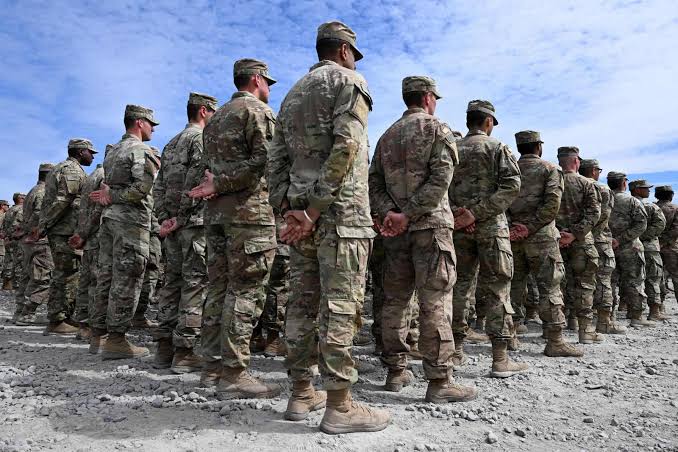
United States forces have begun a series of military training programmes for Nigerian troops, covering unmanned aircraft systems, combat casualty care and other operational skills.
The training is taking place at an operating location in Bauchi State as part of broader security cooperation between the United States and Nigeria aimed at strengthening military capability, readiness and long-term partner capacity.
A report by the United States Africa Command said the joint training covers Combat Lifesaver and Tactical Combat Casualty Care instruction, weapons familiarisation, camouflage, water treatment and testing, explosive ordnance disposal, small-unit tactics and unmanned aircraft systems.
“U.S. and Nigerian forces are conducting a series of training events at Operating Location Bauchi, Nigeria, aimed at sharing military expertise, strengthening partner capacity and building relationships between service members from both nations.
“Training conducted between U.S. and Nigerian forces at Bauchi has included Combat Lifesaver and Tactical Combat Casualty Care instruction, weapons familiarisation, camouflage, water treatment and testing, explosive ordnance disposal, small-unit tactics and unmanned aircraft system training,” the report said.
The training programmes were developed based on areas where US forces have expertise and skills identified by Nigerian military personnel as beneficial.
A logistics officer with the US Army Southern European Task Force, Africa, and operations officer at OL Bauchi, Capt Gabriel Feingold, said Nigerian military leadership selected from a range of training options presented by US personnel.
“We bring them a list of several different training topics, and they select what they think would be most beneficial for them,” Feingold said.
Unmanned aircraft systems attracted particular interest among Nigerian personnel, with Sgt Mark Murphy, an intelligence analyst assigned to the 13th Combat Sustainment Support Battalion, leading about 10 members of the Nigerian Air Force Special Forces Regiment through the training.
The session began with about 45 minutes of instruction before participants received hands-on experience operating the aircraft.
Murphy also trained the personnel on techniques for deploying unmanned aircraft systems and integrating information gathered from them into military operations.
“They were really excited with being able to get hands-on time with it,” Murphy said, adding that the Nigerian personnel were interested in receiving further training.
The joint exercises also created opportunities for American and Nigerian service members to build relationships and improve interoperability.
“It helps build relationships between Soldiers and the partner force, especially at the lower levels,” Feingold said.
Beyond the formal exercises, US and Nigerian personnel also participate in basketball and volleyball when operational commitments and weather conditions permit.
The report said additional training opportunities were being developed at OL Bauchi as both countries continue to identify areas where their forces can share expertise and strengthen operational capabilities.
“Additional training opportunities are being developed at OL Bauchi as U.S. and Nigerian forces continue identifying areas where their personnel can share expertise and train together,” it said.
The development follows AFRICOM’s disclosure in July that the United States had withdrawn most of the troops deployed to Nigeria for a specific counterterrorism operation while retaining intelligence-sharing and security cooperation with the country.
Author