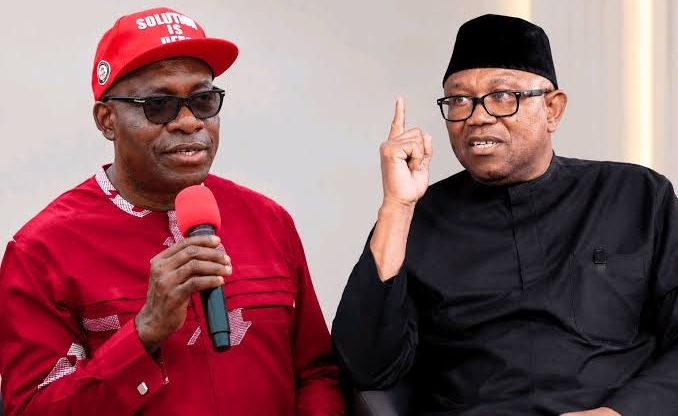

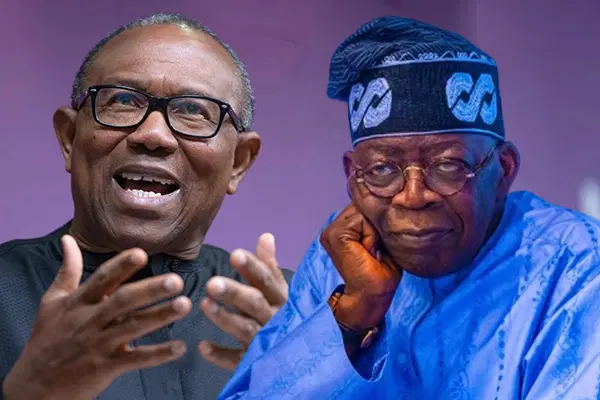
Nigeria Democratic Congress (NDC) presidential candidate Peter Obi has called on President Bola Tinubu to step aside ahead of the 2027 general election, saying the president no longer has the capacity to address Nigeria’s worsening economic and security challenges.
Speaking during an interview on Sunday Politics, Obi said Tinubu’s performance as president has fallen short of the expectations many Nigerians had based on his tenure as governor of Lagos State.
“The Bola Tinubu that was governor is not the one that is president today. He’s tired. He should be allowed to retire in peace, and then go home,” Obi said.
The former Anambra State governor argued that Nigeria needs leadership with the energy and commitment to reverse what he described as the country’s steady decline.
“As it is right now, Bola Tinubu is leading us nowhere. He should just step aside. Yes, he doesn’t have the capacity to do the job,” he added.
Obi said national discourse should focus on pressing issues such as poverty, hunger, insecurity and education rather than political personalities.
Citing recent reports by international organizations, he expressed concern over rising poverty levels and the growing number of out-of-school children.
“The World Bank has just said that 79% of Nigerians are going to face poverty. That should be the issue we should be discussing,” he said.
He also pointed to worsening food insecurity, noting that millions of Nigerians are projected to face hunger.
According to Obi, the 2027 election should be centered on policies that improve the lives of ordinary Nigerians.
Reacting to remarks by former U.S. President Donald Trump commending Tinubu’s efforts to combat insecurity, Obi acknowledged the praise but maintained that the government’s response remains inadequate.
“Thank you to President Trump. But we need to do more. I’ve heard people say he has done his best, but with the crisis we are facing, his best is not enough.”
Obi referenced recent abductions in Zamfara State as evidence that insecurity remains a serious national challenge requiring stronger leadership.
He argued that addressing poverty and expanding access to education are critical to reducing crime and insecurity across the country.
“You can’t create mass poverty and think you can deal with insecurity. The more you put people out of poverty, the more you reduce criminality. You need to invest massively in education.”
The former governor said he would adopt a more proactive approach to security if elected president, pledging to prioritize the protection of Nigerians.
“Whatever it takes to secure any Nigerian, I will do that. If your people are dying, you should be ready to die. You’re the president.”
On his presidential ambition, Obi insisted his motivation is not personal.
“I’m not desperate to be Nigerian president. I’m desperate to see Nigeria work.”
He added that he would support any leader capable of delivering good governance and reiterated his vision of building a united, peaceful and prosperous Nigeria where citizens enjoy equal opportunities regardless of ethnicity or religion.
Author