

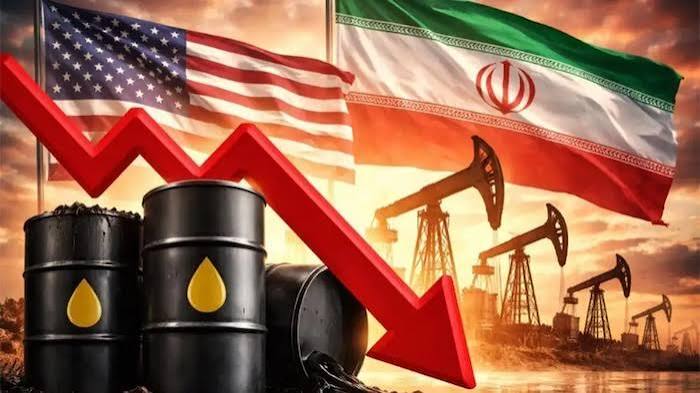
Global oil prices fell sharply on Monday as a pause in hostilities between the United States and Iran renewed hopes of a ceasefire and progress toward reopening the Strait of Hormuz, easing concerns over global energy supplies.
Brent crude dropped 5.2% to around $92 a barrel, while U.S. West Texas Intermediate (WTI) crude fell 5.4% to $84.45 a barrel after both sides refrained from further military escalation over the weekend.
The decline followed 13 days of attacks on Iranian targets, after which the United States suspended further strikes. President Donald Trump’s envoy to the United Nations said the administration was “giving talks some space.”
Iran also announced it would halt retaliatory attacks against regional neighbours, offering relief to Gulf shipping routes and the global oil market.
The latest tensions had erupted after Iran targeted vessels passing through the Strait of Hormuz, disrupting a fragile ceasefire and triggering renewed conflict. The crisis later expanded beyond the strategic waterway, with Iran-backed Houthi rebels attacking Saudi-linked vessels in the Bab al-Mandeb Strait, another key global shipping route.
The escalation had pushed Brent crude above $100 a barrel for the first time since May. However, reports that shipping continued through the Red Sea, coupled with signs of renewed diplomacy, helped reverse some of those gains.
Iran’s Foreign Ministry spokesman, Esmaeil Baqaei, said discussions with Oman focused on developing “common principles and operational mechanisms” to ensure safe navigation through the Strait of Hormuz while respecting the sovereignty of both countries.
Separately, reports indicated Pakistan is exploring efforts to revive US-Iran peace negotiations following diplomatic initiatives backed by China.
Brent crude briefly fell below $90 a barrel during Monday’s trading before recovering slightly.
National Australia Bank economist Sally Auld said the latest developments suggested both sides were showing greater willingness to de-escalate as oil prices climbed above $100 a barrel.
The easing geopolitical tensions also reduced fears of renewed inflationary pressure and additional interest rate hikes, lifting sentiment across most global equity markets.
However, technology stocks remained under pressure as investors continued to question the sustainability of heavy spending on artificial intelligence.
South Korea’s stock market led regional losses, with semiconductor giants SK hynix and Samsung declining ahead of their earnings reports. Markets in Taipei, Singapore and Jakarta also traded lower.
Meanwhile, Tokyo, Hong Kong, Shanghai, Sydney, Wellington and Manila posted gains.
Investors are now awaiting earnings from major technology companies, including Microsoft, Meta, Apple and Amazon, while also watching the U.S. Federal Reserve’s latest policy decision this week.
Although expectations for higher interest rates have increased in recent days, analysts broadly expect the Federal Reserve to leave rates unchanged at its upcoming meeting.
Author