


The Nigeria Labour Congress (NLC) has rejected the latest increase in the price of Premium Motor Spirit (PMS), popularly known as petrol, describing the adjustment as “avoidable and unacceptable” while questioning why more Nigerian crude is not being supplied to the Dangote Petroleum Refinery.
The NLC’s acting General Secretary, Benson Upah, made the position known in an interview with our correspondent on Tuesday while reacting to the latest increase in petrol prices.
Upah warned that the development would deepen the economic pressure on Nigerians, particularly workers and low-income households already dealing with rising transportation, food and other living costs.
“This adds to the increasing difficulties of the average Nigerian for whom life has been Hobbesian,” he said.
The labour leader argued that the latest petrol price increase was difficult to justify given movements in the international oil market and Nigeria’s expanding domestic refining capacity.
“The latest increase is avoidable and unacceptable in light of falling prices in the international market and our local capacity to sell more crude oil to Dangote. Why are we not doing so?” Upah said.
Dangote refinery raises petrol price again
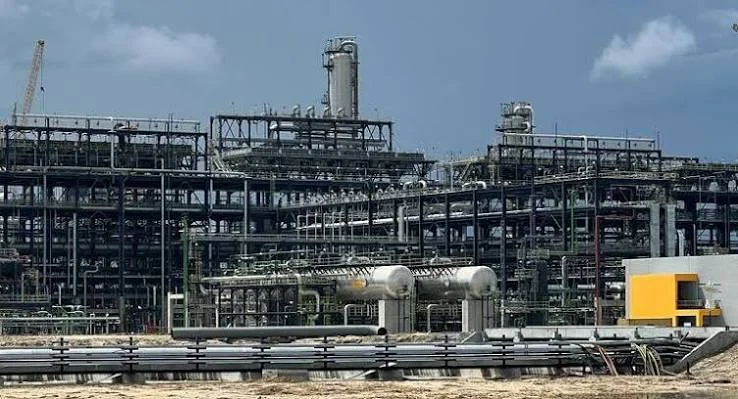
The NLC’s criticism followed another increase in the Dangote Petroleum Refinery’s petrol gantry price, which has added fresh pressure to motorists, transport operators and businesses already facing elevated operating costs.
The refinery raised its petrol gantry price by N65 per litre on Saturday, from N1,200 to N1,265 per litre. The adjustment came just three days after the refinery increased the price from N1,185 to N1,200 per litre.
It was the third price adjustment by the refinery in eight days.
On August 21, the company had raised its gantry price from N1,165 to N1,185 per litre. The three adjustments have collectively added N100 to the refinery’s petrol price, representing an 8.6 per cent increase within eight days.
The impact has begun to spread across the downstream market, with pump prices varying by location as marketers account for transportation, logistics and other distribution costs.
Petrol has reportedly risen to about N1,310 per litre in parts of Lagos and Ogun, while prices in some northern states and areas farther from the refinery have climbed to N1,350 and above. In some locations, the commodity is approaching N1,400 per litre.
Crude supply dispute remains
The latest price increase has again brought attention to the unresolved question of domestic crude supply, particularly the ability of Nigeria’s new refining capacity to access sufficient locally produced crude.
The Dangote refinery has a capacity to process about 650,000 barrels of crude oil per day and was expected to help reduce Nigeria’s reliance on imported refined petroleum products.
However, securing adequate quantities of Nigerian crude has remained contentious even as the refinery has increased its production.
Reuters recently reported that between 30 and 40 per cent of the crude processed by the Dangote refinery is imported, despite Nigeria being a major crude oil producer. The refinery has continued to seek greater access to domestic crude at competitive prices as it works to increase production.
Official industry data has also highlighted the complexity of the supply issue.
Figures from the Nigerian Upstream Petroleum Regulatory Commission showed that oil producers offered 68.1 million barrels of crude to the Dangote refinery in the second quarter of 2026, compared with the refinery’s requirement of 63 million barrels.
However, the refinery accepted 52.6 million barrels during the period, leaving the volume actually taken below both the quantity offered and its stated requirement.
The figures indicate that the domestic crude supply challenge extends beyond production volumes to issues including pricing, commercial terms, crude quality, transportation and delivery arrangements.
The Federal Government and petroleum regulators have consequently faced pressure to review the framework governing crude supplies to domestic refineries.
Petrol prices remain key inflation pressure
The latest increase is occurring against the backdrop of continued economic pressure following the removal of the petrol subsidy in 2023.
The policy fundamentally changed Nigeria’s petrol pricing regime, exposing consumers to fluctuations in crude oil prices, foreign exchange rates and other market costs.
Since then, petrol prices have undergone several adjustments, with increases feeding into transportation costs and the prices of essential goods and services.
The continued rise in petrol prices has also raised questions about whether the expansion of domestic refining is translating into meaningful relief for consumers.
Nigeria’s crude production has improved alongside the expansion of refining capacity. Official figures showed that the country’s crude production averaged 1.72 million barrels per day in the second quarter of 2026, up from 1.55 million barrels per day in the first quarter.
The figures have sharpened the debate over why consumers remain exposed to significant petrol price increases despite higher crude production and the emergence of a refinery capable of processing 650,000 barrels daily.
For households, the impact extends beyond the cost of filling up vehicles. Petrol remains a major component of Nigeria’s transportation and distribution network, while businesses also depend heavily on petrol-powered generators.
Higher fuel costs therefore increase commuting expenses, raise the cost of transporting agricultural produce and manufactured goods, and add to business operating expenses. These costs are frequently passed on to consumers through higher prices for food, transportation and other essential goods.
It is against this backdrop that the NLC has challenged the Federal Government to ensure that Nigeria’s crude resources are more effectively deployed to support domestic refining.
While petrol prices are largely shaped by market forces under the post-subsidy regime, the labour movement maintains that government policy can still influence structural factors such as crude supply arrangements, refinery utilisation and domestic energy policy.
For the NLC, the latest price adjustment is therefore part of a broader debate over whether Nigeria’s petroleum reforms are delivering the economic relief and energy security expected from increased domestic refining.
The labour body’s position places renewed focus on the relationship between Nigeria’s crude production, domestic refinery capacity and the price ultimately paid by consumers at filling stations.
Author