
The Nigeria Ebola case in Abuja has reportedly worsened, with the patient said to have developed multi-organ failure. The Federal Government and several states are stepping up surveillance, contact tracing and emergency preparedness to stop the disease from spreading.
The patient was diagnosed with the Bundibugyo strain of Ebola in the Federal Capital Territory (FCT). Officials have not disclosed the person’s name or nationality.
Nigeria Ebola Case: What We Know So Far
The Director of Public Health Laboratory Service at the Nigeria Centre for Disease Control and Prevention (NCDC), Olajumoke Babatunde, gave the update at an emergency meeting in Abuja on Wednesday. She said three levels of molecular tests confirmed the strain.
“The patient’s condition has deteriorated. We did three levels of tests, but all were molecular. The strain was Bundibugyo.”
The NCDC said this is the same strain causing the outbreak in the Democratic Republic of Congo (DRC). Scientists first identified Bundibugyo during an outbreak in Uganda in 2007.
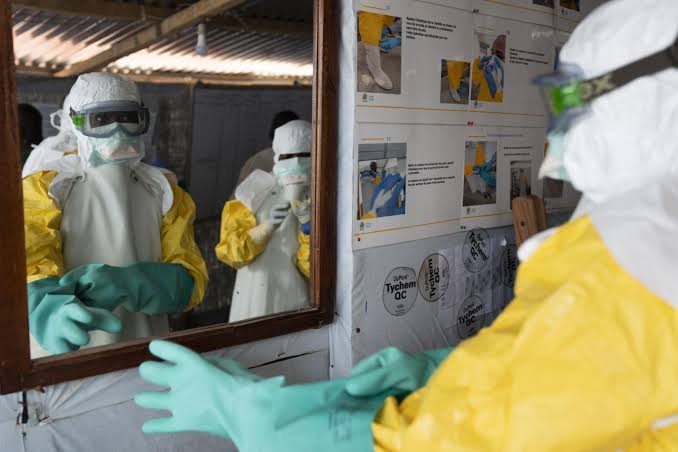
Ebola spreads through direct contact with the blood and other body fluids of an infected person, or with contaminated materials. It does not ordinarily spread through casual contact with someone who shows no symptoms.
The Federal Government confirmed the case on Tuesday. The NCDC said the woman arrived from Uganda on October 5 and developed symptoms on October 7. She sought treatment at a private hospital in Abuja on October 11. Her travel history and poor response to malaria treatment led doctors to alert health authorities.
The NCDC has started an incident-management response covering case management, enhanced surveillance, contact tracing, infection prevention and control, and public risk communication. Its Incident Action Plan was being finalised on Wednesday.
how Ebola spreads and how to stay safe
Federal Government Moves to Contain the Outbreak
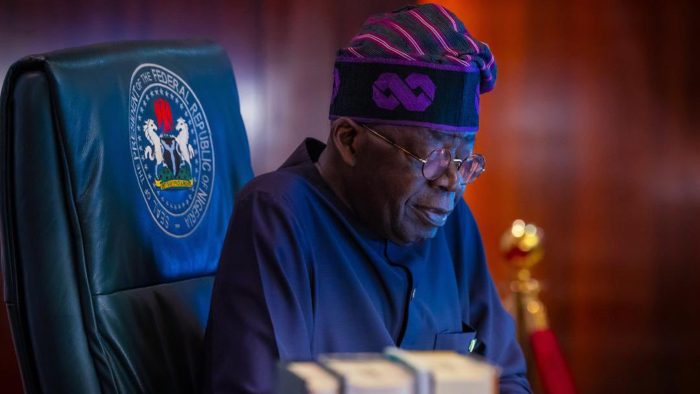
The Coordinating Minister of Health and Social Welfare, Prof. Muhammad Pate, spoke to State House correspondents after meeting the Chief of Staff to the President, Femi Gbajabiamila. He urged Nigerians not to “fall into a trap of hysteria or panic”. He said Nigeria is working with Uganda, which is battling its own outbreak.
“It’s one case. It’s an imported case, and we are containing it.”
Pate said Nigeria handled Ebola in 2014 and has strong public health institutions. He added that the NCDC’s incident management system was “working 24/7”, and the Presidential Task Force on Ebola remains active. He promised regular updates and said the government would meet again on Thursday.
The minister also said the government cannot control people who were told to isolate but went to the market instead. According to him, that “is not in the government’s hands”.
The Incident Manager of the National Ebola Disease Response, Dr Odianosen Ehiakhamen, said 44 contacts are under monitoring. They are mostly healthcare workers and hospital support staff.
The Minister of Aviation and Aerospace Development, Festus Keyamo, directed the Nigeria Civil Aviation Authority to place 46 people on a no-fly list for at least 21 days. They are the 44 hospital contacts and two domestic staff of the patient. Keyamo said 21 days matches the period within which symptoms normally appear.
The Federal Airports Authority of Nigeria (FAAN) is also installing temperature-screening cameras at airports. Its measures include:
- Enhanced health screening and temperature checks
- Travel history tracking and digital health declarations
- Isolation of flagged passengers for further assessment
- Hand sanitisers and protective equipment for frontline workers
Health authorities stress that contacts are not automatically infected. They are monitored because of possible exposure.
World Health Organization Ebola fact sheet
States and Lawmakers Step Up Action
Several states have reported their preparations:
- Anambra: It followed up 40 persons of interest. Thirty-three completed monitoring and were cleared, while seven remained under follow-up as of October 20.
- Ogun: No case has been recorded as of October 21. The state monitored and discharged 111 persons of interest.
- Yobe: It set up surveillance teams and contact-tracing mechanisms in all 17 local government areas. Isolation centres are in Bade, Potiskum and Damaturu.
- Niger: It placed its health system on high alert and is completing an isolation centre.
- Ekiti: It trained laboratory staff and health workers and stockpiled protective equipment.
- Enugu and Kano: Both reactivated their Public Health Emergency Operations Centres.
Kano’s centre asks residents to report suspected cases on 07077974504 or by email to kanocdc@gmail.com.
At the National Assembly, the Senate asked the Federal Government to introduce mandatory health screening for all passengers at airports, seaports and designated land borders. It also called for emergency funding and for the modernisation of the Quarantine Act of 1976. Senate President Godswill Akpabio said, “If it spreads, it will be a major problem.”
The House of Representatives urged the Federal Ministry of Finance to release outstanding appropriated funds to health agencies.
Wider Outbreak Context
The World Health Organization (WHO) declared the outbreak in the DRC and Uganda a public health emergency of international concern on May 16. As of October 11, the DRC had 9,066 confirmed cases and 4,381 deaths, according to WHO figures. The WHO says no approved vaccine or specific treatment exists for Bundibugyo virus disease. Kenya also confirmed an imported case this month.
In June, President Bola Tinubu set up a task force chaired by Gbajabiamila and approved N10bn for emergency preparedness. Nigeria’s 2014 outbreak recorded 20 confirmed and probable cases and eight deaths.
FAQ
What strain of Ebola was found in Nigeria?
The NCDC says it is the Bundibugyo strain, the same one causing the outbreak in the DRC.
Why are 46 people on a no-fly list?
They are 44 hospital contacts and two domestic staff of the patient. They cannot fly for at least 21 days, the period in which symptoms normally appear.
Is there a vaccine for Bundibugyo Ebola?
No. The WHO says there is no approved vaccine or specific treatment for Bundibugyo virus disease.
Follow us on:
Author