
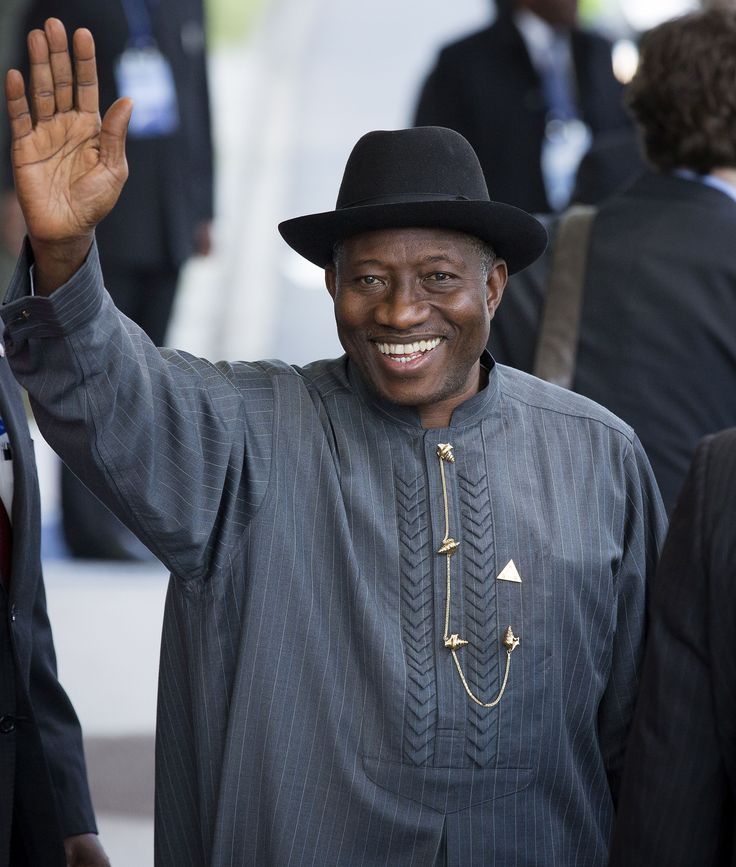
Former President Goodluck Jonathan has thrown cold water on mounting pressure from youth groups urging him to seek a return to Aso Rock, saying the presidential race is “not a computer game” and that any decision of such magnitude demands broad consultation.
Jonathan made the remarks Thursday in Abuja, where he received a delegation of youth groups who had gathered at his office to make a formal appeal for his 2027 presidential bid. Rather than a flat refusal or an enthusiastic embrace, the former president offered something in between — measured, deliberate, and characteristically cautious.
“You are asking me to come and contest the next election. Presidential race is not a computer game. But I’ve heard you and I’ll consult widely,” he told the delegation.
A Statesman’s Caution
Jonathan commended the young visitors for their civic passion, framing their presence as an act of patriotism in itself. “If you have no interest in the country, you will not bother to be here,” he said — a quiet acknowledgment that showing up, in politics as in life, is often the first and hardest step.
But the former president quickly pivoted from the personal to the structural, using the occasion to deliver a broader diagnosis of Nigeria’s democratic health. He pressed the youths on the very foundation of electoral politics: voter participation.
“If I ask how many of you have your voter’s card now, probably 50% of you don’t have your voter’s card. And you’re asking me to go and contest the election. So you must participate in the electoral process,” he said pointedly.
Nigeria’s Voter Turnout Crisis
Drawing from his extensive experience as an election observer across the continent, Jonathan laid out a troubling pattern that he said demands urgent attention. Having monitored elections in more than 14 African nations as well as parts of Southeast Asia, he said Nigeria’s record stands out — for all the wrong reasons.
“Nigeria has the lowest turnout in every election cycle,” he said, calling on the Independent National Electoral Commission to commission expert reviews to understand and reverse the trend. “I think INEC needs to do something about it. They need to start to get consultants to look at it.”
The former president tied low turnout directly to a crisis of credibility, warning that the absence of transparent elections gradually drives capable citizens away from public life entirely.
“The key thing we need in this country is peace. You continue to advocate for that. And you continue to advocate for peaceful and credible elections in the country. Because if we don’t have peaceful and credible elections, most good citizens will not want to bother to get involved in politics,” he said.
The Dignity Question
Jonathan also touched on the treatment of Nigerians in the diaspora, expressing frustration at the disrespect many encounter abroad — a situation he linked, in part, to decades of leadership shortcomings at home.
“The highest level of disdain shown to Nigerian youths abroad has to stop. Even African countries that we have, African countries that even when we are students, as of our scholarship monies, we are contributing to solve problems in those countries,” he said.
The Decision Ahead
As the meeting drew to a close, Jonathan was careful not to let the moment be read as either a campaign launch or a definitive withdrawal. His message was one of process over impulse — a reminder that governance begins long before the ballot.
“I will consult. I cannot just wake up and say I want to be the president of Nigeria again. But I am telling you that I will consult. If there is a need to, I will wait,” he stated.
Whether that consultation ultimately leads Jonathan back into the arena remains to be seen. For now, the former president has heard the call — and is taking his time answering it.
Author