
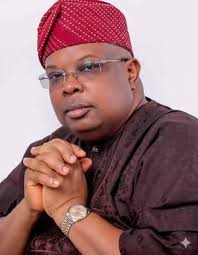
Joseph Tegbe was confirmed by the Senate on Wednesday with a mandate as straightforward as it is daunting: fix a national electricity grid that has collapsed more than 40 times since President Bola Tinubu took office — and do it within 100 days.
The newly confirmed minister of power made his pledges under questioning from senators in the Senate chamber, offering a structured plan, an invitation for accountability, and a candid reckoning with the scale of dysfunction he is inheriting. What he did not offer, and what Nigeria’s power sector has exhausted the public’s patience waiting for, was certainty.
A Grid on the Brink
The numbers alone frame the emergency Tegbe is walking into.
Since May 2023, Nigeria’s national electricity grid has recorded no fewer than 20 collapses, according to industry data, with failures in 2024 occurring at a near-monthly rhythm. At least three collapses were recorded in the final months of 2023. Twelve were logged across 2024. Another 12 incidents were reported in 2025. Multiple collapses have already occurred in 2026, and the year is barely four months old.
Each failure follows the same brutal pattern: transmitted power drops to zero or near zero, plunging homes, hospitals, factories, and commercial centres into darkness simultaneously. Businesses pivot to diesel and petrol generators, a costly fallback that has quietly become a permanent feature of Nigerian enterprise, while the macroeconomic toll compounds, silently, with each outage.
The grid’s chronic instability has long since graduated from operational inconvenience to structural economic constraint.
The 100-Day Plan
Tegbe told senators his immediate focus would be stabilisation, stopping the bleeding before attempting broader reform.
“The first phase in the 100 days is to stabilise that grid. There are questions around grid collapse and then need to roll out metering. Last year we rolled out 1 million meters across the country; it is never done before,” he said.
Beyond grid stabilisation, Tegbe said he intended to roll out another phase of metering nationwide, a measure aimed at reducing the estimated billing system that has long frustrated electricity consumers and eroded trust in the sector. He also promised structural discipline within the ministry itself, framing indiscipline as a core, and underappreciated — driver of the sector’s dysfunction.
“We need to stabilise the grid. There is a short term that we need to quickly do. We need to enforce strict code against indiscipline and ensure a tax system across. We need to also improve reserve in our grid. They have done it in other places so we just need discipline to do it,” he told lawmakers.
₦6 Trillion and Counting
Perhaps the most sobering disclosure of the screening session was financial.
Tegbe informed the Senate that Nigeria’s power sector is currently carrying an estimated ₦6 trillion debt burden — a figure that reflects years of market shortfalls, underpricing, and structural dysfunction across the generation, transmission, and distribution chain.
At the centre of the crisis, he explained, are the power generation companies, whose inability to adequately pay for gas supply has created a cascading deficit throughout the sector.
“Gencos cannot even pay adequately for their gas supply because of their shortfalls. Today, we have an estimated N6 trillion debt in the sector. Government has done very well. A lot of work has been done, we even settled 3.3 trillion through bonds. The movement in the industry is struggling. It’s a lot of pressure,” he said.
The acknowledgement that the government has already retired ₦3.3 trillion in sector debt through bonds, and that the remaining liability still stands at ₦6 trillion — offers a sobering illustration of how deeply the crisis runs.
“Hold Us Accountable”
In a departure from the reassuring but consequence-free language that typically characterises ministerial screenings, Tegbe did something unusual: he explicitly invited lawmakers to measure him against his promises.
He pledged to present a detailed work plan with clear milestones within three months of taking office — and told senators that failure to see those milestones should be treated as a reliable signal that none would follow.
“If you don’t see these in three months, it means you won’t see it in six months, so you must see the three months and you must hold us accountable for it,” he said.
He also committed to presenting the plan within one to two weeks of confirmation, describing a sector plagued by leakages he intends to directly confront. To his constituents — the millions of Nigerians whose daily lives are shaped by power supply, he asked for patience through difficult decisions ahead.
“Your constituency will come to you, please tell them to bear with us, that we saw the pain but we’ll get there — because we’re going to have a disciplined approach,” he told senators.
The Cabal Warning
Senate President Godswill Akpabio used the occasion to deliver what amounted to a political intelligence briefing for the incoming minister — a frank warning about the entrenched human interests that have historically resisted power sector reform.
Akpabio described a ministry culture in which engineers remain unbothered by grid collapses — because each failure generates repair contracts and deployment opportunities. He pointed to the irony of ministry officials calmly drinking tea while their minister grows agitated over yet another outage.
Then he went further, naming what he described as a commercial cabal with a direct financial interest in ensuring Nigeria’s grid never fully functions.
“Those who are importing generating sets — that cabal does not want power to work in Nigeria because they want to keep bringing generators into the country. Those are some of the things you’ll look at outside the issues of finance, outside administrative issues and all that,” Akpabio said.
It was a remarkable statement from the nation’s most senior legislator — an open acknowledgement that the enemies of Nigeria’s power sector are not only technical or financial, but political and commercial, with identifiable beneficiaries invested in the status quo.
Confirmation and What Comes Next
Following his responses, senators confirmed Tegbe by voice vote. He is expected to be sworn into office within days by President Tinubu, who appointed him on May 6 following the resignation of former minister Adebayo Adelabu, who stepped down to pursue a governorship bid in Oyo State.
Tegbe enters office as the latest in a line of ministers handed the same unyielding brief. What distinguishes this moment, perhaps, is the specificity of his commitments and the explicitness with which he has invited scrutiny.
Nigeria’s power sector does not lack diagnoses. It does not lack reform blueprints. What it has lacked, consistently and consequentially, is execution. Tegbe has now staked his tenure on the claim that this time will be different.
The grid — and the country — will be watching.
Author