
Zenith Bank Plc has brought together policymakers, regulators, exporters, manufacturers, investors and development partners to push for greater value addition in Nigeria’s non-oil export sector.
The bank hosted the 10th edition of its International Trade Seminar on Non-Oil Export on August 25, 2026, marking a decade of advocacy for economic diversification.
Held virtually under the theme “Unlocking Value and Harnessing Growth,” the seminar focused on how Nigeria can move beyond exporting raw commodities by developing competitive value chains, improving trade infrastructure and expanding access to financing.
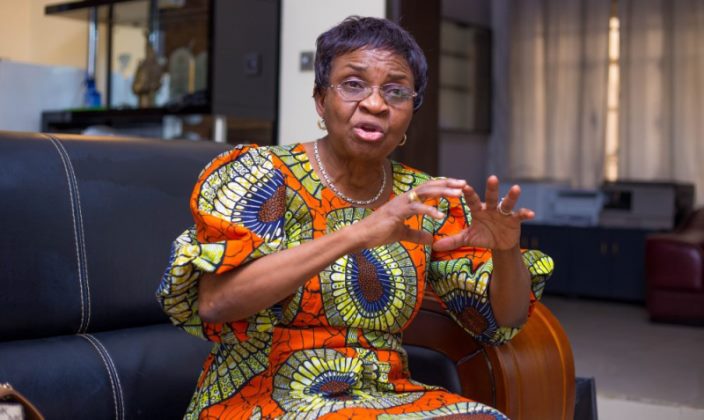
The Group Managing Director and Chief Executive Officer of Zenith Bank, Dame Adaora Umeoji, said Nigeria must convert rising non-oil export figures into sustainable economic value by processing more products locally.

“Our theme, ‘Unlocking Value and Harnessing Growth’, is not just a slogan. It speaks to the opportunities before us and the need to translate our collective efforts into sustainable economic value,” Umeoji said.
She noted that, according to the Nigerian Export Promotion Council, Nigeria’s non-oil exports reached a record $6.1 billion in 2025, up 11.5 per cent from $5.46 billion in 2024 and significantly higher than the $612 million recorded a decade earlier.
Umeoji said Zenith Bank had commenced the development of the SMARTAfCFTA portal through its partnership with the African Continental Free Trade Area Secretariat. She added that the bank’s integration with the Pan-African Payment and Settlement System was helping to simplify cross-border transactions.
“Wherever our exporters need to reach, Zenith Bank will reach with them,” she said.
She also urged Nigeria to accelerate local value creation by exporting more finished products rather than raw materials.
Minister Calls for Stronger Export Reforms
Delivering the keynote address, the Minister of Industry, Trade and Investment, Dr Jumoke Oduwole, called for deeper trade and investment reforms, improved export infrastructure and wider market access.

“The question before us now is not simply how to export more, but how to retain more value in Nigeria from everything we export,” Oduwole said.
“Our focus at the Ministry is straightforward: produce more competitively in Nigeria, process more in Nigeria, connect Nigerian businesses to bigger markets, and ensure that the financing, infrastructure and trade systems exist to help them scale.”
She highlighted the opportunities presented by the African Continental Free Trade Area, which covers a market of more than 1.4 billion people with an estimated GDP of about $3.4 trillion.
Oduwole urged Nigerian businesses to improve productivity, quality and skills to compete effectively in regional markets, while calling on financial institutions to move beyond financing export transactions to supporting export capacity.
Africa Urged to Build Internal Markets
The Chair of the Board of Directors of the Fund for Export Development in Africa and immediate past President and Chairman of Afreximbank, Professor Benedict Oramah, said Africa must rethink its approach to economic growth.
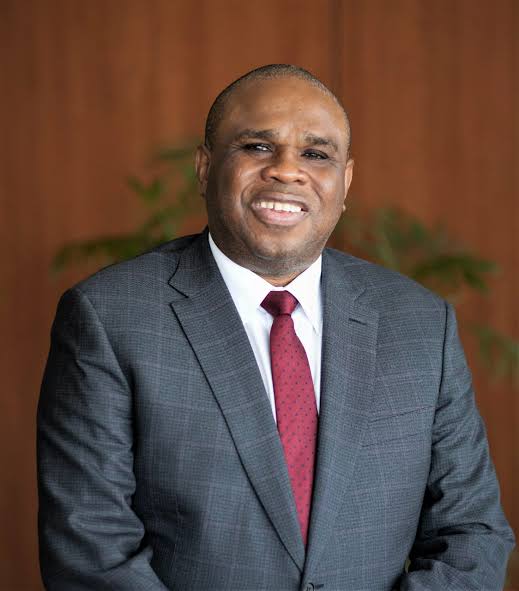
“The question is no longer whether Africa can attract enough external capital and external demand to power its growth,” Oramah said.
“The question is whether Africa, and Nigeria within it, can build her own internal demand, participate effectively in global supply chains, build the capacity to finance her own trade and industries, and create her own markets.”
He said the current global economic environment presented an opportunity for Africa to strengthen internal demand, expand industrial capacity and take greater control of its trade and development agenda.
The Founder and Executive Chair of Plot Enterprise Ghana Limited, Patricia Poku-Diaby, also stressed the need for African economies to shift from exporting raw materials to producing higher-value goods.
“Let us make no mistake: the future of our economy will not be determined simply by what we grow or what we mine, but by what we transform,” she said.
“We need to move from being suppliers of raw materials to becoming producers, processors, manufacturers, exporters and owners of strong African brands.”
AfCFTA Opportunities Take Centre Stage
The Secretary-General of the AfCFTA Secretariat, Wamkele Mene, said the private sector would play a central role in transforming Africa’s economy.
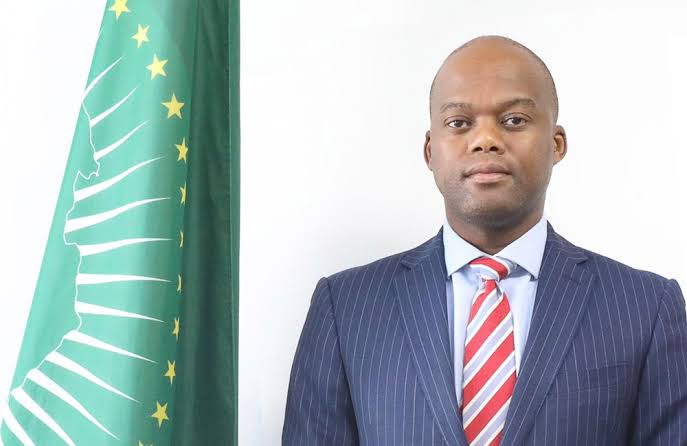
“The private sector is at the heart of the fundamental restructuring of Africa’s economy that all of us want to see,” Mene said.
He said the success of the AfCFTA would ultimately depend on the ability of African businesses to access new markets, expand investment, increase productive capacity and create jobs.
The seminar also featured public and private sector panel sessions focused on trade facilitation, customs efficiency, logistics, financing, product certification, market intelligence and strategies for overcoming barriers to non-oil exports.
The public sector panel included representatives of the Nigerian Export-Import Bank, Nigeria Customs Service, Nigerian Ports Authority, Central Bank of Nigeria and Nigerian Export Promotion Council.
Private sector participants discussed the importance of value creation, competitiveness, structured financing and stronger support systems for businesses seeking to expand into regional and global markets.
Launched in 2015, the Zenith Bank International Trade Seminar on Non-Oil Export was created to promote dialogue and action around Nigeria’s non-oil export potential.
The 2026 edition was streamed on Zoom, YouTube, Instagram, Facebook, X and TikTok, attracting thousands of participants from 97 countries.
As the seminar marked its 10th edition, discussions centred on a common objective: giving Nigerian businesses greater access to the financing, infrastructure, partnerships and markets needed to compete beyond the country’s borders.
Author