
The United States is strengthening its partnership with Nigeria by supporting projects aimed at improving energy security, digital infrastructure and healthcare through targeted commercial investments.
Rather than relying on traditional aid, Washington is increasingly using strategic infrastructure financing to advance both Nigeria’s development goals and American trade and security interests.
That approach is being driven by the US Trade and Development Agency (USTDA), which is funding early-stage infrastructure projects designed to attract larger investments while creating opportunities for American companies.
Speaking at a Washington RoundTable event on July 9, USTDA Chief Operating Officer and Deputy Director, Thomas Hardy, described the agency as “foreign assistance with a purpose.”
According to Hardy, the agency supports development in partner countries while advancing US national security and trade priorities by helping shape infrastructure projects, technologies and standards from the planning stage.
Nigeria has emerged as one of the countries where that strategy is becoming increasingly visible, particularly in energy, digital infrastructure and healthcare.
One of the flagship initiatives is USTDA’s support for a small liquefied natural gas (LNG) terminal being developed by Powergas to strengthen the virtual gas pipeline serving northern Nigeria.
The project is expected to improve energy reliability, expand access to cleaner fuel and create opportunities for US companies to supply trusted technologies.
Hardy said improving energy access in northern Nigeria could also contribute to greater national security by supporting economic activities and reducing vulnerabilities linked to unreliable power supply.
Energy experts have long argued that stable gas supply strengthens industrial productivity, improves transportation and supports broader economic development.
USTDA is also supporting the Medusa submarine cable study, a project designed to extend trusted digital infrastructure along Africa’s Atlantic coastline.
The initiative aims to improve internet connectivity, strengthen network resilience and reduce exposure to cyber threats and interference from malicious actors.
For Nigeria, the project promises more reliable digital infrastructure capable of supporting economic growth, while the United States sees an opportunity to expand the use of trusted technologies in strategic markets.
The agency has also contributed to Nigeria’s healthcare sector.
Hardy highlighted USTDA’s support for the Lagos Teaching Hospital project, which helped facilitate the establishment of a new oncology treatment centre.
He said the project demonstrates how infrastructure investments can deliver tangible public benefits beyond economic development.
USTDA’s model focuses on using relatively small amounts of public funding to prepare projects capable of attracting significantly larger financing from institutions such as the US Development Finance Corporation, the Export-Import Bank and private investors.
The agency’s growing role was further underscored this week when the US Embassy in Nigeria announced that Assistant Secretary Frank Garcia met with Nigeria’s Minister of State for Foreign Affairs, Sola Enikanolaiye, describing Nigeria as a strategic partner across several sectors.
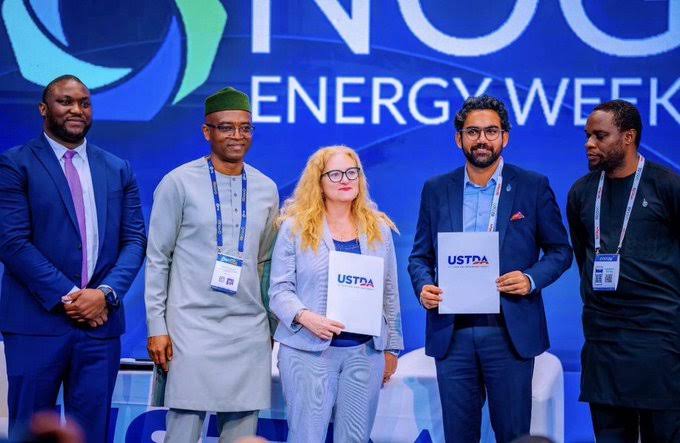
Embassy officials also attended the signing of what they described as a landmark grant financing agreement between Powergas Nigeria and USTDA, reinforcing the shift toward project-driven cooperation between both countries.
For Nigeria, the partnership offers improved energy reliability, stronger digital connectivity and expanded healthcare infrastructure.
For the United States, it provides new export opportunities for American firms, wider adoption of trusted technologies and a stronger relationship with one of Africa’s most strategically important economies.
Analysts say the evolving model reflects a broader shift in US foreign assistance, where development support increasingly aligns with commercial and national security priorities while delivering mutual economic benefits.
Author