
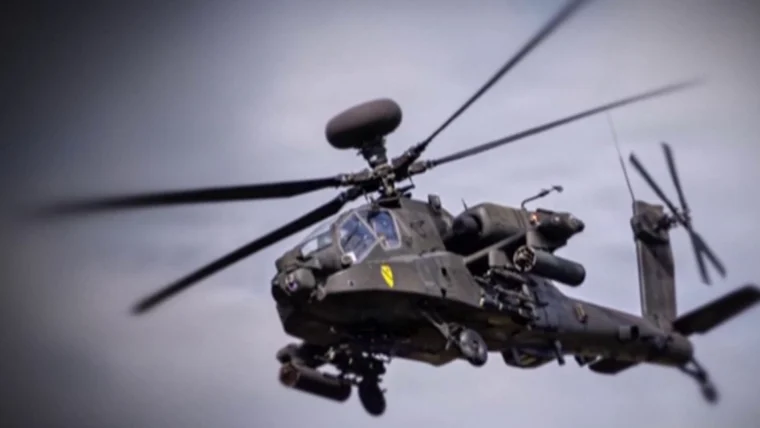
Tensions between the United States and Iran intensified overnight after both countries launched retaliatory military strikes following the destruction of an American Apache helicopter near the strategically important Strait of Hormuz.
The exchange marks one of the most serious escalations since both sides agreed to a ceasefire after months of hostilities, raising fresh concerns about regional stability and the future of ongoing diplomatic efforts.
US Launches Response to Helicopter Downing
According to US officials, American forces carried out strikes against Iranian military infrastructure after the helicopter was brought down in what Washington described as an unacceptable act of aggression.
The operation targeted Iranian air defence systems, ground control facilities and surveillance radar installations located near the Strait of Hormuz.
Speaking on the development, Donald Trump defended the military response, describing it as necessary and proportionate.
“The United States must, of necessity, respond to this attack.”
Trump also stressed that the operation was intended as a direct response to the helicopter incident.
“This is a response to what they did with our helicopter last night, and I believe the response should be very strong, very powerful, and that’s what this one is.”
The United States Central Command later stated that the mission represented a proportional reaction to what it described as unjustified Iranian aggression.
Iran Targets US Military Installations
Iran responded by launching missiles and drones against American military positions across the Middle East.
The reported targets included the US Fifth Fleet headquarters in Bahrain and a military airbase in Jordan.
Iranian military officials claimed their attacks successfully struck several strategic facilities, including hangars housing F-35 fighter aircraft and a major command-and-control centre.
According to Iranian authorities, the operation also formed part of a broader retaliation campaign that included the reported downing of a US MQ-9 surveillance drone over Iranian territory.
Ceasefire Under Threat
The latest confrontation occurred despite a ceasefire arrangement reached after a conflict that began on February 28 when the United States and Israel launched military operations against Iran.
The renewed hostilities have placed ongoing peace negotiations under significant pressure.
Earlier, Trump had expressed optimism that a comprehensive agreement with Tehran could be finalised within days and had publicly stated his desire to avoid actions that might jeopardise diplomatic progress.
However, the latest military exchanges have cast uncertainty over the future of those discussions.
Iran Accuses US and Israel of Violating Truce
Iran’s military leadership accused both the United States and Israel of failing to honour commitments made under the ceasefire arrangement.
According to Iran’s Islamic Revolutionary Guard Corps, repeated attacks against Iranian vessels and coastal areas in the Strait of Hormuz, the Sea of Oman and the Indian Ocean amounted to violations of the truce.
Meanwhile, Iranian Foreign Minister Abbas Araghchi warned that Tehran would continue responding to any perceived threat or attack.
In a statement posted on social media, Araghchi said Washington had chosen to test Iran’s resolve despite what he described as previous battlefield setbacks.
“Leave our region if you want to be safe. History of the Persian Gulf has many chapters on the dire fates of intruding outsiders.”
Growing Fears of Wider Conflict
The latest exchange has renewed fears of a broader regional conflict involving key military and economic corridors in the Middle East.
The Strait of Hormuz remains one of the world’s most critical energy shipping routes, making any escalation in the area a major concern for global markets and international security observers.
With both nations exchanging military actions and diplomatic rhetoric hardening, attention is now focused on whether regional and international mediators can prevent the situation from spiralling into a larger confrontation.
Author