
President Bola Tinubu has directed the rollout of 500 additional Compressed Natural Gas (CNG) refuelling stations across Nigeria, expanding the federal government’s planned network to 1,000 stations.
The move is part of efforts to reduce transportation costs following the removal of the petrol subsidy.
Mr Tinubu announced the decision on Thursday after a meeting with the Nigeria Governors’ Forum, saying state governors had agreed to take immediate steps to reduce transport fares in their respective states.
The president said the federal and state governments would focus on expanding the use of CNG and electric vehicles, particularly for intra-state transportation, where rising fares have continued to affect commuters.
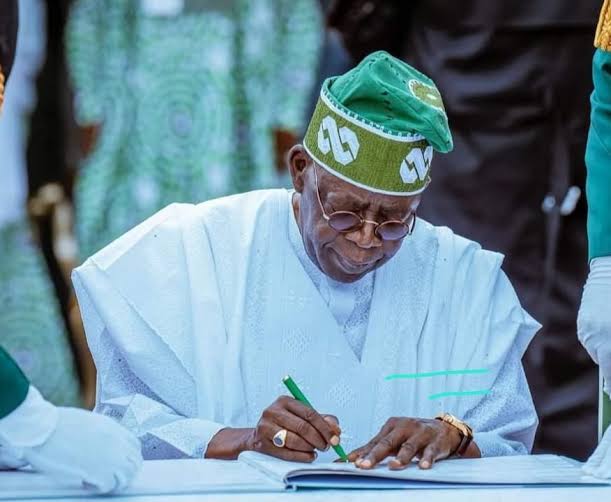
“From October 1, our goal is that Nigerians begin to partake in those savings through lower transport fares. We have agreed that cheaper fuel should result in cheaper fares,” Mr Tinubu said in a statement personally signed by him and posted on his X handle.
He said the federal and state governments had also agreed to establish a joint committee to begin implementing measures aimed at reducing transportation costs.
The committee will work to ensure that savings from cheaper alternative energy sources are reflected in the fares paid by commuters.
CNG Expansion Gathers Pace
According to Mr Tinubu, more than 120,000 vehicles have so far been converted to CNG nationwide under the Presidential CNG Initiative, while more than 100,000 additional conversion kits are being processed.
The federal government is also expanding conversion centres and refuelling infrastructure to support the growing number of CNG-powered vehicles.
Mr Tinubu said the Midstream and Downstream Gas Infrastructure Fund is financing more than 100 gas projects nationwide, including 15 CNG mother stations and 86 daughter stations.
Four of the projects were commissioned in May in Lagos, Abuja and Owerri.
They include a 15-station CNG refuelling network in Lagos and a facility in Abuja capable of serving up to 1,000 cars and tricycles as well as 50 trucks and buses daily.
The president said the government had previously ordered 500 CNG stations through the Midstream and Downstream Gas Infrastructure Fund.
His latest directive adds another 500 stations, bringing the planned nationwide network to 1,000.
Mr Tinubu said the expansion was particularly important for intra-state transportation, where the high cost of commuting is most directly felt by Nigerians.
He said CNG-powered vehicles could spend between 60 and 80 per cent less on fuel than petrol-powered vehicles, with the expected savings meant to translate into lower transport fares from October 1.
Mr Tinubu urged federal and state authorities to work together to ensure that lower operating costs result in cheaper transportation for Nigerians.
“Each tier of government must keep doing its part and work together for the benefit of every Nigerian,” the president said.
Author