

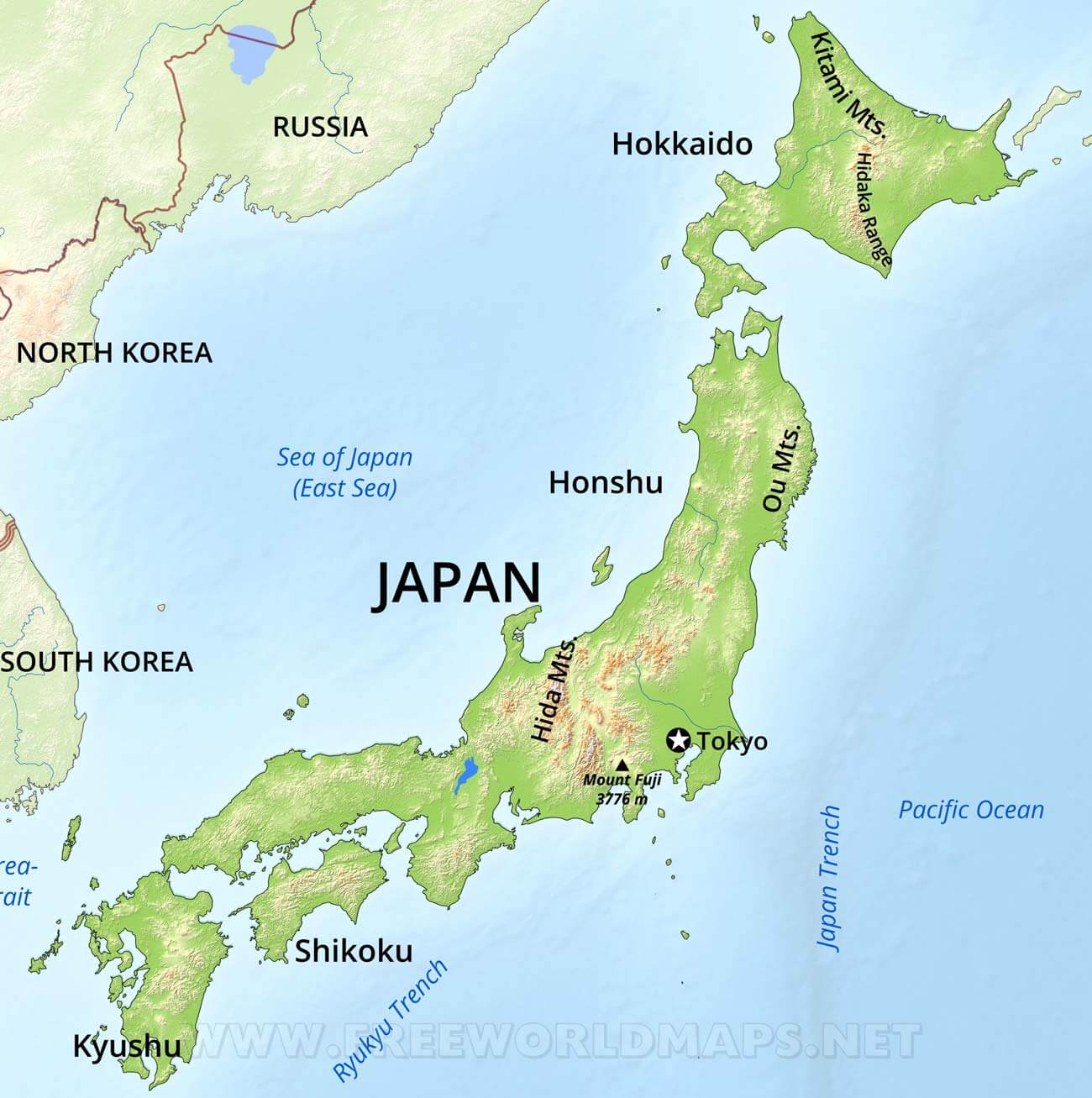
Japan has issued a tsunami warning after a powerful 7.1-magnitude earthquake struck the southwestern island of Kyushu on Tuesday, disrupting electricity supply to tens of thousands of homes.
The earthquake struck at 4:27 p.m. local time (0727 GMT) and registered the maximum intensity of seven on Japan’s Shindo seismic scale, according to the Japan Meteorological Agency.
Authorities warned that tsunami waves of up to one metre (three feet) could reach affected coastal areas. Public broadcaster NHK reported that waves close to that height may already have been recorded.
The Nuclear Regulation Authority said no abnormalities were detected at nuclear power plants following the quake.
Power outages affected about 45,000 households and facilities in the Kumamoto region, local utility Kyushu Electric Power said.
The company added that the three nuclear reactors operating in the region continued to function normally.
About 30 minutes after the earthquake, an NHK reporter wearing a safety helmet said strong aftershocks were still being felt inside the newsroom.
“Shaking is continuing as I speak. Including myself, there may be some people who feel their hearts racing,” he said.
“When the quake struck, the shaking was so big that I could not stand up. Please be aware of possibility that shaking might continue after this.”
Japan’s history of major earthquakes
Kumamoto was devastated in 2016 by two major earthquakes—a 6.5-magnitude tremor followed two days later by a 7.3-magnitude quake—which killed 273 people and injured more than 2,800.
On June 25, a 7.2-magnitude earthquake struck northern Japan but caused no deaths or significant damage.
Japan is among the world’s most earthquake-prone countries, sitting at the convergence of four major tectonic plates along the Pacific Ring of Fire. The country experiences hundreds of earthquakes each year and accounts for roughly 18 percent of global seismic activity.
Although most earthquakes are minor, their impact depends largely on their location and depth.
The country still bears the scars of the devastating 9.0-magnitude earthquake and tsunami in 2011, which killed or left about 18,500 people missing and triggered the Fukushima nuclear disaster.
Earlier this year, on April 20, a 7.7-magnitude earthquake struck northern Japan, injuring at least 10 people and shaking high-rise buildings in Tokyo.
The disaster prompted authorities to issue a special advisory warning of an increased risk of earthquakes measuring 8.0 magnitude or higher, which was lifted a week later.
Author