
Iran and Oman are negotiating a temporary shipping corridor and mine-clearance arrangements for the Strait of Hormuz as efforts continue to restore navigation through the crucial waterway.
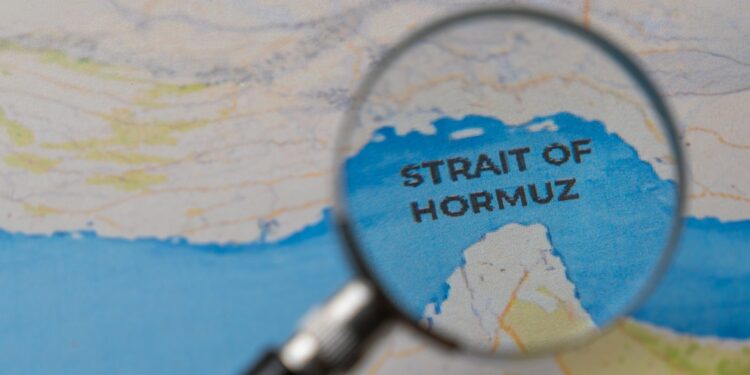
The two countries have yet to agree on the conditions for reopening the strait, where shipping has been paralysed by Tehran since US-Israeli attacks that began the Middle East war in late February.
With the conflict approaching its six-month mark, negotiations between Tehran and Muscat are focused on establishing a controlled return of maritime traffic while addressing longer-term questions over how the waterway will be administered.
Why Oman Matters
Iran and Oman both border the Strait of Hormuz, one of the world’s most important routes for global oil and gas shipments.
A US-Iran memorandum of understanding signed in mid-June provided for the reopening of the strait and left Iran and Oman to “define the future administration and maritime services” in consultation with Gulf states and in accordance with international law.
The agreement was also intended to create a framework for negotiations towards a permanent end to the war, but that broader deal has since collapsed.
Temporary Corridor Under Discussion
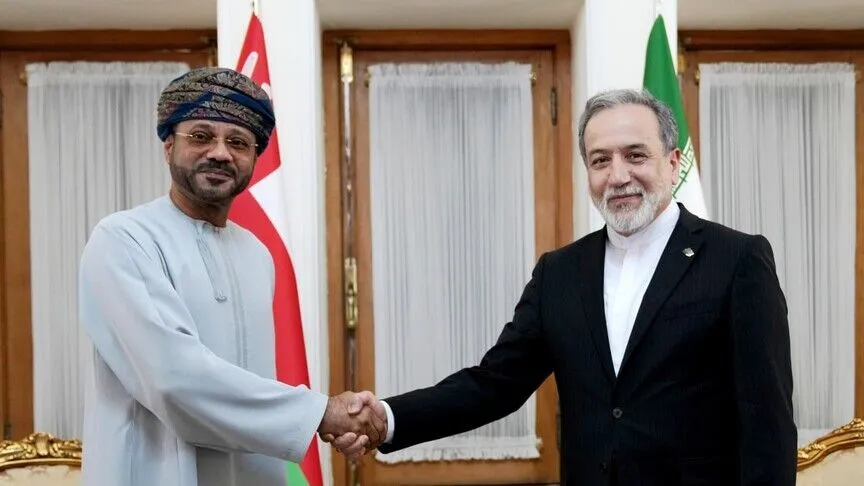
Iranian and Omani foreign ministers discussed a proposed framework agreement in Tehran on Tuesday covering a “temporary corridor” for shipping and a project to clear mines from the strait.
In a joint statement, both sides confirmed that discussions were continuing.
Omani Foreign Minister Badr Albusaidi said he hoped the corridor and “practical arrangements to restore safe navigation” would be announced “soon”.
He added that “future management of the strait and a permanent solution will follow in due course”.
Iranian Deputy Foreign Minister Kazem Gharibabadi said the proposed arrangement would allow vessels entering the Gulf to pass through Iranian waters, while ships leaving the Gulf would travel through Omani waters before entering Iranian waters.
He said Iran and Oman would have between 30 and 60 days to negotiate a permanent route if the temporary arrangement is approved.
Gharibabadi also disclosed that Iran’s Islamic Revolutionary Guard Corps was participating in the negotiations and that maps being considered had been prepared by Iran’s armed forces.
The Guards said on Wednesday that Iran and Oman had also agreed to share revenue from any fees imposed on shipping through the strait. Washington has rejected the proposal.
Why Is Reopening Still Delayed?
Iran continues to link the full reopening of the Strait of Hormuz to concessions from the United States, particularly as Washington maintains a counter-blockade on Iranian ports.
“Before any action is taken to reopen the Strait of Hormuz, the United States must fully implement all the commitments it has breached,” Gharibabadi warned Washington late Tuesday.
“The Strait of Hormuz will only be reopened in exchange for an end to the war on all fronts, the lifting of the blockade and a resolution to the situation in Yemen.”
The negotiations involve complex questions over sovereignty, maritime jurisdiction, vessel control, fees and compliance with international law, making an immediate agreement difficult.
“Oman and Iran are effectively negotiating elements of a post-war governance and security architecture for Hormuz — which explains the slow pace,” Omani researcher Abdallah Baaboud told AFP.
For Tehran, the strait is also tied to its broader confrontation with Washington. Iran is demanding the lifting of US sanctions, compensation for war damage and security guarantees as part of its demands for a full reopening.
Oman, meanwhile, wants to separate freedom of navigation from the wider conflict as much as possible.
Baaboud said the differing objectives of the two countries were “the real source of the delay”.
Washington’s Complicated Position
Washington has not publicly responded to the latest Iran-Oman joint statement, although the United States had previously reported progress on the Hormuz issue.
US President Donald Trump has repeatedly claimed that the strait is under US control, a position rejected by Tehran. He has also threatened Oman with bombing if the sultanate were to “stand in the way” of US access through the waterway.
The situation has placed Muscat in a delicate position.
Oman is attempting to maintain its role as an intermediary with Tehran while avoiding any perception that it fully supports Iranian control over shipping through Hormuz, which could damage its strategic relationship with Washington.
“Washington may be uncomfortable with aspects of Oman’s diplomacy, but it also needs the channel Oman provides,” Baaboud said.
Oman has called for other Gulf states bordering the waterway to participate in the discussions, seeking to avoid the appearance of a bilateral deal between Muscat and Tehran.
The broader objective is to establish a regional arrangement in which freedom of navigation is guaranteed collectively rather than relying solely on a permanent US military presence or Iran’s ability to control the strait.
“That would be a very Omani outcome,” Baaboud said.
“Not a grand peace settlement, but a practical arrangement that removes reasons for confrontation and opens space for wider diplomacy.”
Author