

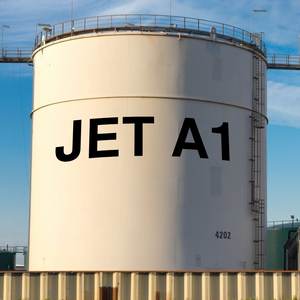
Nigerian airlines are considering reducing operations on unprofitable routes as the high cost and uneven availability of aviation fuel continue to put pressure on their finances and schedules.
Airline operators said the price of Jet A1 has remained elevated since February, while difficulties moving the product to some airports have compounded operational challenges.
The situation has forced some carriers to make additional fuel arrangements for destinations where refuelling may be difficult. In some cases, airlines have reportedly left passengers’ luggage behind to accommodate the extra fuel required for return journeys and mandatory endurance reserves.
Airlines that spoke to THISDAY said the rising cost of Jet A1 was contributing to mounting losses and flight delays.
At the height of the Middle East crisis, aviation fuel prices rose to about N3,500 per litre, from around N900 per litre before the US-Israel attacks on Iran at the end of February, according to the Airline Operators of Nigeria (AON).
The price later fell to about N2,500 per litre and has remained around that level.
Airlines have said fuel now accounts for between 45 per cent and 50 per cent of their total operating expenses.
Airline executives, including Air Peace founder, Dr Allen Onyema, have also disclosed that a flight that previously required about N3 million worth of fuel could now require between N12 million and N13 million.
The cost pressures have placed airlines in a difficult cash-flow position, with some accumulating significant debts to fuel suppliers. Marketers have consequently become less willing to extend fuel on credit, creating the risk of sudden operational disruptions.
Airlines also said some operators were borrowing billions of naira from commercial banks at interest rates of between 29 per cent and 33 per cent to keep their aircraft operating, further increasing their costs.
Although the Dangote Refinery is now refining and supplying Jet A1, operators continue to complain about the price of the product and its distribution to some airports.
Airlines have also raised concerns about pricing transparency, alleging that some middle-tier marketers sell Jet A1 at substantial markups over primary refinery prices.
Marketers, however, have rejected the suggestion that the pricing structure is driven by a lack of competition, arguing that they compete with one another and that excessive pricing would result in a loss of customers.
The spokesman for Air Peace, Efeoghene Osifo-Whiskey, said the Jet A1 supply challenge had become a major operational pressure point for the airline.
“Fuel unavailability at a departure station does not simply delay an isolated flight; it can unsettle aircraft rotations, crew schedules and subsequent services across several destinations, progressively weakening on-time performance and creating passenger build-up at terminals,” he said.
Osifo-Whiskey said the impact was particularly severe on routes serving airports with restricted operating hours.
“A flight that is operationally ready to depart may consequently become untenable once daylight or prevailing airport operating restrictions intervene, leaving cancellation as the only responsible course of action,” he said.
He cited recent disruptions in Abuja, where fuel-related delays affected operations and subsequently disrupted the Maiduguri service.
The Managing Director and Chief Executive Officer of Aero Contractors, Captain Ado Sanusi, said airlines could reduce services to destinations that were not commercially viable.
“Airlines can cut down operations to certain destinations that are not viable. It is a global practice. When the price of Jet A1 went up some international airlines automatically stopped operating to some destinations. They cannot go to non-profitable routes or where they will spend more money,” Sanusi said.
According to him, the primary challenge with aviation fuel remains its price, which he linked partly to the conflict in the Middle East.
Sanusi said Jet A1 was not physically scarce because the Dangote Refinery was producing the product.
He said Aero Contractors had maintained relatively stable operations through a buy-and-pay arrangement with oil marketers, although the airline operates fewer destinations than some of its competitors.
Sanusi said difficulties transporting Jet A1 to some airports could also contribute to local shortages, citing security concerns and poor road conditions, particularly during the rainy season.
The Chairman of Ndano Energy, an aviation fuel marketing company, Chris Ndulue, also said Jet A1 was not technically scarce in Nigeria but remained expensive.
“I am not aware that the product is scarce. But it is very expensive; so, it could substantially be equated to scarcity. But in practical terms the product is not scarce. 90 per cent of the product comes from Dangote Refinery. They are producing and I don’t think there is scarcity. But because of the high price, it becomes scarce in a way,” Ndulue said.
Ndulue rejected claims that the price was high because of a monopoly, saying Jet A1 pricing is benchmarked against international market prices.
He said increased domestic refining capacity could improve competition and potentially address pricing concerns.
“If there are more refineries there will be fair competition, which will address the issue of pricing; there will also be better service. There are a lot of benefits refining the product locally,” he said.
Ndulue added that increased local refining could reduce exposure to shipping delays, demurrage and other import-related costs.
He expressed optimism that Jet A1 prices in Nigeria could decline in the coming weeks, although he said domestic prices were currently comparable to international market levels.
He also acknowledged that some marketers may be reluctant to continue supplying airlines with significant outstanding debts, saying suppliers could not allow unpaid obligations to continue accumulating.
Follow us on:
Author