
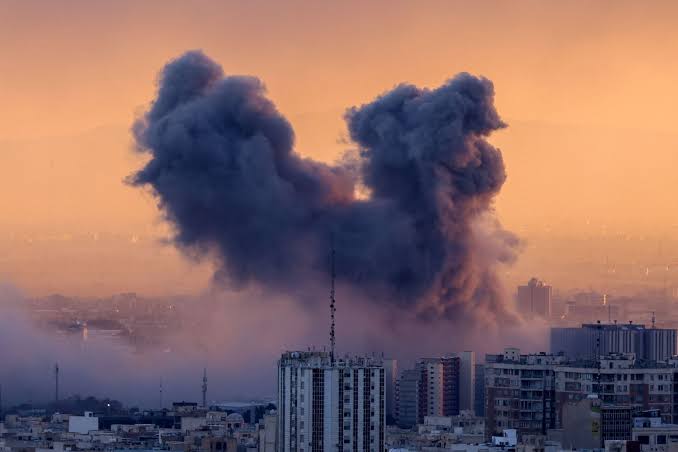
Four people, including a child, were killed and more than 50 others wounded in a US strike on a wedding gathering in southern Iran as renewed American attacks triggered the heaviest exchange between Washington and Tehran in weeks.
The Iranian Red Crescent said the casualties occurred on Tuesday after the attack struck the wedding in Sirik, with footage shared by an Iranian government account showing extensive debris and damage at the site.
The latest escalation has prompted Iran’s Revolutionary Guards to announce attacks on US bases in Jordan, the United Arab Emirates, Kuwait, Bahrain and Iraq’s autonomous Kurdistan region.
The attacks come after US President Donald Trump warned Iran that it would face “much harder and higher” strikes if it retaliated against American attacks.
Iran’s military and state media said the initial US strikes killed 18 people.
The renewed fighting has further deepened the deadlock in the six-month conflict, with Iran maintaining a blockade affecting traffic through the strategic Strait of Hormuz while the United States continues a counter-blockade of Iranian ports.
Iran’s top negotiator, Mohammad Bagher Ghalibaf, condemned the attack and described the United States as “Satan”.
“If a power acts like Satan, picks targets like Satan, and kills like Satan, it’s Satan. Shields a junior Satan that does the same? It’s THE Great Satan,” he posted on X.
The US military did not directly comment on the reported wedding strike.
However, US Central Command spokesman Tim Hawkins said, “the US military never targets civilians, unlike the IRGC”, referring to Iran’s Revolutionary Guards.
Iran Reports More Casualties
The latest round of fighting began on Sunday when Washington launched strikes against Iranian targets, marking the first known US attacks in several weeks.
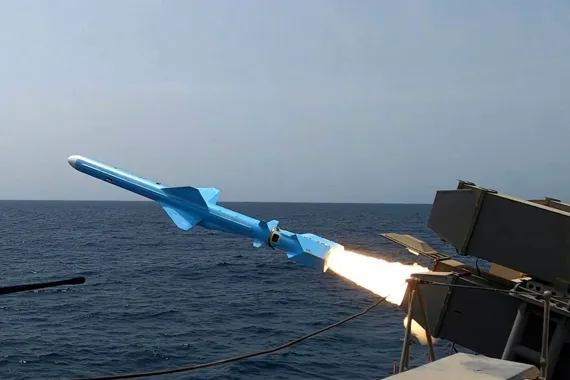
Iran subsequently targeted US troops in Jordan and the UAE, while unidentified projectiles also struck two oil tankers.
Trump said the US strikes were “large and powerful” and described them as retaliation for Iran’s “failed attempt at adding sea mines to the Strait” and for Iranian forces firing eight missiles at a US military base in Jordan, all of which he said were intercepted.
The United States launched additional strikes on Tuesday, with Iranian state television reporting explosions in southern Iran along the Strait of Hormuz, on an island in the Gulf and at an airport in Kerman province.
In southern Khuzestan province, seven people were killed and eight others wounded in a missile attack, Iran’s state news agency IRNA reported.
The Islamic Revolutionary Guard Corps said four members of its aerospace force were killed in a US strike in western Kermanshah province, while three paramilitaries were killed in an attack on Lavan Island in the Gulf.
The IRGC said its retaliatory operations included “a coordinated missile and drone attack on US bases in Erbil” that destroyed a maintenance centre, warehouses and the “guidance system of a US surveillance aerostat”.
An AFP journalist reported hearing explosions near Erbil’s airport, which hosts coalition troops.
Iran’s Guards also announced a ballistic missile attack on a US Marine training camp in Jordan on the Gulf of Aqaba, near the borders with Israel and Saudi Arabia, according to Iran’s Tasnim news agency.
Air raid sirens were also reported across Bahrain and Kuwait. Kuwaiti authorities said an Iranian drone caused a fire at a residential complex, although the blaze was extinguished without casualties.
Trump Issues Fresh Warning
IRGC spokesman Hossein Mohebi warned Washington that it would “regret its new attacks”, adding that “severe punishment awaits the aggressors”.
Trump later warned on Truth Social that Iran would face another attack at a “much harder and higher level” if it retaliated against US strikes.
“There will be very little left of the Islamic Republic of Iran!” he wrote.
The current Middle East war began in late February with US-Israeli attacks on Iran that killed its supreme leader, Ayatollah Ali Khamenei.
A fragile ceasefire between Washington and Tehran subsequently collapsed following attacks on commercial vessels in the Strait of Hormuz, a crucial oil shipping route through which one-fifth of global oil supplies flowed before the war.
Tensions around the waterway have continued. Iran’s Guards said Wednesday that two oil tankers caught fire after striking mines, alleging they had done so after being urged by the US military to use what Tehran described as “an illegal route”.
Despite the renewed military escalation and diplomatic deadlock, Iranian President Masoud Pezeshkian said Tuesday that Tehran was prepared to match any US move towards a deal aimed at ending the war.
He warned, however, that a return by Washington to “a policy of pressure and threats could derail the path of diplomacy”.
Author