
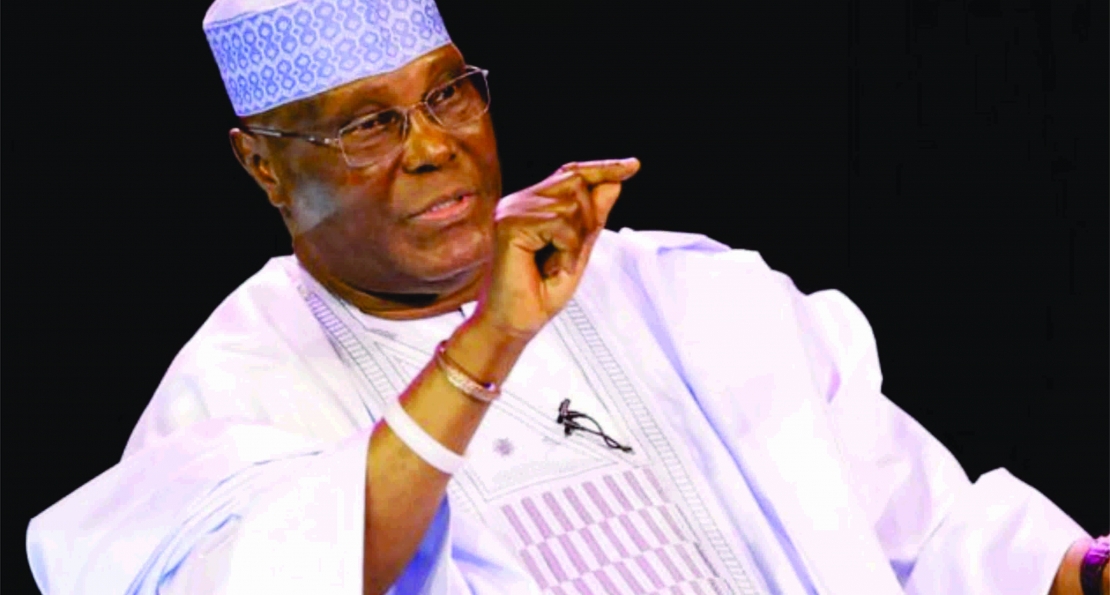
Former Vice-President Atiku Abubakar has challenged President Bola Tinubu’s administration to explain what will happen after the expiration of its 30-day petrol price discount, arguing that the temporary intervention offers no lasting solution to Nigeria’s cost-of-living crisis.
Atiku raised the issue while inaugurating the African Democratic Congress (ADC) Presidential Campaign Council ahead of the 2027 general election. He accused the government of adopting a petroleum pricing principle he had previously proposed but rejecting the measures he believes would make it sustainable.
The federal government’s initiative allows Nigerian National Petroleum Company Limited (NNPC) Retail to reduce petrol prices by ₦60 per litre by temporarily foregoing its retail profit margin. The government says the measure is a commercial decision rather than a return to fuel subsidy.
Atiku, however, argued that the discount would provide only temporary relief while households, transport operators and businesses continued to grapple with high fuel prices and rising living costs.
“You owe me an apology. But more importantly, you owe Nigerians an answer: what happens on day 31?” he said, referring to the administration’s announcement of the 30-day initiative.
The former vice-president maintained that his alternative proposal involved a targeted production subsidy for petroleum products refined in Nigeria, with defined limits, budgetary provisions and independent auditing.
He argued that supporting domestic refining could lower fuel costs while encouraging local production, rather than relying on a temporary reduction at selected retail outlets.
Atiku also questioned how the discount would translate into lower transport fares and reduced costs for farmers, traders, manufacturers and households that depend on petrol directly or indirectly.
He accused the administration of responding to mounting economic pressure with a short-term measure as the 2027 elections approach.
Oyedele: Discount is not a return to subsidy
Minister of Finance and Coordinating Minister of the Economy Taiwo Oyedele defended the initiative, saying NNPC Retail was absorbing the cost by temporarily surrendering its profit margin rather than receiving public funds to subsidise petrol.
In a statement issued by the Ministry of Finance, Oyedele explained that a retail margin discount occurs when a marketer reduces or relinquishes some or all of its profit margin for a period and passes the saving to consumers.
According to the minister, NNPC Retail continues to purchase petrol from Dangote Refinery and other suppliers at prevailing market prices before applying its retail margin.
He argued that lower prices could attract more customers to NNPC outlets, potentially offsetting the reduced earnings per litre through higher sales volumes.
Oyedele also defended the government’s decision to remove fuel subsidy in 2023, arguing that the previous arrangement had placed unsustainable pressure on public finances and crude oil revenues.
He said Nigeria’s available crude oil was constrained by production costs, royalties and contractual commitments to joint-venture partners and other parties. Consequently, he argued, the country could not simply supply all domestic refineries with crude at discounted prices without accounting for those obligations.
The minister said the government hoped to increase production and free up more crude oil for domestic refineries over time.
Keyamo attacks Atiku over criticism
Minister of Aviation and Aerospace Development Festus Keyamo responded to Atiku’s criticism by accusing the former vice-president of being embittered by his political rivalry with Tinubu.
In a post on his verified X account, Keyamo described Atiku’s recent attacks on the president as signs of what he called “agitated depression” and attributed them to Tinubu’s eventual emergence as president.
Keyamo argued that the former vice-president’s repeated presidential ambitions had contributed to his frustration following successive electoral disappointments.
He also urged people close to Atiku to seek mental health support for him, making claims about his psychological state that were not supported by evidence presented in the report.
Atiku’s criticism, meanwhile, has broadened the political debate over whether the government’s fuel price intervention represents a practical response to rising costs or an insufficient temporary measure.
Marketers warn of market distortions
Petroleum marketers have raised concerns about the effects of the discount on competition, pricing and the ability of businesses to recover their costs.
Independent marketers face pressure to compete with NNPC Retail’s reduced prices without eroding their own margins. One marketer, who spoke anonymously, said operators were reviewing their pricing strategies and focusing on service and operational efficiency to retain customers.
Tunji Oyebanji, former chairman of the Major Energies Marketers Association of Nigeria, also questioned the proposed ₦1,350-per-litre price benchmark and its implications for suppliers operating in a market where costs fluctuate.
He warned that uncertainty over how price differences would be managed could increase financing pressures on importers and refiners, particularly where inventory costs were already high.
Oyebanji also cautioned that significant price differences between Nigeria and neighbouring countries could encourage cross-border smuggling.
A senior official of the Depot and Petroleum Products Marketers Association of Nigeria said marketers had not been consulted before the intervention was announced. Officials of the Major Oil Marketers Association of Nigeria and Dangote Petroleum Refinery declined to comment.
Analysts disagree on the best approach
The Centre for Social Justice criticised the government’s proposed price-modulation mechanism, arguing that it did not provide the scale of relief consumers needed.
Its lead director, Eze Onyekpere, advocated a domestic crude oil pricing differential that would allow local refineries to purchase crude below international benchmarks. He also called for stronger measures against the diversion and smuggling of refined petroleum products.
Professor Emeritus of Petroleum Economics Wumi Iledare said the discount could be justified only if it remained temporary, targeted and transparent.
“The decisive question is simple: who pays for the discount?” Iledare said, arguing that if NNPC Retail sold below economic cost and the government later reimbursed it, or assumed an implicit liability, the arrangement could be equivalent to a subsidy regardless of its label.
He called for the government to disclose the discount per litre, eligible sales volumes, funding source, maximum financial exposure and exit plan.
Energy analyst Dan Kunle also criticised the initiative as an ad hoc response to rising prices. He proposed closer coordination among the Nigerian Midstream and Downstream Petroleum Regulatory Authority, NNPC Retail, Dangote Refinery and other downstream operators to improve domestic crude allocation and petrol pricing.
Sam Amadi, director of the Abuja School of Social and Political Thought, described the discount as a politically motivated measure that would provide limited relief to households. Speaking on Arise News, he characterised the intervention as “too late, too little”.
Former Nigerian Bar Association president Olisa Agbakoba separately advocated a domestic crude pricing differential, arguing that it could significantly reduce the cost of locally refined petrol.
Other analysts offered a more qualified assessment. Muda Yusuf, chief executive of the Centre for the Promotion of Private Enterprise, said the initiative could provide relief to some consumers and argued that its limited duration and scope could make its fiscal burden smaller than that of a blanket subsidy.
Yusuf also called for investment in mass transit vehicles and subsidised transport fares to complement the intervention.
Boniface Chizea, chief executive of BIC Consultancy Service, acknowledged the hardship facing households and said production support could be preferable to subsidising consumption. He nevertheless warned that keeping domestic pump prices far below those in neighbouring countries could encourage smuggling.
APC rejects subsidy reversal as ADC criticises the initiative
The ruling All Progressives Congress defended the government’s position, maintaining that the retail discount did not amount to a restoration of fuel subsidy.
APC National Secretary Senator Ajibola Basiru said the country would not return to the previous subsidy regime, arguing that its removal had eased pressure on government finances.
APC National Chairman Nentawe Yilwatda also challenged proposals to lower petrol prices through discounted crude supplies, pointing to contractual obligations that limit the volume of crude available to the government.
The ADC, by contrast, described the discount as a temporary measure whose costs could eventually be passed on to consumers. In a statement signed by its National Publicity Secretary, Bolaji Abdullahi, the party argued that the initiative did not resolve the broader cost-of-living crisis.
The competing positions highlight the policy questions surrounding the intervention: whether NNPC Retail can sustain lower prices without public support, how other marketers will respond, and whether the temporary reduction will translate into meaningful savings across the economy.
For consumers and businesses, the unresolved issue remains what relief, if any, will replace the discount when its 30-day period ends.
Follow us on:
Author