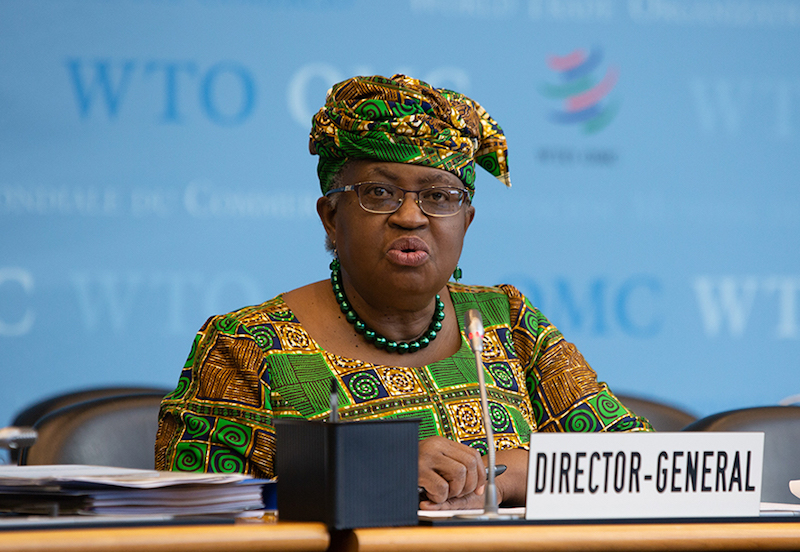


The Director-General of the National Agency for Food and Drug Administration and Control, Mojisola Adeyeye, has raised concerns about Nigerians’ limited awareness of food safety guidelines, saying many people neither read nor understand available information.
Adeyeye made the remarks in an interview with BusinessDay, published on Monday, while explaining the responsibilities of government agencies involved in regulating Nigeria’s food chain.
“We are ignorant in this country. We are very ignorant, we don’t read, we don’t understand,” Adeyeye said.
She explained that food safety regulation involves several government agencies, with NAFDAC’s mandate covering processed and semi-processed foods.
“From farm to fork, there are many organisations involved. There are many agencies involved. NAFDAC mandate is for processed or semi processed foods.
“We have about 56% illiteracy… if it is a literate country they would read. Sometimes, our people don’t understand.”
NAFDAC Explains Role in Food Safety
Adeyeye said the Federal Ministry of Agriculture has primary responsibility for fresh produce, meaning products such as oranges sold in markets do not fall directly under NAFDAC’s food regulation mandate.
“So the oranges you buy in the market, we don’t control it,” she said.
However, she said NAFDAC has a regulatory role when pesticides are used on crops because the agency regulates and controls pesticides.
According to Adeyeye, NAFDAC, working alongside the Ministry of Agriculture, trains farmers on the proper use of pesticides and the appropriate period for harvesting crops after pesticides have been applied.
She added that NAFDAC’s Veterinary and Allied Products Directorate also trains farmers and other stakeholders on pesticide use.
Adeyeye said NAFDAC could not directly train all farmers in the country because of the size of the farming population.
“We cannot go to one million farmers in Nigeria, NAFDAC cannot do that, it is the ministry of agriculture that should be doing that,” she said.
She said the Ministry of Agriculture should take primary responsibility for educating farmers, while NAFDAC would continue to support the process because of its regulatory responsibilities over pesticides.
“Many people don’t know,” she said.
NAFDAC Receives More Than 200 Complaints Monthly
Adeyeye also disclosed that NAFDAC receives more than 200 complaints from Nigerians every month through its complaint channels.
She said the complaints provide important leads for the agency’s investigations.
In September, NAFDAC said it had received 225 complaints about suspected counterfeit products in August.
The agency has continued to encourage consumers to report suspected counterfeit and substandard regulated products through its complaint channels.
Follow us on:
Author