
The Central Bank of Nigeria has reduced its benchmark Monetary Policy Rate by 350 basis points to 23 per cent from 26.5 per cent, citing improved macroeconomic conditions, easing inflation and stronger external reserves.
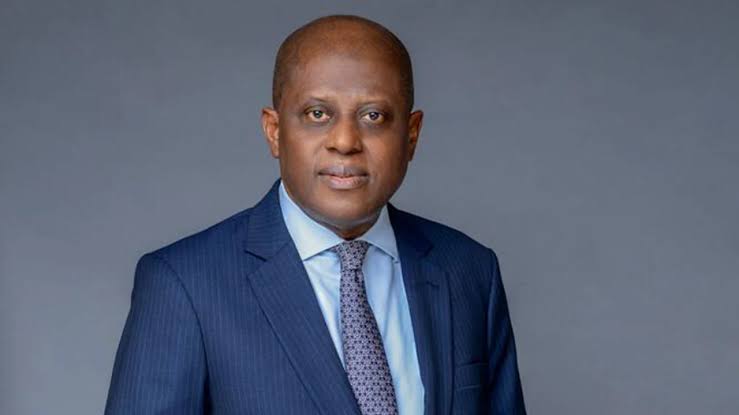
CBN Governor Olayemi Cardoso announced the decision on Tuesday after the Monetary Policy Committee’s 307th meeting in Abuja.
“The Committee decided as follows: reset the monetary policy rate at 23 per cent,” Cardoso said.
The committee also adjusted the standing facilities corridor to +50/-300 basis points around the MPR, while retaining the Cash Reserve Requirement at 45 per cent for deposit money banks, 16 per cent for merchant banks and 75 per cent for non-Treasury Single Account public sector deposits.
The decision followed two consecutive MPC meetings in May and July at which the MPR was held at 26.5 per cent. The CBN had previously reduced the rate by 50 basis points in February.
Despite the size of the latest adjustment, Cardoso said the move should not be interpreted as a shift towards monetary easing.
“We will stay on the course, which has been a restrictive one, for as long as we have to,” he said.
“And that’s why I re-emphasise that you should not see this as an easing. This is a reset and a recalibration. That is all it is.”
According to the governor, the gap between the MPR and prevailing interbank rates had weakened the transmission of monetary policy, making it necessary to realign the benchmark with market conditions.
The MPC said the CBN’s adoption of the Nigerian Overnight Financial Average as a transaction-based operational benchmark had improved transparency in money-market operations. It said the recalibration would help restore the MPR as the principal signal of monetary policy.
CBN cites stronger macroeconomic conditions
Cardoso said the economic conditions that had justified the CBN’s prolonged tightening had changed.
“Fundamentals have changed,” he said. “We are at macroeconomic stability.”
He added: “The tight thing that we have done, in our view, has done its job. It has worked. The policy tools that we have used have worked.”
The governor said foreign exchange pressures had receded significantly, while investor confidence and Nigeria’s external position had strengthened.
Nigeria’s gross external reserves stood at $55.25bn as of September 18, 2026, their highest level in 18 years and enough to cover about 11.3 months of imports of goods and services.
The balance of payments surplus rose to $3.51bn in the second quarter from $2.38bn in the first quarter, while the current account surplus increased by 67.92 per cent to $7.54bn from $4.49bn.
Cardoso attributed part of the improvement in external buffers to stronger diaspora remittances. He said monthly remittances had increased from about $200m when the CBN intensified its reforms to almost $1bn by July, bringing the bank closer to its $1bn monthly target.
The reforms included expanding access to Bank Verification Numbers for Nigerians abroad, strengthening oversight of International Money Transfer Operators and requiring dedicated settlement accounts.
Inflation continues to moderate
The rate decision also came as inflation continued to ease.
Headline inflation declined to 15.39 per cent in August from 15.43 per cent in July, marking a third consecutive monthly decline. Food inflation fell to 19.57 per cent from 20.31 per cent, while core inflation declined to 13.29 per cent from 14.97 per cent.
Month-on-month headline inflation also slowed sharply to 0.71 per cent from 1.57 per cent.
The MPC attributed the moderation to the impact of earlier monetary tightening, exchange-rate stability and improved inflation expectations.
It nevertheless identified prolonged geopolitical tensions in the Middle East and election-related spending as potential sources of renewed inflationary pressure.
The committee expects inflation to moderate further in the short to medium term, supported by foreign-exchange stability, the lagged effects of previous monetary tightening and improved food supply during the harvest season.
CBN prepares for election-related liquidity
Cardoso said the CBN was also preparing to manage liquidity risks as Nigeria approaches another election cycle.
“We are ready,” he said, explaining that the bank had reviewed previous election cycles and developed different scenarios to guide its response.
The CBN will monitor currency in circulation, banking-system liquidity, monetary aggregates and foreign-exchange demand.
“We will proactively deploy any tools and instruments to mop up any excess liquidity,” Cardoso said. “We will not allow ourselves to be caught unaware in any form.”
He said the CBN would ensure adequate currency availability while warning that currency abuse would not be tolerated. The bank will also intensify collaboration with law-enforcement agencies.
Cardoso encouraged greater use of electronic payments, saying digital transactions improve transparency and create an audit trail.
GDP growth strengthens
The MPC said real Gross Domestic Product grew by 4.43 per cent in the second quarter of 2026, up from 3.89 per cent in the first quarter.
Non-oil growth accelerated to 4.31 per cent from 3.94 per cent, while the oil sector expanded by 7.31 per cent, compared with 2.57 per cent previously.
The Composite Purchasing Managers’ Index also rose to 52.7 points in August from 51.1 points in July.
Reflecting on his three years as CBN governor, Cardoso said he inherited an economy characterised by declining confidence, persistent currency depreciation, high inflation and a dysfunctional foreign-exchange market.
He identified the return of the CBN to its core price and financial stability mandate, exchange-rate unification, banking recapitalisation and the rebuilding of external reserves among the major changes implemented under his leadership.
Cardoso also said excessive Ways and Means financing and more than ₦10tn in intervention programmes had previously injected substantial liquidity into the economy.
CBN backs fiscal monetary coordination
The governor described the recently signed fiscal-monetary coordination agreement between the CBN and the Federal Ministry of Finance as important to Nigeria’s planned transition towards inflation targeting.
“I think the difference here is that we’ve decided to institutionalise this,” he said, explaining that the arrangement would ensure coordination does not depend on individual officeholders.
“You can’t do it with monetary policy alone,” he added, stressing the importance of fiscal coordination in maintaining low and stable inflation.
Cardoso also described Nigeria’s return to major global investment indices as a “vote of confidence” that could support additional foreign investment, deepen the capital market and improve foreign-exchange liquidity.
The MPC said it would continue to assess the effectiveness of the recalibrated framework, with future decisions remaining data-dependent.
The committee’s next meeting is scheduled for November 23 and 24, 2026.
Author