
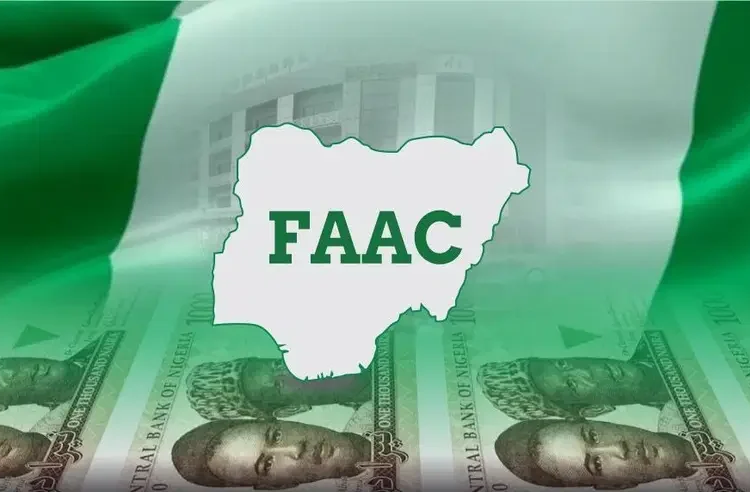
Nigeria’s 36 state governors are facing growing pressure to account for how increased public revenues have been spent after about ₦47.25 trillion was shared among the three tiers of government between 2023 and 2025.
The sharp rise in Federation Account Allocation Committee disbursements followed the removal of petrol subsidy, foreign exchange reforms and improved revenue mobilisation, significantly increasing the funds available to the Federal Government, states and local governments.
However, policy analysts and civil society groups say the increase in government revenue has not translated into a corresponding improvement in living conditions, as many Nigerians continue to face rising costs, unemployment, poverty and inadequate public services.
Data from the Federal Ministry of Finance showed that ₦93.13 trillion was distributed through FAAC between 2017 and 2025. Of that amount, ₦47.25 trillion, representing about 50.7 per cent, was shared between 2023 and 2025 alone.
Net FAAC allocations rose from ₦5.64 trillion in 2017 to a record ₦21.90 trillion in 2025.
Annual allocations stood at ₦10.09 trillion in 2023, ₦15.26 trillion in 2024 and ₦21.90 trillion in 2025, reflecting a sharp acceleration in distributable federation revenue after the 2023 reforms.
The Ministry of Finance said states and local governments received significantly higher allocations, increasing the resources available for salaries, pensions, infrastructure and other public responsibilities.
According to the ministry, states received about ₦9.17 trillion in additional allocations between June 2023 and December 2025 compared with the monthly run-rate before the removal of petrol subsidy, while local governments received about ₦6.66 trillion in additional allocations.
States emerged as the biggest beneficiaries of the post-reform increase, with their annual FAAC allocation rising from ₦4.18 trillion in 2023 to ₦8.93 trillion in 2025.
However, the increase in naira allocations does not tell the full story.
While FAAC distributions rose sharply in naira terms, the weaker naira reduced their dollar value. For instance, ₦7.98 trillion shared in 2018 was equivalent to about $26 billion at the Central Bank of Nigeria exchange rate at the time. By 2025, the ₦21.90 trillion shared was worth about $14.4 billion at the prevailing official exchange rate.
Policy analysts have argued that the real measure of the reforms should be the impact of the additional funds on citizens’ lives.
A policy analyst, Adebayo Abubakar, said increased government revenue had not always translated into spending that reflected the economic hardship facing Nigerians.
“Roads, bridges, drainage and other infrastructure remain important, but some governments appear to favour conspicuous projects while schools, healthcare facilities, water supply and other basic services receive inadequate attention,” he said.
Another analyst, Festus Oyabambi, said the key test of the post-subsidy reforms should be whether Nigerians experience meaningful improvements in their daily lives.
“The real test of the post-subsidy era should be whether Nigerians can feel a tangible improvement in their lives,” he said.
The Chief Executive Officer of the Centre for the Promotion of Private Enterprise, Dr Muda Yusuf, also raised concerns about transparency and how some states deploy public funds.
“Transparency is also a big issue because sometimes monies are spent on unnecessary things,” Yusuf said, arguing that investments should focus more on projects capable of improving economic activity and citizens’ welfare.
Development economist Aliyu Ilias said the significant increase in revenue accruing to states had created a greater responsibility for governors to demonstrate how the additional resources were improving the lives of citizens.
“The Finance Minister said states have collected from subsidy savings, so it has to show,” he said.
As FAAC revenues continue to rise, analysts say greater transparency, citizen engagement and public scrutiny will be critical to ensuring that the additional funds translate into improved infrastructure, public services and living standards across the country.
Author