
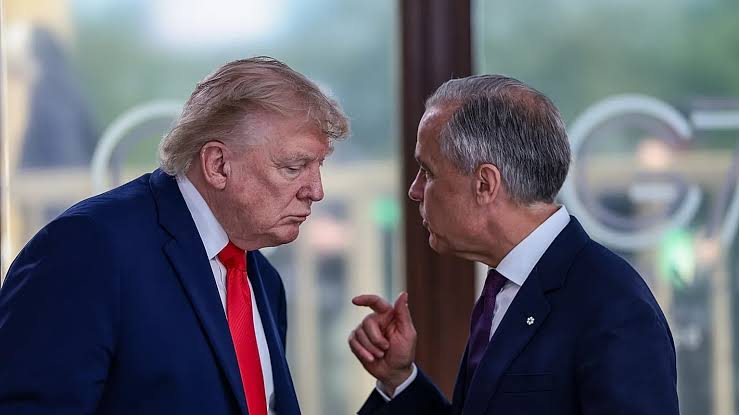
The United States and Canada have failed to reach a trade agreement, triggering new US tariffs on some Canadian products after negotiations ended without a final deal.
The tariffs took effect on Saturday following days of talks that continued until the deadline.
The failure to reach an agreement means new 50 per cent duties affecting about $20 billion worth of goods, or 5.5 per cent of Canadian exports to the United States, have come into force.
The affected products range from hockey sticks to cement.
Canadian Prime Minister Mark Carney vowed that his government would match the US tariffs “dollar for dollar to protect our workers and businesses.”
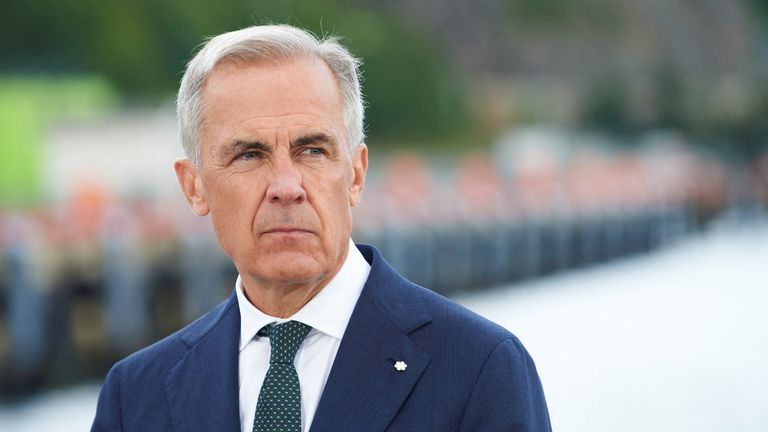
US Trade Representative Jamieson Greer said Canada had declined to finalise the deal under terms agreed earlier in the week.
“Tonight, Canada declined to finalize the trade deal under the terms agreed earlier this week,” Greer said Friday.
He said Washington had offered significant tariff reductions on steel, aluminium, automobiles and lumber in exchange for concessions from Canada.
A senior US official said there were no further meetings scheduled for now.
The breakdown in talks came after President Donald Trump had earlier expressed optimism that the two countries could reach an agreement, citing his “good relationship” with Carney.
However, after several hours of negotiations on Friday, Canada’s top negotiator, Dominic LeBlanc, said officials still “have more work to do.”
LeBlanc and Greer had also met for about three hours on Thursday.
According to Greer, the Trump administration offered “significant tariff reductions on steel, aluminum, autos and lumber” in exchange for concessions from Canada.
He also accused Canada of maintaining its “prolonged retaliation” against the United States, including restrictions on certain American goods and services.
One retaliatory measure that reportedly drew particular concern from Washington was the removal of US alcohol and wine from Canadian liquor stores.
Carney, however, said last-minute changes to the proposed US terms made it impossible to finalise an agreement.
“Last-minute changes in the US proposed terms were unfair, uneconomic, and called into question the reliability of any deal,” he said.
While acknowledging that both countries had made “important progress” in recent weeks, Carney said it was “not enough to meet our objectives for Canadians.”
A senior US official, speaking on condition of anonymity, said Canada had sought additional concessions that Washington was unable to provide.
The official added that the negotiations were candid and not acrimonious.
Former US commerce official Ryan Majerus said retaliatory tariffs could make it more difficult for both countries to de-escalate the dispute.
“If Canada has agreed to also impose retaliatory tariffs, that will make deescalating this a lot harder,” Majerus said.
“But I think both sides will face significant pressure in the coming days to find an off-ramp.”
Christopher Padilla, another former US official, said businesses on both sides of the border had hoped for an agreement that would help “turn the page on what has been a very difficult eighteen months in the US-Canada relationship.”
The White House had accused Canada of imposing “discriminatory treatment” against US alcohol, automobile and dairy products, prompting the new duties.
The tariffs were initially scheduled to take effect on Wednesday but were delayed by three days after Trump cited major progress in the negotiations.
Canadian officials had spent the week in Washington attempting to finalise an agreement that would address several outstanding trade disputes.
Canada has been seeking relief from US tariffs on automobiles, steel and aluminium, which have affected its economy, contributed to job losses and strained the long-standing trade relationship between the two countries.
Carney has repeatedly warned that Canada’s relationship with the United States has changed permanently and said the country must reduce its dependence on its southern neighbour.
The United States currently accounts for about 70 per cent of Canadian exports.
Beyond the latest dispute, both countries must still negotiate revisions to the United States-Mexico-Canada Agreement, which Trump has declined to renew in its current form.
Author