
FG Independent Revenue Target Set for 2026
The Federal Government has set an ambitious new benchmark for its independent revenue drive, targeting N2.5tn in collections for 2026 as part of a broader push to strengthen fiscal discipline and reduce reliance on volatile oil earnings.
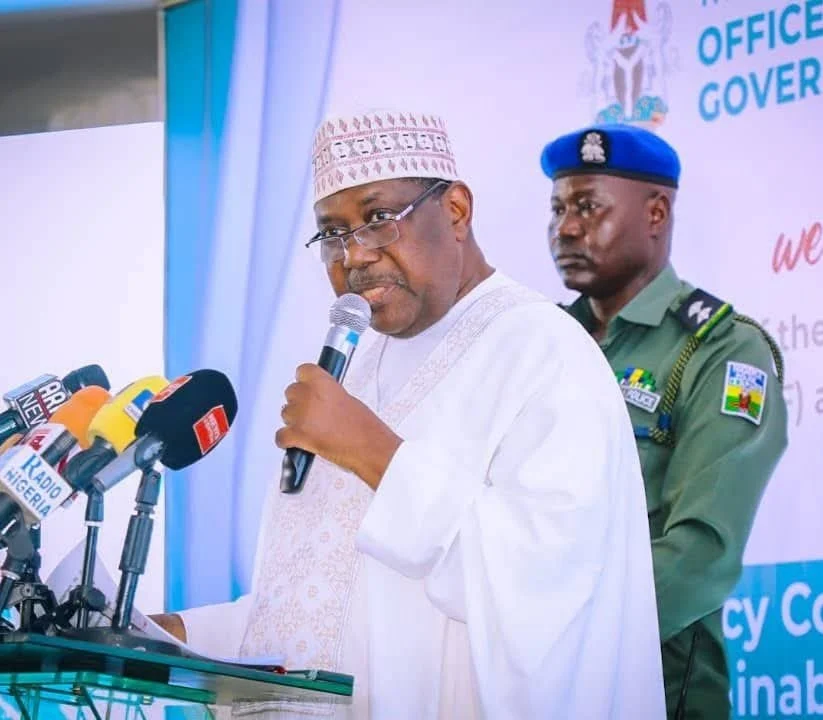
The target was disclosed on Tuesday by the acting Executive Chairman and Chief Executive Officer of the Fiscal Responsibility Commission, Charles Abana, during a meeting between the commission’s management and the Secretary to the Government of the Federation, Senator George Akume, held in Abuja. Details of the engagement were contained in a statement issued by the Office of the Secretary to the Government of the Federation’s spokesman, Chris Ugwuegbulam.
According to Abana, the new target builds directly on progress already recorded through the commission’s intensified monitoring of revenue flows from government agencies and enterprises. He noted that as of September 2025, the commission had tracked approximately N1.84tn in independent revenue generated across Ministries, Departments and Agencies, a figure that now forms the baseline for the more ambitious 2026 goal.
“Through enhanced monitoring of operating surplus from Government-Owned Enterprises and independent revenue generated by Ministries, Departments and Agencies, the commission recorded approximately N1.84tn in monitored independent revenue as at September 2025 and has set an ambitious target of N2.5tn in independent revenue for 2026,” Abana said.
Beyond simply raising the revenue target, Abana outlined a set of structural reforms the commission is pursuing to make the target achievable. He said efforts were underway to improve transparency in how revenue is reported across public institutions, to ensure operating surpluses are remitted into the Consolidated Revenue Fund in a timely manner, and to close the leakages that have historically undermined independent revenue collection across government bodies.
Central to this push is a technical upgrade to one of the commission’s core compliance tools. Abana revealed that the Operating Surplus Calculation Template, originally developed in 2016, has been reviewed and modernised to reflect current fiscal realities and to align with the provisions of the Finance Act 2020. “The template has now been fully automated to improve efficiency, accuracy, and transparency in revenue computation and compliance monitoring,” he added, framing the automation as a critical step toward reducing the manual errors and delays that have often slowed revenue tracking in the past.
The meeting also became an opportunity for Akume to press for tighter coordination across Nigeria’s fiscal and oversight architecture. The SGF called for stronger collaboration among the institutions responsible for managing and monitoring public finances, arguing that deeper cooperation was essential to eliminating duplication of effort and strengthening overall fiscal governance.
“I want to urge deeper collaboration with the Federal Ministry of Finance, the Budget Office of the Federation, the Office of the Accountant-General of the Federation, the Debt Management Office, and other oversight institutions to eliminate duplication and strengthen fiscal governance,” Akume said, specifically naming the key agencies he wants the Fiscal Responsibility Commission to work more closely with going forward.
Akume was equally direct about the significance he attaches to the commission’s role within Nigeria’s broader fiscal governance framework, describing it as an institution central to keeping public resource management disciplined and accountable. “The Fiscal Responsibility Commission occupies a strategic position in strengthening public financial management and ensuring that government resources are managed with discipline, transparency and accountability in line with the Renewed Hope Agenda of President Bola Ahmed Tinubu,” he said.
He went on to tie the commission’s mandate to wider macroeconomic goals, arguing that fiscal responsibility underpins far more than internal government bookkeeping. In his view, disciplined revenue management is fundamental to sustaining macroeconomic stability, strengthening investor confidence, ensuring the country’s debt remains sustainable, and promoting the efficient use of public resources across all tiers of government — from federal agencies down to state and local institutions.
The renewed push for higher independent revenue collection comes as the Federal Government intensifies broader efforts to boost non-oil revenue streams and tighten fiscal discipline generally, a strategy increasingly seen as necessary amid growing expenditure demands and the government’s stated ambition to reduce dependence on oil earnings that have historically proven volatile and unpredictable.
At the core of this effort sits the Fiscal Responsibility Commission’s ongoing statutory function: monitoring the independent revenue and operating surpluses generated by Ministries, Departments, Agencies and Government-Owned Enterprises, and ensuring that these bodies comply with the Fiscal Responsibility Act by remitting appropriate surpluses into the Consolidated Revenue Fund. With the new N2.5tn target now in place for 2026, attention will turn to whether the commission’s newly automated monitoring systems and strengthened interagency collaboration can translate an ambitious figure on paper into concrete gains for the federal purse over the course of the coming fiscal year.
Author