
Power Outage Hits Thousands After Lagos Flooding Damages Transmission Station
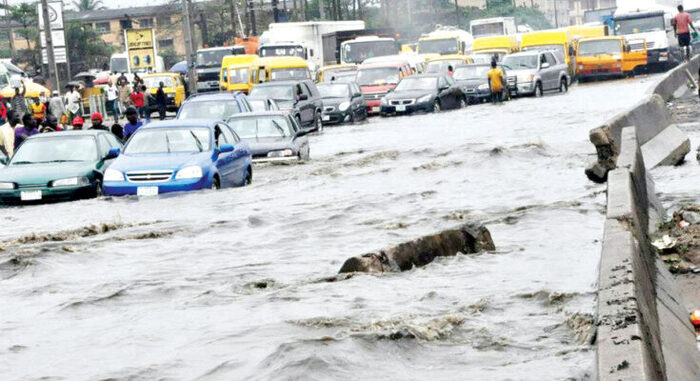
Hours of relentless rainfall on Tuesday left large parts of Lagos State underwater, submerging homes and roads, cutting off movement across several communities, and knocking out electricity supply after floodwaters damaged critical power transmission facilities.
Footage obtained showed flooded streets across FESTAC, Gbagada, Evans, Olushi, Anikantamo and Adeniji Adele on Lagos Island, with residents wading through waterlogged roads and motorists struggling to navigate submerged streets. In Ikeja, correspondents monitoring the situation observed floodwaters pushing into homes and shops, forcing some residents to temporarily relocate over fears that conditions would worsen through the day.
At the heart of the crisis, residents point to a familiar culprit: blocked drains choked with plastic waste and drainage infrastructure that simply cannot keep pace with the volume of water Lagos receives during heavy downpours. The result on Tuesday was roads submerged in knee-deep water across multiple parts of the state.
Ikeja resident Abidemi Raji placed much of the blame on poor road design combined with obstructed drainage channels. “The way the road was constructed contributes to the flooding. Although there is a drainage channel, it usually takes between 30 minutes and one hour after the rain stops before the water recedes because of the volume of water,” he said. Raji went further, alleging that a specific channel meant to link his area to a neighbouring street had been deliberately obstructed during construction work. “There is supposed to be a channel connecting this compound to the next street, but the back passage was blocked after the hotel was built. That has worsened the flooding,” he added.
The Festac area of Amuwo-Odofin Local Government Area was among the hardest hit, with the downpour submerging several streets and disrupting movement for both residents and motorists. A video circulated by Lagos Reporters on X captured floodwaters covering major roads and inner streets alike, forcing pedestrians to wade through the water while vehicles struggled to move at all.
For many residents, Tuesday’s flooding was simply the latest instalment of an all-too-familiar problem. Okeke Mmesoma, who lives in the area, described it as a recurring nightmare that returns with every heavy rain. “Anytime it rains heavily, this place gets flooded. It is usually after the rain stops that the water begins to clear. My shoes were soaked this morning on my way to work,” she said. She noted that many motorists deliberately avoided the flooded roads to protect their vehicles from breaking down, while commuters stayed away entirely to avoid getting drenched.
The flooding extended well beyond Festac and Ikeja. Ajah also reported flooding, while roads around Adeniji Adele, Evans, Olushi and Anikantamo on Lagos Island were similarly inundated, painting a picture of a state grappling with widespread drainage failure rather than an isolated, localised incident.
Beyond the immediate disruption to movement and property, the heavy rainfall triggered a significant power crisis. Floodwaters damaged facilities at the Oworo 132/33kV Transmission Station, knocking out electricity supply across a wide swath of communities. In a public notice issued on Tuesday, Ikeja Electric confirmed that severe flooding at the station had affected two power transformers and several 33kV feeders.
The scale of the outage was considerable. Affected feeders included Oworo Injection Substations 1 and 2, which serve Ladilak, Bariga, Araromi, Oworo, Pedro, GTB, Alapere, Agboyi, Araba, Hospital and Gbagada — meaning tens of thousands of households and businesses across these areas were left without power. Ikeja Electric said it was working closely with the Transmission Company of Nigeria to restore supply as soon as the damaged facilities could be returned to service.
The impact of the storm was not confined to Lagos State alone. In neighbouring Ogun State, residents of Gloryland Estate in Ibafo issued an urgent appeal to the state government for intervention, describing damage to buildings, disrupted movement, and families forced to temporarily vacate their homes as the rainy season took its toll.
Oladipupo Awoyemi, a member of the estate’s Community Development Association, traced the flooding back to blocked drainage channels connected to the Lagos-Ibadan Expressway. “Whenever it rains continuously for two or three days, the whole community becomes flooded. We have reported the blocked drainage channels several times, but the problem remains unresolved,” he said. He also pointed to indiscriminate construction and refuse dumping as compounding factors obstructing the community’s waterways.
“Years ago, the flooding was not this severe because water flowed freely. Today, many canals have been blocked by buildings and factories, while refuse dumped into the drains has made the situation worse,” Awoyemi said, adding that the annual flooding has damaged buildings, disrupted economic activities and exposed residents to health risks. “It affects everybody. People cannot use the roads freely, vehicles are forced to take longer routes, and some residents have to leave their homes whenever the flooding becomes severe,” he added.
Against this backdrop, Lagos State Governor Babajide Sanwo-Olu has approved the dredging of 28 additional primary drainage channels in a bid to strengthen flood control across the state. The Commissioner for the Environment and Water Resources, Tokunbo Wahab, disclosed the approval in a statement issued on Tuesday through the ministry’s spokesperson, Kunle Adeshina.
Wahab described Tuesday’s downpour as an extreme weather event that overwhelmed existing drainage infrastructure, resulting in temporary flooding across Victoria Island, Lekki, Ikeja, Gbagada, Mushin, Mafoluku and several other communities. He explained that Lagos’ unique coastal geography — its dense network of lagoons, rivers and tidal water bodies — naturally slows the discharge of stormwater into the sea during periods of high tide, making some degree of temporary flooding almost inevitable following exceptionally heavy rainfall.
The commissioner sought to reassure residents that government agencies were closely monitoring drainage infrastructure and known flood-prone locations, with emergency response teams remaining on the ground to support affected communities. At the same time, he issued a pointed appeal to residents to stop dumping refuse into drainage channels, to desist from illegal reclamation of wetlands, and to avoid building directly on drainage alignments, warning that these practices actively worsen flooding across the state.
Wahab further advised motorists to avoid driving through flooded roads during heavy rainfall, and urged residents — particularly those living in flood-prone areas — to comply with weather advisories and safety guidelines issued by the relevant authorities as the rainy season continues.
Author