
Government’s Fuel Price Control Warning Sparks Backlash From IPMAN
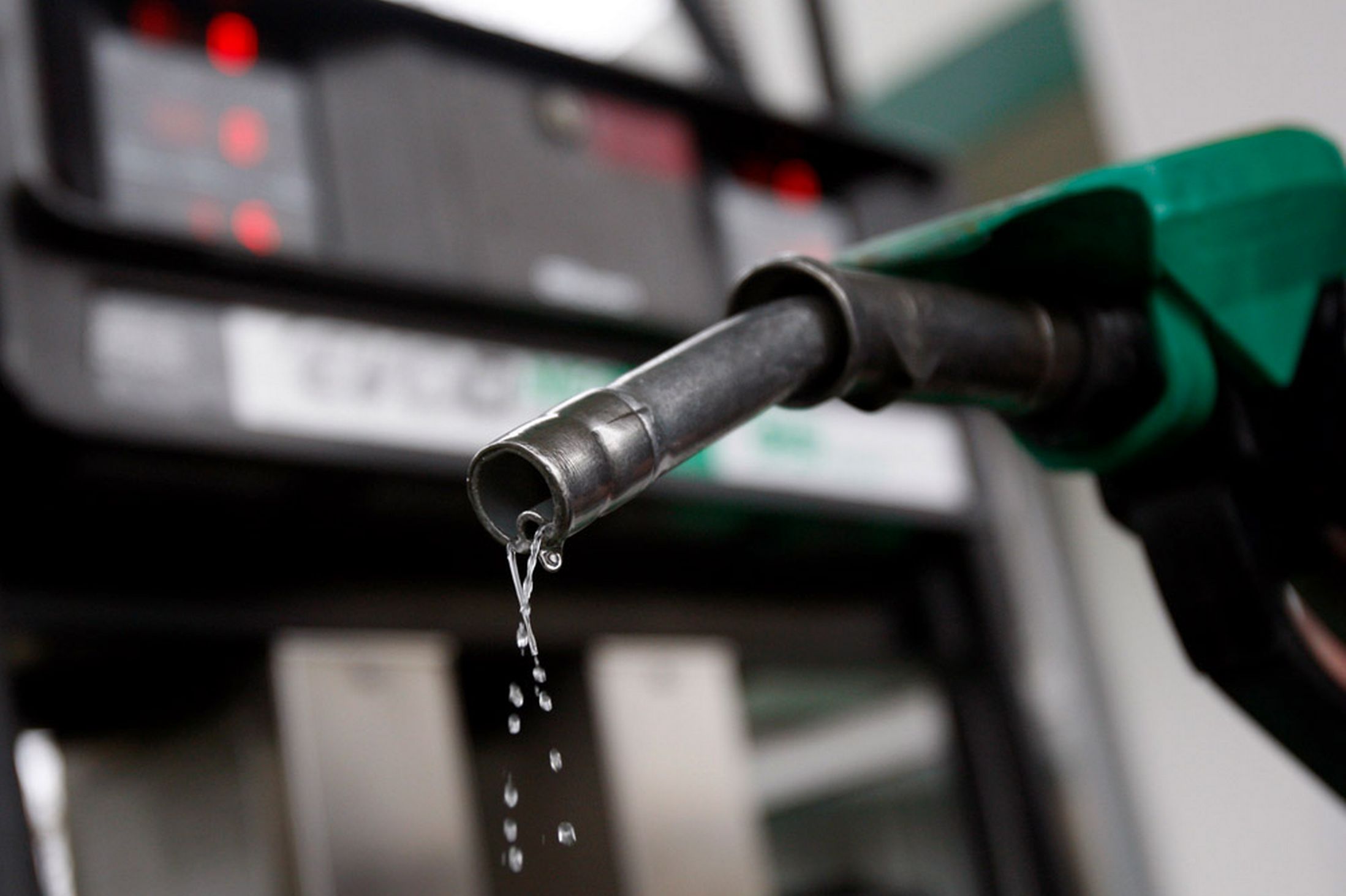
Nigeria’s fuel marketers have drawn a hard line in the sand, warning that any attempt by the Federal Government to reintroduce price controls on petrol will be met with a nationwide shutdown of filling stations.
The threat came directly from the Independent Petroleum Marketers Association of Nigeria, whose National Publicity Secretary, Chinedu Ukadike, laid out the association’s position in blunt terms on Tuesday. His comments followed a pointed warning issued a day earlier by the Minister of State for Petroleum Resources (Oil), Heineken Lokpobiri, who cautioned that government would not sit back while consumers were exploited through unchecked profiteering in the downstream sector.
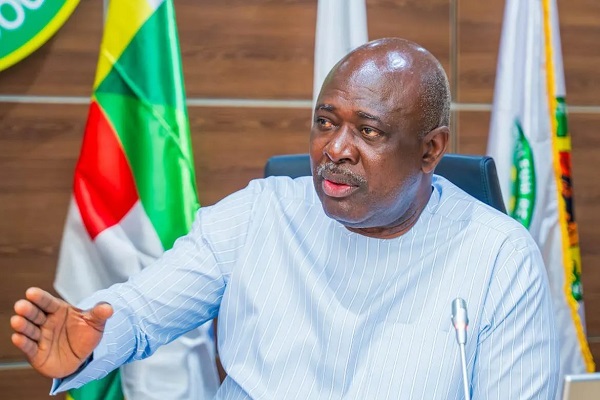
Speaking in Abuja at the opening of the 2026 General Counsel and Legal Advisers Forum, an event organised by the Nigerian Midstream and Downstream Petroleum Regulatory Authority, Lokpobiri struck a tone that tried to balance two competing realities: a market that has been deregulated, and a government that still sees itself as a guardian against exploitation. He told the NMDPRA in clear terms that Nigerians must not be short-changed by marketers, framing this as a core responsibility under the Petroleum Industry Act.
“As part of the requirements of deregulation, fuel prices have to be determined by market forces. The NMDPRA has a unique responsibility, compounded by the PIA, to ensure not only that fuel products are available but also that unnecessary profiteering is stopped. Yes, the market is definitely deregulated, but that doesn’t limit deregulation… What is important is the reality of the situation in the industry. Primarily, market forces have to determine fuel prices. But we also have a responsibility as a government to ensure that there is no profiteering. The PIA specifically vested (that power in) government institutions, including the NMDPRA,” Lokpobiri said.
The minister’s intervention did not emerge in a vacuum. It came against a backdrop of mounting public frustration over the reluctance of refiners and importers to pass on the benefits of falling crude oil prices to consumers at the pump. Global crude had climbed as high as $120 a barrel during the US-Iran war, but has since retreated to as low as $72 a barrel — a steep decline that many Nigerians expected would translate into cheaper petrol. Instead, gantry prices have remained stubbornly resistant to downward movement, fuelling suspicion that some players in the chain are pocketing the difference rather than passing on relief.
That suspicion was given official weight just a day before the minister’s remarks, when the Federal Competition and Consumer Protection Commission flagged what it described as possible consumer exploitation in the downstream petroleum sector. The commission’s concern centred on the same puzzle troubling ordinary Nigerians: why fuel prices have failed to fall significantly despite the sharp drop in global crude values.
It is within this charged atmosphere that IPMAN chose to push back — firmly and without ambiguity. Ukadike rejected any suggestion that marketers were profiteering, insisting instead that many of them are currently operating at a loss, squeezed by a rapid series of price reductions from the Dangote refinery that has left independent marketers holding stock bought at higher rates.
Rather than accept blame, Ukadike turned the conversation back on government, arguing that the real issue lies upstream — in the absence of functioning local refining capacity and genuine competition. He urged the Federal Government to first interrogate the root causes of persistently high petrol prices and to focus its energy on getting domestic refineries working, rather than policing marketers over what they charge at the pump.
“Marketers will shut down if they try somehow to enforce price control. We are going to shut down our stations nationwide. You can’t be regulating a deregulated market. You can’t tell me how much to sell my product without trying to know how much I bought it,” Ukadike warned.
He painted a picture of an industry under severe financial strain, describing marketers as caught between falling market prices and fixed debt obligations. “We, the independent marketers, are losing money. We bought petrol at a particular rate a few days ago; on our way to our filling stations, there was a reduction. We have been struggling with the price. We have been struggling against financial losses. We are also struggling against stagnation due to low patronage of our products. Because those marketers who are purchasing now are purchasing at a lower price, and they are selling cheaper.
“If you don’t bring down your price, you cannot see buyers. This is the beauty of deregulation. If you cannot compete, you will not survive in the market. And because most of us are trading on bank loans, the bank does not know when the price goes up or goes down. Their interest rate is fixed; their return on investment is fixed. So, you must pay them. This is the situation we find ourselves in,” he said, insisting that the fundamentals of demand and supply — not directives from Abuja — should be left to determine pump prices.
For Ukadike, the solution does not lie in clamping down on marketers but in opening up the system altogether. “By the time more products come in, you will see that the prices will go down. What we, independent marketers, are asking for is not about regulation or trying to bring price control or trying to force marketers to sell below or trying to force Dangote to sell below its production cost. What we are asking is to open up the various channels, boost importation, and let local refineries start refining. This will push the competition to the peak. With this, prices will drastically go down,” he stated.
He went further, placing the burden of responsibility squarely on the government to fix the structural gaps in the sector before turning its attention to marketers. “The primary cause of this is that there is no competition. If there should be competition, the refineries will be working. That is where the minister should put his energy to ensure that our local refineries or whatever partnership we have with the Chinese will work.
It is not about going to filling stations to check who is selling at higher prices. Do you know how much I bought the fuel for? Can you have a regulated market in a deregulated economy? You can’t be blowing hot and cold at the same time. The PIA must be followed to the letter. If they try to enforce price control, we will shut down,” Ukadike said.
Not every voice in the downstream sector struck the same combative note. Billy Gillis-Harry, National President of the Petroleum Products Retail Outlet Owners Association of Nigeria, offered a more measured reading of the standoff, acknowledging that the minister does hold real authority to step in and protect consumers — but insisting that any such move should not bypass the sector’s key stakeholders.
“The minister of petroleum has the power to intervene in ensuring that Nigerians are treated fairly. The NMDPRA has the power, and so does the FCCPC. However, these decisions to discipline or not to discipline should follow stakeholder practice. We have the petroleum stakeholder conference that is being headed by the minister.
And I think that this is the time for the minister to convene a meeting of all the stakeholders to unravel what the scenario is and what the situation is and make a decision that is beneficial for Nigerians. That’s what I think we should do,” Gillis-Harry said.
He was equally clear that unilateral government action, without buy-in from the industry, would only complicate matters further. “They have the right to intervene, but if they do that and the stakeholders have a different view, that will be difficult. And that’s why the minister should mandate a meeting to speak to all stakeholders as fast as possible. The minister has the power to intervene in matters like this, and every stakeholder, including the refineries, must comply,” he submitted.
Meanwhile, the regulator at the centre of the storm appeared to be caught off guard by the unfolding controversy. The NMDPRA’s spokesman, George Ene-Ita, told our correspondent that he had received no formal briefing on how the authority’s management intended to respond to the standoff. “I’ve not been briefed. I don’t know the action the management wants to take,” Ene-Ita said.
As the back-and-forth between government, marketers and retail outlet owners plays out, ordinary Nigerians remain squarely in the middle, still paying between N1,140 and N1,210 for a litre of petrol depending on location — prices that have shown little sign of softening even as crude oil, the raw material behind it all, has grown markedly cheaper on the international market.
Whether the coming weeks bring a negotiated truce between regulators and marketers, or an escalation into the shutdown IPMAN has threatened, will likely hinge on whether the stakeholder engagement Gillis-Harry called for actually materialises — and on whether government succeeds in tackling the deeper competition and refining gaps that marketers insist are the true source of Nigeria’s fuel price troubles.
Author