
Nigeria Housing Deficit and the Economic Cascade: How Soaring Rent Is Destroying the Middle Class
There is a man in Lagos who wakes up each morning in his car, straightens his tie, and drives to work. He is not homeless in the way that word is commonly understood, he holds a steady job, earns a salary, and pays his dues to society. But rent in the neighbourhood nearest to his office now costs more than his annual income. So he sleeps in his car.
There is a university lecturer in the same city who locks the door of his office at the end of the teaching day and does not leave, because the cost of renting an apartment within a reasonable distance of campus, combined with the daily expense of commuting from somewhere affordable, has made that combination financially impossible. These are not outliers. These are symptoms of a systemic collapse that has overtaken Nigeria’s housing sector and is now reaching into the lives of workers who, by any reasonable definition, should be middle-class.
The Numbers Behind a National Emergency
Nigeria’s housing deficit, the gap between the number of habitable units available and the number needed by the population, is estimated at between 15 million and 28 million units, a range so vast that it reflects not merely a counting problem but a governance one. The Federal Ministry of Housing and Urban Development has disclosed that approximately 15.2 million existing housing units across the country are structurally inadequate: they lack acceptable safety standards, basic infrastructure, habitability conditions, and access to essential services. These are not abandoned shells on the urban fringe, they are places where people live, where children grow up, where families try to build their futures.
The supply side of this equation has not kept pace with demand for decades. Nigeria’s population, currently estimated at over 220 million, is projected to exceed 400 million within the next three decades. Cities like Lagos continue to absorb thousands of internal migrants every week, drawn by the pull of economic opportunity and pushed by the deterioration of conditions in rural areas and smaller towns. The arithmetic is unforgiving: more people competing for a stock of housing that grows far too slowly, in cities where land is scarce, infrastructure is overstretched, and construction costs have spiralled beyond what most developers can sustainably absorb.
“University lecturers — once considered comfortably middle-class professionals — are now reportedly sleeping in their offices due to soaring rents and transportation costs.”
Rents Have Doubled, Tripled, and Then Doubled Again
The velocity of rent inflation in Nigeria’s major cities over the past three years has been, by any international standard, extraordinary. In Lagos, a self-contained apartment that attracted between N250,000 and N400,000 in annual rent just three years ago now commands between N700,000 and N1.5 million, and often more in high-demand locations. Two-bedroom apartments in middle-income neighbourhoods that previously cost less than N1 million annually now fetch between N2 million and N6 million.
Similar trajectories have been recorded in Abuja, Port Harcourt, and the sprawling communities of Ogun State that function as residential extensions of Lagos, places like Mowe, Ibafo, and Sagamu, which were themselves relatively affordable until they too became engulfed by the same inflationary wave.
The United Nations defines housing as affordable when a household spends no more than 30 per cent of its annual income on accommodation. In Nigeria’s major cities, that benchmark has become a relic of a different era. Many households now spend between 40 and 70 per cent of their income on rent alone, and those are the households that have managed to secure formal accommodation.
For workers earning the national minimum wage of N70,000 monthly, the situation requires no elaboration: annual earnings of N840,000 cannot cover the cost of a modest self-contained apartment in most urban centres, let alone leave adequate funds for food, transportation, healthcare, and school fees.
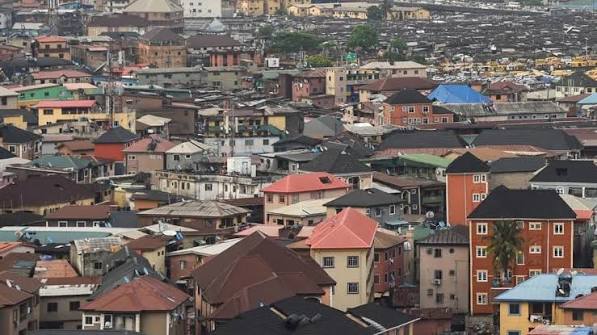
The consequences of this arithmetic play out in ways that are at once mundane and devastating. Families that previously occupied two-bedroom apartments have migrated to single rooms shared by five or six people. Workers who once lived within thirty minutes of their places of employment now undertake daily commutes of three to six hours each way from distant suburbs where rent remains fractionally more affordable.
And a growing number of workers, among them educated, formally employed, tax-paying citizens, have simply stopped paying for accommodation altogether, sleeping instead in offices, workshops, market stalls, vehicles, and unfinished buildings.
The Structural Failures That Created This Crisis
The housing emergency did not arrive suddenly, and it was not caused by a single policy failure or economic shock. It is the accumulated product of several interconnected structural breakdowns that have compounded over decades and been dramatically accelerated by the economic turbulence of recent years.
Construction costs have become prohibitive. Cement prices have climbed above N10,000 per bag in many locations, a figure that would have seemed implausible three years ago. Steel, roofing sheets, electrical fittings, and finishing materials have all increased sharply in price, driven by a combination of domestic inflation and the depreciation of the naira, which has made imported components significantly more expensive.
Developers who built and sold at a profit two years ago now face cost structures that price completed housing units beyond the reach of the very buyers they intend to serve. The result is a market paradox: housing that is too expensive to build affordably and yet too expensive for most buyers to purchase even at a loss to the developer.
Nigeria’s mortgage system has failed to bridge this gap. Mortgage penetration in Nigeria remains among the lowest in the world, a structural deficiency that means the overwhelming majority of potential homeowners have no access to long-term, structured financing for property purchase. Commercial mortgage facilities carry interest rates that are, for average-income earners, prohibitive. The Federal Mortgage Bank of Nigeria and the National Housing Fund were created to address this gap, but coverage remains thin and the administrative burden of accessing these instruments has limited their reach. The consequence is that home ownership, in a country of over 220 million people, remains an aspiration for the wealthy and an impossibility for the majority.
Land administration has imposed its own friction on the market. Obtaining a Certificate of Occupancy, the foundational document of formal land tenure in Nigeria, remains a process that is, in most states, cumbersome, expensive, time-consuming, and susceptible to unofficial costs at every stage. Developers navigating multiple regulatory approvals, local government levies, and state-level charges frequently report that the non-construction costs of a housing project represent a substantial share of total expenditure. These costs, inevitably, are passed on to end buyers and tenants.
“Many households now spend between 40 and 70 per cent of their annual income on accommodation — far above the UN affordability benchmark of 30 per cent.”
The Economic Cascade: Housing Costs Are Eroding the Middle Class
The damage wrought by Nigeria’s housing crisis does not stay within the housing sector. Its effects radiate outward through the entire economy, with consequences that economists are only beginning to fully map.
When households commit 40 to 70 per cent of their income to rent, the discretionary spending that drives consumer markets is compressed to a point where it can barely sustain the basic economy of daily life. Retail sales suffer. Healthcare expenditure is deferred. Investment in children’s education is reduced. Savings rates, already negligible for most Nigerian households — fall further toward zero. The cumulative effect is a compression of aggregate demand that undermines economic growth from the bottom up, even as macroeconomic indicators may suggest a recovery narrative at the top.
World Bank data indicate that poverty levels in Nigeria have deteriorated in recent years, with projections suggesting that millions more citizens could fall below the poverty line if the gap between income growth and living costs continues to widen. Housing affordability is now one of the most visible and acutely felt manifestations of this broader economic stress. It is also one of the most politically sensitive, because it affects not only the poor but increasingly the formally employed, educated, salaried middle class that is the social and economic backbone of Nigerian urban life.
The productivity consequences are equally serious. A worker who spends between four and six hours commuting each day — not by choice but by financial necessity, arrives at the workplace already depleted. Over time, chronic fatigue from extreme commuting reduces concentration, increases error rates, and diminishes the quality of professional output. Businesses absorb these costs indirectly through reduced employee productivity, increased absenteeism, and higher staff turnover as workers seek employment closer to wherever they have been able to secure accommodation. The housing crisis is, in this sense, a hidden tax on Nigerian enterprise.
Public health is also at risk. Overcrowded informal settlements — the ultimate destination of those who can find no affordable formal housing — typically lack adequate sanitation, clean water supply, and waste management infrastructure. These conditions create the physical preconditions for disease outbreaks, from cholera and typhoid to respiratory infections and vector-borne illnesses. The public health costs of inadequate housing eventually materialise as demands on a health system that is itself under-resourced and overstretched.
Government Programmes: Well-Intentioned, Structurally Insufficient
Nigeria’s history of public housing intervention is long, and its record is mixed. The Federal Low-Cost Housing Scheme of the 1970s, the Shagari Housing Programme of the early 1980s, the National Housing Programme under successive administrations, and the more recent Family Homes Fund have each represented genuine attempts to address the deficit through public provision. The Family Homes Fund, for example, has reportedly delivered more than 15,000 housing units across several states — a real achievement in implementation terms, and a meaningful improvement in the lives of the families housed.
But 15,000 units against a deficit of 15 to 28 million is not a solution. It is a gesture. The scale of public intervention has never remotely approached the scale of the problem, and successive administrations have treated housing as a peripheral policy concern rather than the foundational social and economic infrastructure that it represents. The result is a sector where public delivery has been chronically under-resourced, private delivery has been structurally mis-incentivised toward luxury and upper-middle-income segments, and the vast majority of Nigerians have been left to navigate a market that consistently fails them.
A Reform Agenda Nigeria Can No Longer Defer
The path out of this crisis is not mysterious. The policy tools required are well understood, their application in analogous contexts documented across the developing world. What has been lacking is the political will to deploy them at the necessary scale, with the necessary consistency, and with adequate insulation from the vested interests — in land, construction, and finance — that benefit from the status quo.
Public investment in social and affordable housing must increase substantially. Countries that have meaningfully reduced housing shortfalls — from Singapore in the 1960s and 1970s to Rwanda more recently — did so through sustained, targeted state intervention aimed specifically at low- and middle-income earners. Nigeria has the institutional architecture to do the same; what it has lacked is the budgetary commitment.
Land administration must be reformed with urgency. Digitising title registration, eliminating redundant approval processes, enforcing transparent fee schedules, and dramatically reducing the time required to secure a Certificate of Occupancy would lower the cost of housing development and attract private capital that currently avoids the sector. Nigeria’s Land Use Act, now nearly five decades old, requires comprehensive revision to reflect the realities of a rapidly urbanising economy.
Mortgage financing must be restructured to reach those who need it. Long-term, single-digit-interest mortgage products — whether delivered through a reformed Federal Mortgage Bank, a restructured National Housing Fund, or through incentivised private lender participation — are not aspirational luxuries. They are functional necessities for any society in which home ownership is to extend beyond the wealthy. Without accessible mortgage finance, the rental market will remain the only option for the majority, and landlords will retain the pricing power that is currently destroying household finances across Nigeria’s cities.
Incentives for affordable housing development must be meaningfully differentiated from those for luxury development. Tax reliefs, access to subsidised land, infrastructure support, and concessional finance for developers committing to affordable price points would redirect private-sector capacity toward the segment of the market that most urgently needs it. And tenancy laws require not merely strengthening but enforcement — the practices of demanding two or three years of rent in advance, levying excessive agency fees, and imposing arbitrary mid-tenancy rent increases must be addressed through both legislative reform and active regulatory intervention.
Nigeria’s housing crisis has passed the threshold at which it can be addressed through incremental adjustment. It has become a social emergency, an economic impediment, and a public health risk. It is pushing educated professionals into vehicles, overcrowding families into single rooms, and systematically dismantling the material foundations of the urban middle class. The question is no longer whether Nigeria can afford to fix its housing sector. The evidence is overwhelming that it can no longer afford not to.
Author