
Technology | November 26, 2026
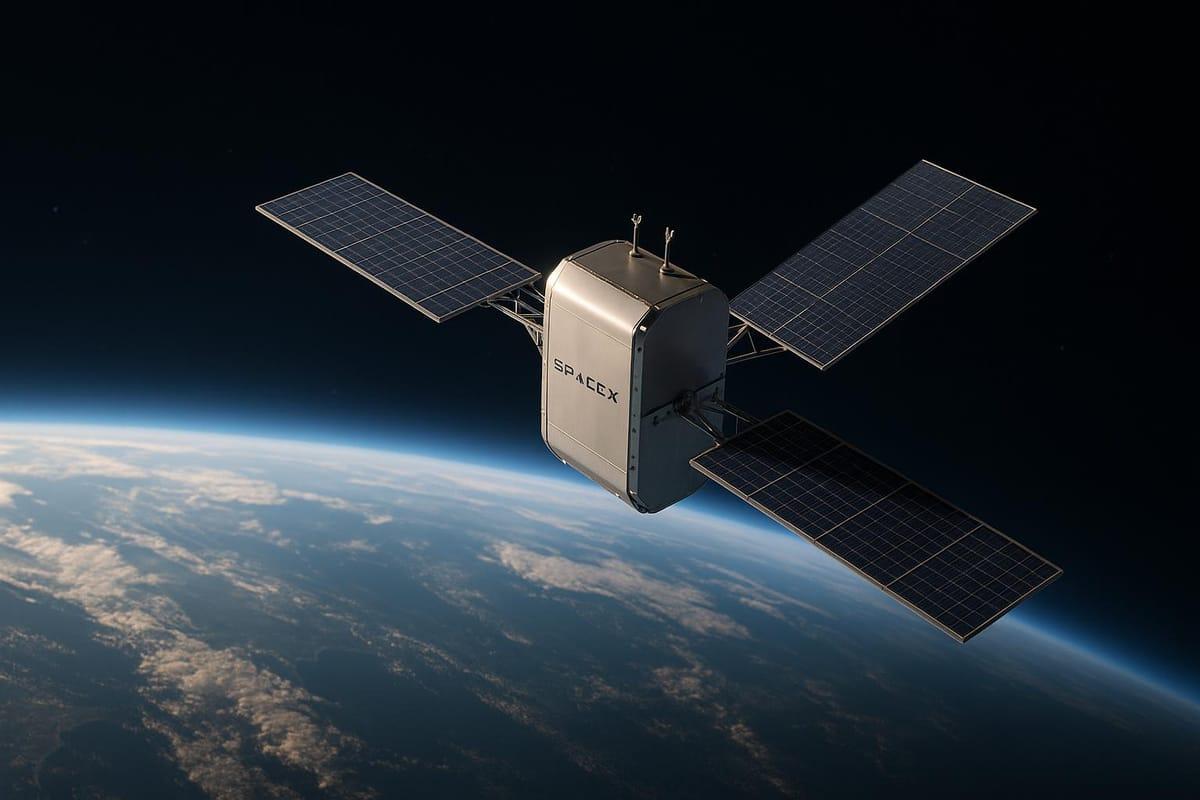
The United States Federal Communications Commission (FCC) has granted SpaceX approval to deploy up to one million satellites designed to operate as data centres in space, marking a major development in the expansion of artificial intelligence infrastructure.
The approval, announced on Wednesday, November 25, 2026, covers a proposed satellite network known as Starmind, which aims to process large volumes of data in Earth’s orbit.
The project is being developed by Elon Musk’s SpaceX as demand for computing power continues to increase across the artificial intelligence industry.
According to the FCC, the authorisation represents the first approval in the United States for a satellite constellation specifically designed to function as orbital data centres.
Under the proposal, the satellites would use solar energy to power onboard computing equipment, allowing data to be processed in space before being transmitted to systems on Earth.
SpaceX argues that space-based data centres could eventually offer an alternative to conventional facilities, which require substantial electricity, land and cooling infrastructure.
The company plans to connect the proposed Starmind satellites through optical communications technology, with links to its existing Starlink network.
FCC Chairman Brendan Carr welcomed the approval, describing the project as an opportunity to expand American computing capacity and support technological development.
Musk also expressed support for the decision, presenting orbital computing as part of SpaceX’s broader ambitions in space technology.
However, the project has raised concerns among astronomers, researchers and competing technology companies.
The American Astronomical Society has warned that a constellation of this size could interfere with astronomical observations and affect the visibility of the night sky.
Scientists have also raised concerns about the risk of satellite collisions, increasing orbital congestion and the accumulation of space debris.
Other questions surround the feasibility of operating large-scale artificial intelligence computing infrastructure in space.
Although solar power is readily available in orbit, experts say transferring enormous quantities of data, maintaining computing equipment and safely managing large satellite fleets present significant engineering challenges.
Under the FCC’s approval conditions, SpaceX must place at least one authorised Starmind satellite into operation by November 25, 2033.
The company must deploy at least 10 percent of the approved constellation, equivalent to 100,000 satellites, by November 2035.
It is also required to reach 50 percent deployment, or 500,000 satellites, by November 2038, with further milestones extending to 2040.
SpaceX has indicated that it hopes to begin launching Starmind satellites as early as 2027, although the actual pace and scale of deployment remain uncertain.
The proposed network would operate in low-Earth orbit and is intended to work alongside SpaceX’s existing satellite communications infrastructure.
The project comes as major technology companies explore alternative approaches to meeting the increasing energy and computing requirements of artificial intelligence.
Companies including Google and Blue Origin have also examined the possibility of developing computing infrastructure beyond Earth.
While the FCC’s approval represents an important regulatory milestone for SpaceX, significant technical, environmental and operational questions remain.
The authorisation does not guarantee that the company will deploy all one million satellites or that orbital data centres will prove commercially viable.
Follow us on:
Author