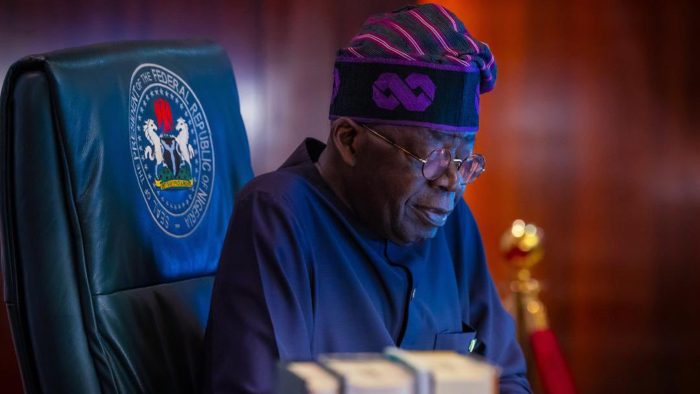
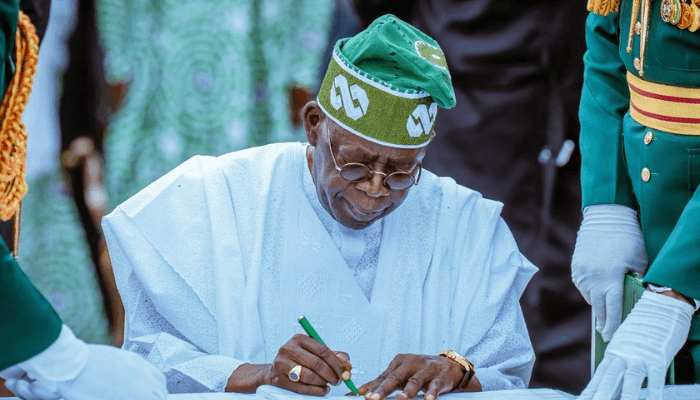
President Bola Tinubu has submitted a new $7.7 billion external borrowing request to the National Assembly to help finance Nigeria’s 2026 budget, replacing an earlier loan proposal worth about $20.5 billion.
The request was contained in a letter dated October 26, 2026, and read by Senate President Godswill Akpabio during plenary on Wednesday, November 4.
According to the President, the proposed borrowing amounts to approximately ₦10.79 trillion at the budget exchange rate of ₦1,400 to one dollar.
The funds are intended to cover part of the Federal Government’s budget deficit and support projects already included in the 2026 Appropriation Act.
Tinubu explained that the budget provides for ₦29.2 trillion in new borrowing, comprising ₦18.4 trillion from domestic sources and ₦10.79 trillion from external lenders.
The latest request covers the foreign borrowing component of the financing plan.
National Assembly — Official Website
After reading the letter, Akpabio said the new proposal effectively replaces an earlier request for external loans of approximately $20.5 billion.
He explained that the revised submission provides clearer information about the funding options available to the government rather than relying on a single source of financing.
The President outlined several ways the Federal Government could raise the money, including loans from international financial institutions, bilateral and multilateral lenders, and the issuance of Eurobonds.
Eurobonds are debt instruments issued in international financial markets, allowing governments to borrow from foreign investors and repay the funds under agreed conditions.
Tinubu said the government would place greater emphasis on Eurobond issuance because it could provide access to larger amounts of funding within a shorter period.
However, he explained that the final interest rates, repayment periods and other borrowing conditions would depend on market conditions when the funds are raised.
The President said the Federal Ministry of Finance and the Debt Management Office would work to obtain the most favourable terms available.
He also identified defence, security, transportation, agriculture, electricity, education and healthcare as priority areas expected to benefit from the financing.
Beyond supporting government projects, Tinubu said the borrowing could help strengthen Nigeria’s external reserves.
He explained that the proceeds would be received by the Central Bank of Nigeria on behalf of the Federal Government, potentially providing additional support for the naira.
The request was submitted under Sections 21(1) and 27(1) of the Debt Management Office Establishment Act, 2003, which provide for legislative oversight of government external borrowing.
Following its presentation, Akpabio referred the proposal to the Senate Committee on Local and Foreign Debts for consideration.
The committee is expected to examine the request and report back to the Senate before further legislative action is taken.
The new proposal comes amid continuing concerns about Nigeria’s borrowing requirements, debt servicing costs and the amount of government revenue available for public spending.
Although the new request is smaller than the earlier proposal, the Federal Government will still need legislative approval before proceeding with the proposed external financing.
The borrowing has not yet been approved, and the specific lenders, interest rates and repayment arrangements remain subject to further decisions.
Follow us on:
Author