
Nigeria’s push to create state police has hit a major roadblock, with only five of the 36 state Houses of Assembly approving the constitutional amendment as of Thursday, October 15, one day before the 30-day deadline set by the National Assembly.
The Assemblies of Edo, Osun, Oyo, Rivers and Zamfara have passed the bill, which would decentralise policing and create a constitutional framework for state police services.
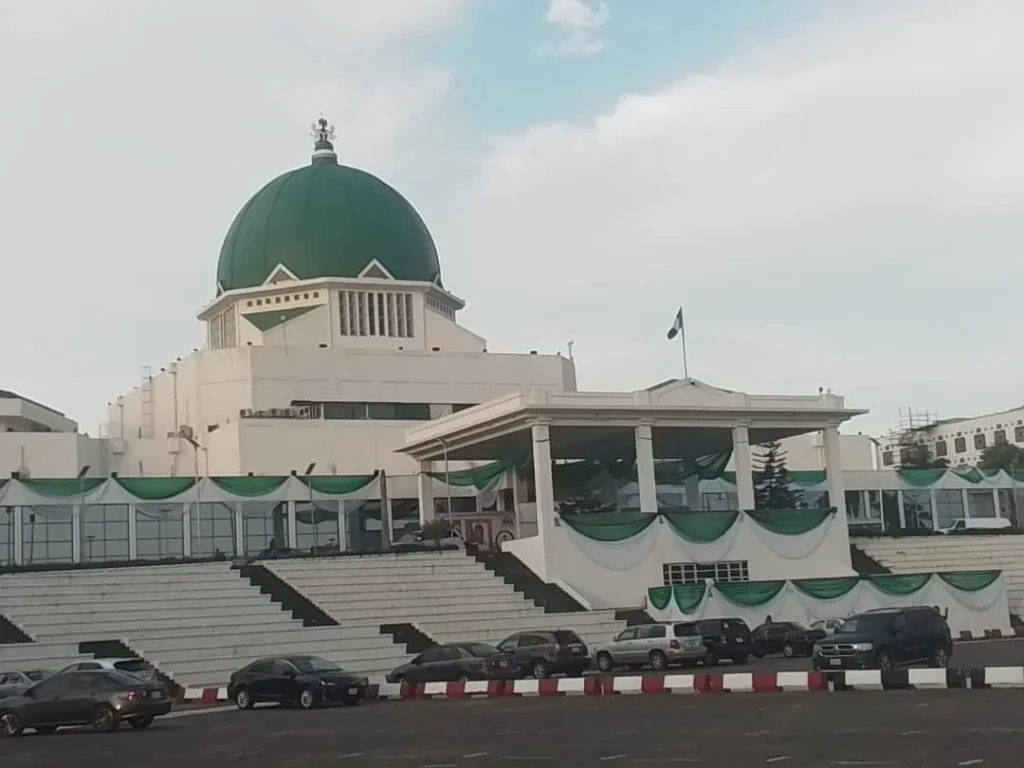
The proposal needs the approval of at least 24 states, two-thirds of the 36, under Section 9(2) of the 1999 Constitution before it can go to the President for assent. At the current pace, it is far short.
The bill was passed by the Senate on June 24 and the House of Representatives on July 23. It was transmitted to the state legislatures on September 16, 2026, and the 30-day window closes today, October 16.
The House of Representatives leadership has yet to issue any statement on the next steps.
What the bill proposes
The amendment provides for a Federal Police Service alongside state police services, with each state empowered to set up its own through legislation. It also covers the administration, oversight and accountability of state police personnel.
Supporters say decentralised policing will help states respond faster to banditry, kidnapping, terrorism and communal violence. Critics warn that state-controlled security agencies could be politically abused.
States that have approved
Zamfara’s Assembly spokesperson, Malam Nasiru Biya-Buki, confirmed the bill was passed and sent to the National Assembly.
“The Zamfara State House of Assembly has since passed the bill regarding the creation of the state police,” he said.
“The bill has been sent to the National Assembly, Abuja, as requested. So, we are waiting for the next line of action to take.”
In Osun, lawmakers including Lawrence Adeoti (Ife South), Taofeek Olayiwola (Ede South), Adewumi Adeyemi (Obokun) and Jeremiah Awoyeye (Ife Central) backed the proposal, calling it timely and arguing it would strengthen security at state and local government levels. The motion was moved by Majority Leader Babajide Kofoworola and seconded by Tajudeen Adeyemi.
In Oyo, the Assembly passed the Constitution of the Federal Republic of Nigeria (Sixth Alteration) Bill, 2026 on September 29 after clause-by-clause consideration, presided over by Speaker Adebo Ogundoyin. He said the state would need a comprehensive law to guide its police service if the alteration is completed.
Under the framework, state police would enforce state laws, maintain public order, prevent and detect crime, and protect lives and property. State Police Service Commissions would handle appointments, promotions, transfers, discipline and complaints. Each service would be headed by a State Commander of Police, appointed by the governor on the recommendation of the National Police Council and confirmed by the State House of Assembly. The National Assembly would set minimum policing standards, which states could exceed.
States still undecided
In Ogun, Olakunle Oluomo, Chairman of the House Committee on Constitutional Amendment, said he had proposed a public hearing.
“The Speaker is working round the clock to ensure success of everything. As the House Committee Chairman on Constitution Amendment, I have proposed that we should have public hearing about it.
“I look forward to meeting the Speaker this week so that we can fix a date for public hearing about it, so that our people can get familiarised with the content of the bill and then we take it up from there,” he said.
In Delta, the Speaker’s Chief Press Secretary, Nkem Nwaeke, said the Assembly is following due process.
“I can confirm that the bill has been received by the House and due legislative process is being followed,” he said. He added: “The interest of Delta people remains uppermost to the Assembly, hence the need for due diligence.” He gave no date for debate or a vote.
In Abia, Speaker Emmanuel Emeruwa said: “We have this on the floor.” Asked about a public hearing and vote date, he said, “I don’t have a position yet on the matter.”
In Anambra, Clerk Tony Ughenu said the bill was announced two sessions ago but has not been formally listed for consideration. He noted the Assembly cannot alter the provisions.
“The House normally is expected to vote ‘yes’ or ‘no’ on it,” he said. He attributed part of the delay to ongoing deliberations at the Speakers’ Forum.
In Imo, Dominic Ezerioha, Chairman of the House Committee on Information and Judiciary, said: “The bill came when we were going for recess. But we resumed on Thursday and it was presented.”
In Kaduna, lawmakers have begun reviewing the bill and plan a public hearing. Committee Chairman on Information Henry Marah said: “We are still studying the bill. We are looking at the underlying clauses and everything that is peculiar, in particular, to Kaduna State.”
He added: “The public hearing is important because we need to hear from the people and stakeholders. Their contributions will also guide us when we consider the bill further.”
Reps silent, Senate promises delivery
House spokesperson Akin Rotimi declined to comment on the bill’s status.
“If you asked me a question and you did not get an answer, it means I don’t want to answer. You cannot be pressurising me like this,” he said, adding, “You know that question is not for me.” He then ended the call.
It remains unclear whether the National Assembly will extend the deadline or issue a fresh directive.
The Senate was more forthcoming. Senate Committee on Media and Public Affairs Chairman Yemi Adaramodu said the process would be completed before the end of the 10th National Assembly, dismissing fears of delay into the 11th.
“We are still waiting after transmitting to the states. We only need 24 State Houses of Assembly to consent. That’s two-thirds of 36. So, once we get that, we will go ahead and promulgate,” he said.
“There is no need for fear. This is the 10th Senate, isn’t it? I can assure you that it will be done in the life of this 10th Senate before the next one comes on board,” he said.
Asked about a new deadline, Adaramodu said federal lawmakers expect responses soon.
National Assembly Clerk Kamoru Ogunlana has clarified that the State Police Bill is the only constitutional amendment so far sent to the states. Until 24 Assemblies approve it, state police remains a proposal, not law.
National Policing Bill 90 per cent ready
The Presidency said Thursday that the National Policing Bill, which would give effect to the state police system, is 90 per cent ready and will be sent to the National Assembly by October 29.
Chief of Staff to the President Femi Gbajabiamila spoke to State House correspondents after a steering committee meeting at the Aso Rock Villa, Abuja.
“The National Policing Bill is more or less ready for transmission to the National Assembly. We will probably have one more meeting after this to cross the t’s and dot the i’s and make sure every area is covered. So, we are 90 per cent ready.
“The governors have one or two observations, and we should be ready in about a week or so,” he said.
He called it “the most consequential Bill of the administration so far,” noting intense deliberation since the steering committee began work on August 3.
Asked whether states might delay approval given that only five have acted, he cited a national consensus. “I see no reason why anyone will want to have a rethink on it,” he stated.
The meeting was attended by Nigeria Governors’ Forum Chairman and Kwara Governor AbdulRahman AbdulRazaq, Governors Dapo Abiodun (Ogun) and Uba Sani (Kaduna), and Inspector-General of Police Tunji Disu. The Attorney-General was represented by Solicitor-General Beatrice Jedy-Agba. Others present included Justice Abdullahi Liman (retd), Prof. Olu Ogunsakin, Lanre Smart, Nnadubem Moghalu and a representative of the Nigerian Bar Association president.
President Bola Tinubu inaugurated the seven-member Presidential Working Group on July 7, mandating it to produce a “technically robust, implementation-ready draft National Policing Bill.” He said it would cover minimum policing standards, state readiness certification, federal-state coordination, accountability, human rights safeguards and fiscal conditions.
“The Constitution Amendment Bill establishes the framework for dual policing, but it does not operationalise it,” Tinubu said in a speech read on his behalf.
On Wednesday, at the inauguration of the APC Presidential Campaign Council, Tinubu said state police “will be a reality.”
Follow us on:
Author


[…] national policing bill and police reform […]