
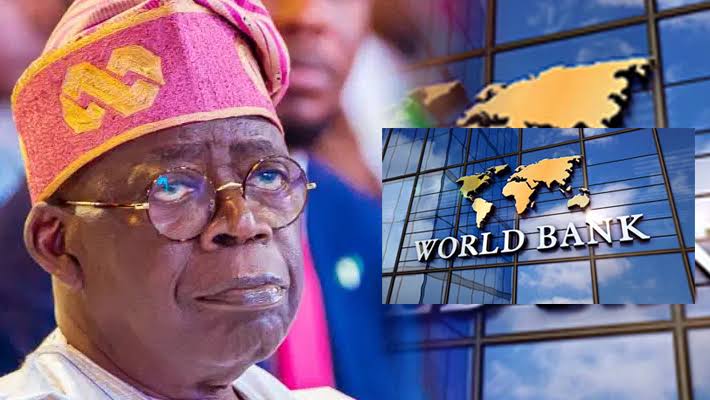
The Federal Government has opened talks with the World Bank for three new loans totalling $1.5bn, even as Nigeria’s public debt climbed to a record N166.79tn at the end of June 2026.
Documents obtained from the World Bank show the proposed financing comprises three separate $500m facilities for climate resilience, social protection and early childhood development.
The most immediate is a $500m additional financing for the Agro-Climatic Resilience in Semi-Arid Landscapes project (ACReSAL), with the World Bank board expected to consider it on October 29, 2026. The Federal Ministry of Environment is the implementing agency. The financing would raise ACReSAL from its previously approved $700m to $1.2bn, entirely through the International Development Association (IDA), the bank’s concessional arm.
“The Government of Nigeria has requested AF of $500m to scale up demonstrated project results and strengthen the institutional, operational and financing arrangements needed to sustain integrated landscape management,” the document said. Of the amount, $310m is proposed for dryland management, $165m for community climate resilience and $25m for institutional strengthening and project management. The project operates across 19 northern states and the FCT.
The World Bank said desertification and land degradation affect an estimated 43 per cent of Nigeria’s land area, while failure to address climate change could cut GDP by about 2.6 per cent annually by 2030 and as much as 6.7 per cent by 2050.
The second facility is a $500m IDA credit for the Household Prosperity and Empowerment-Social Protection Project (HOPE-SP). Its technical design review is expected on October 30, 2026, with approval tentatively set for March 16, 2027. The Finance Ministry is the borrower, while the Ministry of Humanitarian Affairs and Poverty Reduction will implement it. The cost comprises a $420m results-based programme and an $80m investment component.
The programme would establish “a sustainable social assistance to poor and vulnerable households, financed increasingly from federal and state budgets and delivered through strengthened state and local government systems.” It would fund cash transfers, modernise the social registry and integrate the National Identification Number into the social protection system.
The bank said Nigeria spent only 0.14 per cent of GDP on social safety nets in 2021, against a global average of 1.5 per cent. It estimated poverty had risen from 40 per cent in 2019 to 56 per cent in 2023 and could reach 62.5 per cent in 2026, citing the pandemic, inflation, natural disasters and conflict, while noting fuel subsidy removal and exchange-rate reforms worsened living costs in the short term.
The third facility is a $500m IDA credit for the Nigeria Early Childhood Development programme, with approval estimated for March 15, 2027 and design review on October 30, 2026. The Finance Ministry is the borrower, and the Ministry of Budget and Economic Planning would implement it across all 36 states and the FCT, covering health, nutrition, early learning, childcare and sanitation for children aged zero to five. Financing includes a $400m programme-for-results component and $100m for investment projects.
The bank said intervention was necessary because “40 percent of children under five are stunted, fewer than half are developmentally on track, 36 percent of children aged 36 to 59 months attend organised early learning.”
Debt jumps
Debt Management Office figures show public debt rose by N14.39tn in a year, from N152.40tn in June 2025 to N166.79tn in June 2026, a 9.44 per cent increase. In dollar terms, it rose 21.35 per cent, from $99.66bn to $120.93bn, reflecting a stronger naira valuation of N1,379.1842/$ against N1,529.2105/$ a year earlier. Quarterly, debt rose by N7.44tn, or 4.67 per cent, from N159.35tn in March.
Domestic debt stood at N91.59tn (54.91 per cent) and external debt at N75.20tn (45.09 per cent). External debt rose from $46.98bn to $54.52bn year-on-year. The Federal Government’s domestic debt was N87tn, while states and the FCT owed N4.59tn domestically.
Treasury bills recorded the sharpest growth, jumping 52.64 per cent from N12.76tn to N19.48tn in a year. FGN bonds remained dominant at N64.84tn, or 74.53 per cent of federal domestic debt, including N41.47tn in conventional naira bonds and N22.11tn in securitised Ways and Means advances.
World Bank exposure
Nigeria’s debt to the World Bank Group reached $20.73bn in June 2026, comprising $19.12bn to IDA and $1.61bn to IBRD, up 6.93 per cent from $19.39bn a year earlier. That is about 38 per cent of the $54.52bn external debt stock. Multilateral debt totalled $24.76bn (45.42 per cent), commercial debt $23.16bn (42.47 per cent), including $18.55bn in Eurobonds, and bilateral debt $6.61bn (12.12 per cent), with China’s Exim Bank holding $4.91bn.
Former Vice-President Atiku Abubakar has demanded a full reconciliation of Nigeria’s public debt and an apology from the Tinubu administration over hardship since subsidy removal. “A government that says more money is coming in must explain why it keeps borrowing and why the people paying for its policies cannot see the promised gains,” he said in a statement by Phrank Shaibu.
Lagos-based economist Adewale Abimbola said multilateral loans are largely concessionary, with lower interest rates and longer tenors. “If it’s concessionary and tied to viable projects with medium-term revenue prospects, I don’t think it’s a bad idea,” he said. “Borrowing isn’t bad; what matters is utilisation.”
Follow us on:
Author