

Nigeria’s tax reform has reduced the burden on low-income earners and micro-scale businesses while eliminating multiple nuisance taxes, the Joint Revenue Board (JRB) has said.
JRB Executive Secretary, Olusegun Adesokan, disclosed this during the 160th meeting of the board in Kaduna State, held under the theme, “One Year of Reform: Assessing Progress and Addressing Challenges.”
Adesokan, speaking in a post shared on the board’s X handle on Friday, dismissed concerns that the reform had increased the tax burden on Nigerians.
“Addressing the misconception that the tax reform has increased taxes, the reform has rather reduced the tax burden on low-income earners, eliminated multiple nuisance taxes while providing reliefs for low-income earners and micro-scale businesses,” he said.
He said 18 state Houses of Assembly had domesticated the model harmonised taxes and levies law, designed to tackle overlapping and multiple taxation across the country.
According to Adesokan, the legislation reduced more than 50 collection items previously administered by state and local governments to nine sub-heads.
He added that the law had abolished cash collection and the use of roadblocks for revenue collection, describing the measures as significant progress in harmonising taxes and levies across subnational governments.
The JRB, Nigeria’s apex body for revenue administration, convened the meeting to assess progress under the new revenue regime, identify gaps and address emerging challenges.
Sani Calls For Smarter Tax Collection
Declaring the meeting open, Kaduna State Governor Uba Sani said the reform had expanded opportunities for domestic resource mobilisation and strengthened Nigeria’s capacity to finance development.
Sani urged the JRB to identify bottlenecks affecting revenue collection, institutional weaknesses creating friction between revenue authorities and taxpayers, and opportunities for technology to improve efficiency.
“The objective of the reform should not be simply to collect revenue; it should be to build a tax system in which compliance becomes easier, enforcement becomes more intelligent and voluntary compliance becomes a norm,” he said.
Sani expressed support for the reform, saying it had not only eliminated duplication in taxation but also enhanced revenue generation.
He said national tax revenue had risen to N21.6 trillion since President Bola Tinubu introduced the tax reform in 2026.
According to the governor, national revenue stood at approximately N10.1 trillion in 2023, N21.6 trillion in 2024 and about N36.8 trillion in 2025.
Adesokan thanked Sani for hosting the 160th JRB meeting and for his support for the tax reform initiative.
He also commended the governor for nominating JRB member and outgoing Executive Chairman of the Kaduna State Internal Revenue Service, Jerry Adams, as his running mate for the 2027 gubernatorial election.
JRB Seeks Stronger Compliance
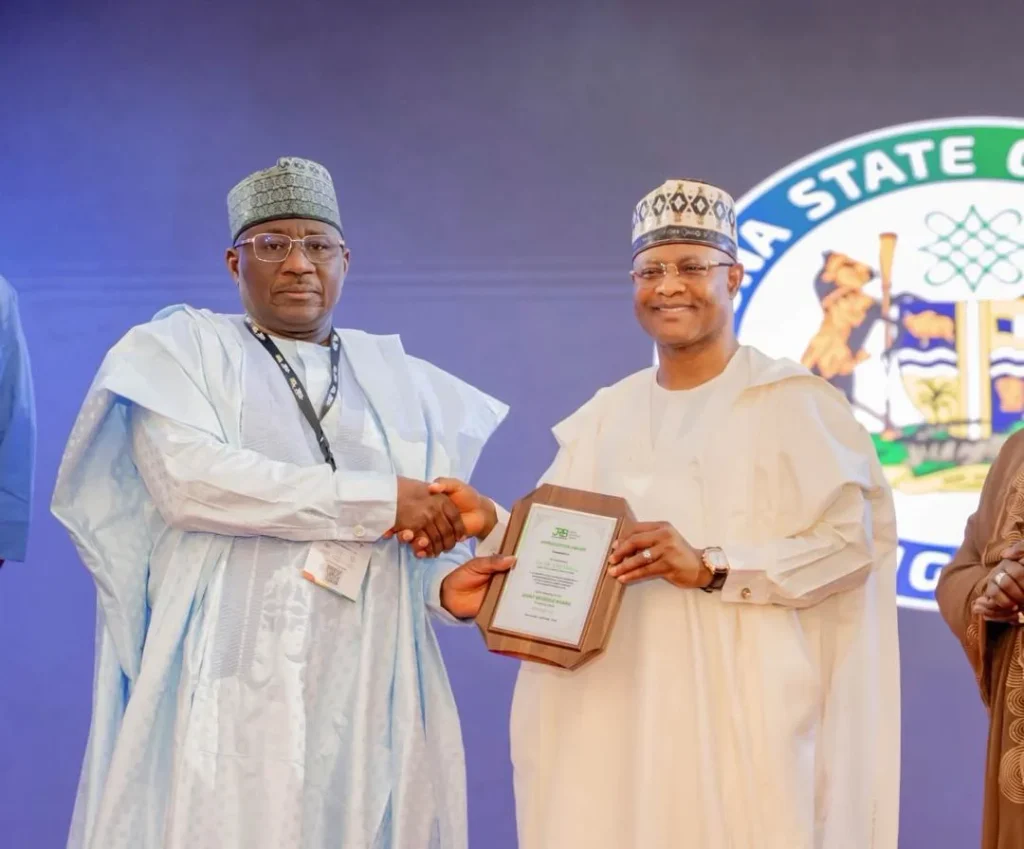
In his opening remarks, JRB Chairman Dr Zacch Adedeji, represented by the Executive Director of Finance and Corporate Services at the Nigeria Revenue Service, Muhammad Abubakar, said the meeting provided an opportunity for revenue authorities to assess progress, address gaps and confront emerging challenges.
He said the ultimate measure of the reform’s success should be improved revenue mobilisation, greater compliance, a better taxpayer experience and stronger contributions to national development.
Author