
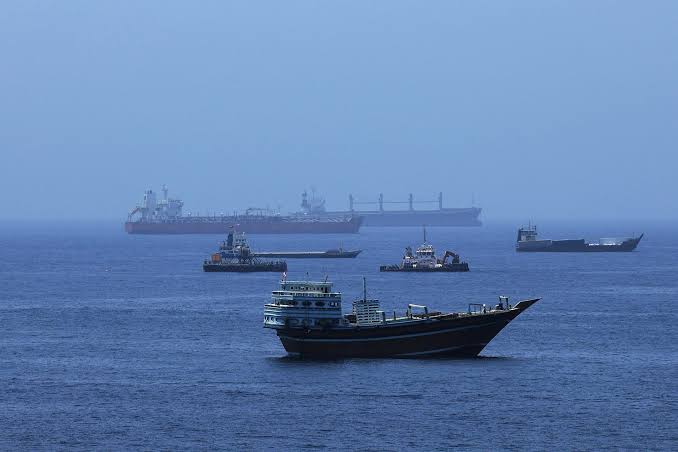
At least 20 seafarers and port workers have been killed in 68 confirmed maritime incidents around the Strait of Hormuz during the six-month war involving Iran, the United States and Israel.
The incidents, recorded across the Gulf and neighbouring waters, occurred at an average rate of one every 2.6 days, according to data from the International Maritime Organization.
The United Kingdom Maritime Trade Operations classified 47 of the 68 incidents as attacks.
In total, 35 people were reported injured and one remains missing.
The Strait of Hormuz has remained at the centre of the conflict, with commercial vessels operating through one of the world’s most important routes for oil and gas shipments facing repeated security threats.
About half of the incidents involved tankers, while container ships accounted for 20 per cent and bulk carriers made up 15 per cent.
Liberia-flagged vessels were the most affected, featuring in 13 incidents. Panama and the Marshall Islands each recorded 10 affected vessels, while Iran-flagged vessels were involved in four incidents.
Incidents Fluctuate as War Continues
The frequency of maritime incidents shifted during different stages of the conflict.
From the outbreak of the war at the end of February until a framework for peace talks was reached in mid-June, an incident was reported on average every 2.3 days.
That period accounted for 16 deaths and 19 injuries, with incidents reported across the Gulf, including waters off Iraq, Iran, Qatar, Saudi Arabia, Oman and the United Arab Emirates.
As peace talks continued until around July 7, the rate of incidents fell to an average of one every 4.6 days.
No seafarers or other workers were reported killed, injured or missing during that period.
Four of the five incidents recorded during the talks occurred off the coast of Oman near the Strait of Hormuz’s narrowest point, along a route not authorised by Iranian authorities.
Iran had warned vessels against using the alternative route and has indicated its intention to retain control of the strategic waterway and impose passage fees.
However, maritime incidents increased again after the talks collapsed, rising to an average of one every 2.8 days.
During the period, four seafarers or workers were killed, 16 others injured and one person reported missing.
Iran has controlled the strategic energy corridor since the war began. Reopening the Strait of Hormuz, which is vital to global oil and gas supplies, has become a major priority for the United States.
Tehran, however, insists the waterway will remain closed until Washington lifts its naval blockade on Iranian ports, removes oil sanctions and unfreezes Iranian assets held abroad.
Author