
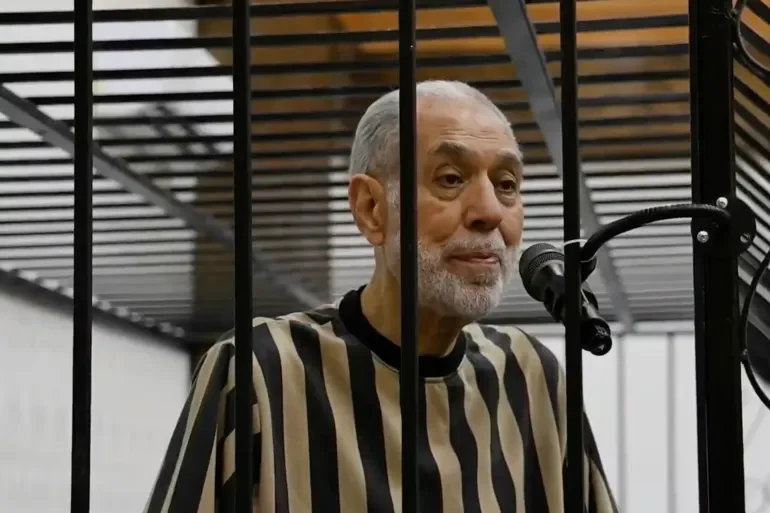
A Syrian court has sentenced Ahmed Hassoun, the country’s former grand mufti under ousted president Bashar al-Assad, to life imprisonment after convicting him of crimes including inciting civil war and sectarian strife.
Hassoun, 77, was Syria’s top Muslim cleric for 16 years and is the 10th figure from the Assad era to be sentenced under the country’s new authorities.
Judge Fakhr al-Din al-Aryan said Hassoun was found guilty of “inciting civil war and sectarian strife”, an offence that carried a life sentence.
The former cleric was also convicted of “incitement to intentional homicide”, “principal complicity in intentional homicide”, and “inciting sectarian and racial strife”.
He received additional prison terms ranging from three to 20 years, while the court ordered the confiscation of his assets and their transfer to the public treasury.
Hassoun was known for his close ties to Assad and frequently appeared alongside the former president at religious events.
His sentencing is the first involving a religious figure since Syrian authorities began prosecuting officials from the Assad era in April.
On August 11, Syria sentenced Bashar al-Assad, his brother Maher and five other security officials to death in absentia over atrocities committed during the country’s civil war.
The ruling was the first of its kind under Syria’s new authorities.
Atif Najib and Wassim al-Assad, cousins of the former president, have also received death sentences after being tried in person.
Assad fled Syria after his government collapsed in December 2024 and is believed to be in Russia.
Hassoun, a native of Aleppo whose late father was also a prominent religious figure, was arrested at Damascus airport in March last year while attempting to leave the country.
He served as grand mufti for more than a decade before Syria abolished the position in 2021.
The United Nations and human rights groups have criticised the death sentences handed to several Assad-era officials.
Human Rights Watch said on Sunday that the rulings “raise important legal issues the government should urgently address”.
“Advancing justice for the litany of serious crimes committed in Syria requires more than just convictions, but building a system that can deliver competent, impartial, and independent justice,” said Balkees Jarrah, the organisation’s Middle East and North Africa director.
Syria began legal proceedings in April against Assad and other former officials accused of atrocities during the civil war, which began in 2011 following the brutal repression of pro-democracy protesters.
More than half a million people were killed and millions displaced during the conflict, while tens of thousands disappeared.
Author