
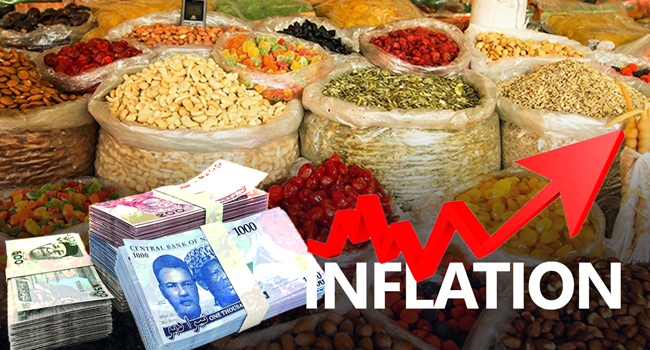
Nigeria’s headline inflation rate fell to 15.43 per cent in July, extending the recent moderation in overall price pressures, although food prices accelerated sharply during the month.
The latest Consumer Price Index released by the National Bureau of Statistics (NBS) on Monday showed that headline inflation declined from 15.91 per cent in June and was significantly below the 24.94 per cent recorded in July 2025.
On a month-on-month basis, headline inflation also eased to 1.57 per cent in July, compared with 1.66 per cent in June, indicating a slower increase in the overall price level.
The July figure marks another decline from the 15.93 per cent recorded in May, when inflation reached its highest level in the recent three-month period before easing in June.
Food Inflation Rises Sharply
Despite the decline in headline inflation, food inflation moved in the opposite direction.
Food inflation rose to 20.31 per cent year-on-year in July, up from 17.52 per cent in June, although it remained below the 26.20 per cent recorded in July 2025.
The sharper increase came on a month-on-month basis, with food inflation climbing to 5.56 per cent in July from 3.75 per cent in June.
The figures indicate that food prices increased substantially faster in July, even as overall inflation moderated.
The divergence is likely to continue putting pressure on household budgets, particularly as food and other essential items account for a significant share of consumer spending.
Core Inflation Slows
Core inflation, which excludes farm produce and energy, recorded a significant slowdown.
The measure fell to 14.97 per cent year-on-year in July, compared with 15.92 per cent in June and 23.95 per cent in July 2025.
On a month-on-month basis, core inflation dropped sharply to 0.15 per cent in July, from 1.66 per cent in June.
The figures point to a substantial easing in price pressures outside volatile food and energy components.
Urban Inflation Remains Higher
The NBS data also showed a persistent gap between urban and rural inflation.
Urban inflation stood at 16.12 per cent year-on-year in July, down from 25.26 per cent recorded in July 2025.
Monthly urban inflation also declined to 1.90 per cent, compared with 2.13 per cent in June.
Rural inflation stood at 13.77 per cent year-on-year, down from 23.95 per cent a year earlier.
However, rural month-on-month inflation increased to 0.78 per cent in July, from 0.52 per cent in June.
The figures show that annual price growth remains higher in urban areas, while monthly price increases were more pronounced in cities than rural communities.
Inflation Trend Reverses
The NBS 12-month headline inflation series shows a substantial decline over the past year.
Inflation fell from 24.94 per cent in July 2025 to 23.14 per cent in August, 20.98 per cent in September, 18.97 per cent in October and 17.33 per cent in November.
It then dropped to 15.15 per cent in December 2025, before reaching 15.10 per cent in January 2026 and 15.06 per cent in February.
The rate subsequently began rising gradually, reaching 15.38 per cent in March, 15.69 per cent in April, 15.93 per cent in May and 15.91 per cent in June.
July’s decline to 15.43 per cent therefore reverses the increases recorded between March and May.
However, the sharp rise in monthly food inflation shows that the moderation in headline inflation has yet to translate into broad-based relief for households.
The NBS CPI framework tracks headline, food, core, urban and rural inflation, among other indicators, following the rebasing of the Consumer Price Index.
Author