
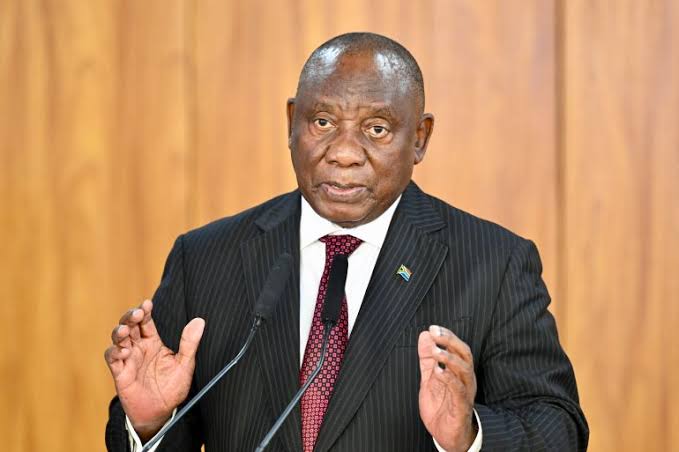
A South African court has temporarily halted impeachment proceedings against President Cyril Ramaphosa over the controversial Phala Phala cash scandal, pending the outcome of his legal challenge.
The Western Cape High Court ruled on Friday that Parliament must suspend the impeachment process until it determines Ramaphosa’s application to review a November 2022 independent panel report that found he “may have committed” serious constitutional violations and misconduct.
Delivering the ruling, Judge Andre le Grange ordered that the parliamentary impeachment committee should not proceed with public hearings until the court concludes its review.
“Pending the determination by this court of the applicant’s review… respondents are interdicted from proceeding with a public impeachment hearing,” the judge said.
The controversy centres on the theft of foreign currency from Ramaphosa’s Phala Phala game farm in Limpopo Province in 2020.
The President has consistently denied any wrongdoing, insisting he reported the burglary to the police and that the money—about $580,000—came from the sale of 20 buffaloes.
The allegations were brought by a former intelligence chief and ally of former President Jacob Zuma, who claimed Ramaphosa concealed a robbery involving $4 million from police and tax authorities.
Responding to Friday’s ruling, Ramaphosa said he remained committed to the rule of law and constitutional accountability.
“The President reaffirms his respect of judicial independence and separation of powers enshrined in our Constitution,” a statement from his office said.
“The President will continue to cooperate with and abide by processes of accountability.”
The High Court is expected to hear Ramaphosa’s application to overturn the 2022 independent panel report in September.
The report initially prompted calls for impeachment, but the process was blocked after the National Assembly, where the governing African National Congress held a majority, voted against adopting the findings.
Although the country’s public prosecutor dropped related charges in 2024, South Africa’s Constitutional Court overturned Parliament’s earlier decision in May this year, paving the way for the establishment of a parliamentary impeachment committee.
If the impeachment proceedings eventually continue, they would mark the first such process against a sitting South African president.
Author