

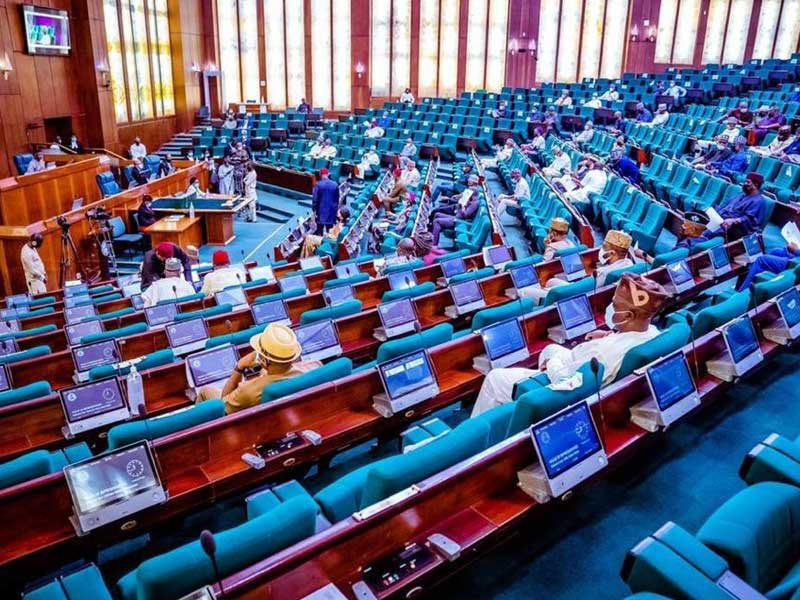
The House of Representatives on Thursday approved the Constitution Alteration Bill seeking to establish State Police across Nigeria, despite a protest and walkout by members of the minority caucus over alleged breaches of legislative procedure.
The bill, which seeks to amend the 1999 Constitution to create a legal framework for State Police Services, secured the required two-thirds majority after consideration by the House.
The proposed legislation was transmitted to the National Assembly by President Bola Tinubu as part of efforts to decentralise policing and strengthen Nigeria’s security architecture in response to persistent insecurity.
Before becoming law, the bill must be harmonised with the Senate’s version, approved by at least 24 of the 36 State Houses of Assembly and receive presidential assent in line with constitutional amendment requirements.
Presenting the report of the House Committee on Constitution Review, Deputy Speaker and Committee Chairman Benjamin Kalu described the proposal as one of the most significant reforms in Nigeria’s security sector.
He commended President Tinubu for forwarding the executive bill and said the amendment would bring policing closer to communities, strengthen intelligence gathering, improve community policing and enable state governments to respond more effectively to security threats.
“This bill is not merely about creating another policing institution. It is about bringing policing closer to the people, strengthening intelligence gathering, enhancing community policing, improving coordination among security agencies and empowering governments to respond more effectively to the complex and evolving security challenges confronting our nation,” Kalu said.
He acknowledged that while the proposal may not satisfy every stakeholder, it establishes only the constitutional foundation for state police, with issues such as recruitment, training, funding, accountability and operational standards to be addressed through subsequent legislation.
“We must not allow the pursuit of perfection to become the enemy of meaningful progress,” he added.
Proceedings became tense during the Committee of the Whole after Speaker Tajudeen Abbas put the bill to a voice vote instead of conducting the customary clause-by-clause consideration required for constitutional amendment bills.
Before the vote, Abbas announced that 311 lawmakers had indicated support for the legislation, comprising 211 members of the All Progressives Congress, 65 lawmakers physically present from other political parties and 35 members participating virtually.
He noted that the Constitution requires the support of at least 240 members of the 360-member House for a constitutional amendment to pass.
Following the voice vote, opposition lawmakers staged a walkout, accusing the Speaker of violating parliamentary procedures by failing to consider each of the bill’s 26 clauses individually.
Minority Leader Frederick Agbedi repeatedly sought to raise a point of order but was not recognised before the bill was passed.
Addressing journalists after the walkout, Minority Caucus spokesman Afam Ogene questioned both the voting procedure and the method used to determine the number of lawmakers present.
“We were shocked to hear names being read out that we do not know where they came from. The way of determining members present in a sitting is through the register. That is why members sign it every legislative day,” Ogene said.
Agbedi maintained that the minority caucus supports the creation of state police but objected to what it described as a failure to comply with constitutional and parliamentary procedures.
“We are not against state police. Whatever will help address insecurity in this country, we will support. But every action of Parliament must follow due process,” he said.
He argued that lawmakers were denied the opportunity to scrutinise individual clauses or propose amendments before the legislation was approved.
“If we walked out of the chamber, where then did our votes come from? Can anyone count our votes? Can a constitutional amendment be decided by a voice vote?
“The Constitution and our Standing Orders require a two-thirds majority for each clause,” Agbedi added.
In a letter dated July 22, 2026, the minority caucus reiterated its support for state police but urged the House leadership to recommit the bill for further review, citing constitutional ambiguities, governance gaps and unresolved institutional issues.
The lawmakers also raised concerns over the financial implications of establishing state police, warning that states may struggle to fund the new security structure.
They recommended transferring 15 per cent of the Federation Account allocation currently received by the Federal Government to states to finance policing responsibilities.
The caucus further urged the House to allow constitutional lawyers, security experts, state governments and fiscal authorities to review the bill before its final adoption.
The debate over state police has remained one of Nigeria’s most contentious constitutional issues for more than two decades, with supporters arguing it would improve local security while critics warn it could be abused for political purposes and place heavy financial burdens on states.
Author